
 By admin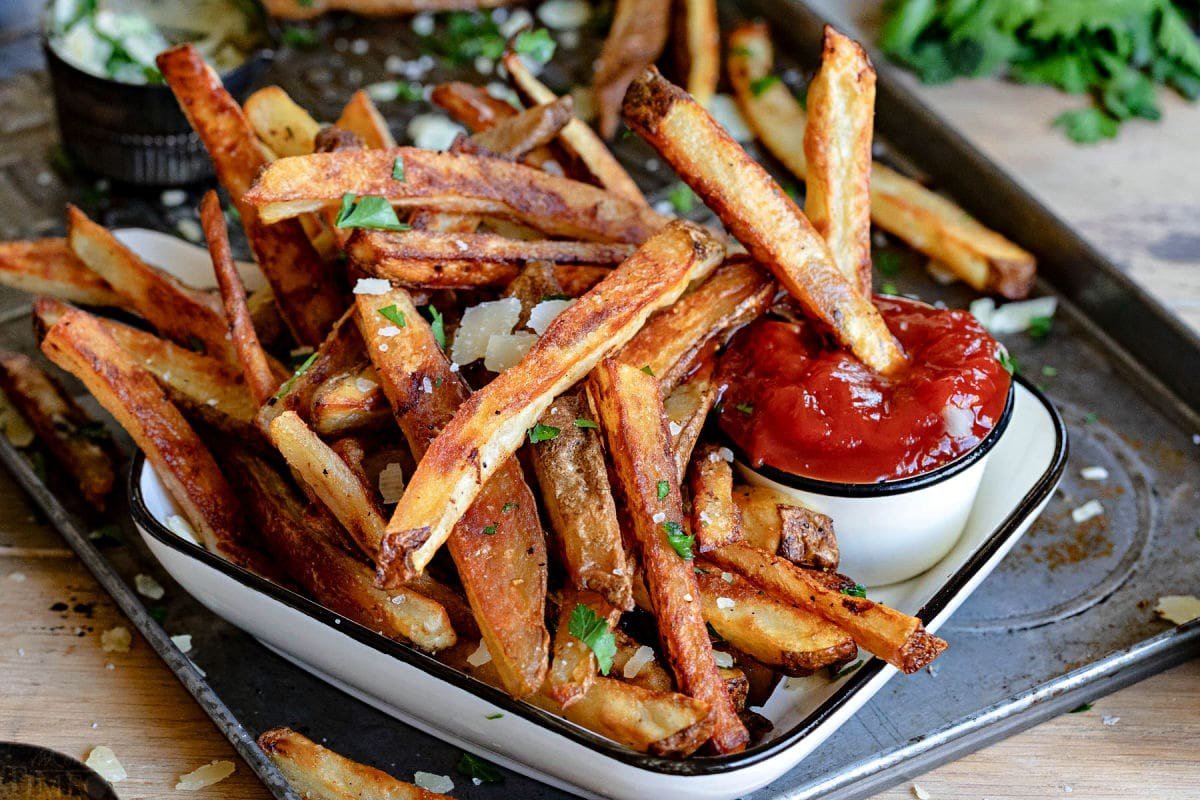
Deep-fried french fries are a masterpiece and a mess — the oil, the smell, the cleanup, the calories. Oven fries promise the best of both worlds: crispy, golden, satisfying, without the vat of oil. But most oven fry recipes deliver a tragic compromise: pale, limp, steamy potato sticks that taste like disappointment. I’ve tested dozens of methods, and the difference between sad oven fries and genuinely crispy ones comes down to a handful of techniques that most recipes skip.
Here’s the thing: crispiness is about moisture management. A potato is 80% water, and crispy means driving that water out while building a starchy, crunchy exterior. Every technique below is really about removing water faster than the potato can steam itself.
Choose the Right Potato
Russets. Full stop. Russet potatoes are high in starch and low in moisture, which is exactly the combination that fries up fluffy inside and crispy outside. Waxy potatoes (red, Yukon Gold, fingerling) hold their shape well for roasting but never get truly crispy as fries — they’re too moist. If you’ve been making oven fries with whatever potatoes were on sale, switching to russets alone will transform your results.
The Non-Negotiable Steps
1. Soak the cut potatoes (30 minutes minimum)
After cutting your potatoes into even fries (about 1/4 to 1/3 inch thick — uniformity matters for even cooking), soak them in cold water for at least 30 minutes, or up to a few hours in the fridge. Soaking rinses off excess surface starch, which is what makes fries stick together and steam instead of crisp. You’ll see the water turn cloudy — that’s the starch leaving. This single step makes a bigger difference than any seasoning.
2. Dry them completely
Drain the soaked fries and dry them aggressively — I mean really dry. Spread them on a clean kitchen towel (or paper towels), roll them up, press firmly, then let them air-dry for 10 minutes. Any surface moisture turns to steam in the oven, and steam is the mortal enemy of crispiness. If you’re wondering what the best oil for deep frying is, the same high-smoke-point logic applies to oven fries — but honestly, technique matters more than oil choice here.
3. Preheat the baking sheet
Put your baking sheet in the oven while it preheats to 425°F. When the fries hit a screaming-hot pan, the bottoms start crisping immediately instead of slowly steaming as the pan warms up. Use a heavy-duty sheet pan — thin pans warp and create hot spots. A light coating of oil on the hot pan (or parchment paper, though the direct pan contact crisps better) and you’re ready.
4. Oil lightly, space generously
Toss the dried fries with just 1 to 2 tablespoons of oil for a whole sheet pan — enough to coat thinly, not pool. Then spread them in a single layer with space between each fry. Crowded fries steam; spaced fries crisp. If your fries are touching, use two pans. This is the rule people resist most (“but that’s two pans to wash!”) and the one that matters most.
5. High heat, flip once
425°F for 25 to 35 minutes, flipping once halfway through. Don’t flip repeatedly — every flip releases steam and cools the pan. One confident flip at the 15-minute mark. They’re done when deeply golden with browned edges, not just pale yellow. Pale = steamy. Golden-brown = crispy.
The Cornstarch Boost (Optional but Excellent)
For truly shattering crispiness, toss the dried, oiled fries with 1 to 2 tablespoons of cornstarch before baking. The cornstarch forms an extra-crisp shell that stays crunchy even as the fries cool. This is the trick behind many restaurant “crispy” fries, and it works just as well in the oven. Rice flour works similarly if that’s what you have.
Seasoning: When and What
Salt after baking, not before. Salt draws moisture out of the potatoes during cooking, which works against crispiness. The moment the fries come out of the oven — while the oil is still glistening — shower them with fine salt so it sticks. Then add whatever else you like:
- Classic: Sea salt + cracked black pepper
- Garlic parmesan: Garlic powder + grated parmesan + parsley
- Cajun: Paprika + garlic powder + onion powder + cayenne + thyme
- Truffle: Truffle salt (or truffle oil) + parmesan — restaurant luxury for pennies
- Loaded: Top with cheese, bacon bits, sour cream, and scallions for full loaded-fry glory
Sweet Potato Fries: Different Rules
Sweet potatoes have more sugar and moisture than russets, so they burn faster and crisp less readily. Cut them slightly thicker (1/2 inch), use the cornstarch trick (it helps more here than with regular potatoes), bake at 400°F instead of 425°F, and accept that they’ll be crispy-edged and creamy-centered rather than shattering-crisp throughout. That’s not failure — that’s just sweet potatoes being themselves.
Serving Ideas
Oven fries are the ultimate side dish. Serve alongside juicy grilled burgers for the classic combo, next to a perfectly cooked steak for steak-frites night at home, or as a snack with a flight of dipping sauces (garlic aioli, sriracha mayo, and classic ketchup cover all bases).
Make Crispy French Fries in the Oven: Quick Answers
Why are my oven fries always soggy? Almost always one of three things: the potatoes weren’t soaked and dried properly (surface starch + moisture = steam), the pan was crowded (crowded fries steam each other), or the oven wasn’t hot enough. Fix all three: soak 30 min, dry completely, single layer, 425°F.
What potatoes make the crispiest fries? Russets — high starch, low moisture, the exact combination that fries up fluffy inside and crispy outside. Waxy potatoes (red, Yukon Gold) never get truly crispy as fries; they’re better for roasting.
Should I soak potatoes before making fries? Yes — 30 minutes minimum in cold water. Soaking rinses off excess surface starch that would otherwise make fries stick together and steam instead of crisp. You’ll see the water turn cloudy; that’s the starch leaving. It’s the highest-impact step.
How do I get fries crispy without deep frying? The cornstarch trick: toss dried, oiled fries with 1-2 tablespoons of cornstarch before baking. It forms an extra-crisp shell that stays crunchy even as fries cool — the same trick behind many restaurant “crispy” fries.
The Academy of Nutrition and Dietetics has practical guidance on making fried favorites lighter.
Practical Takeaway
Crispy oven fries are a moisture-management project: russet potatoes, 30-minute cold soak, dried completely, hot preheated pan, light oil, generous spacing, 425°F, one flip, salt after baking. Add cornstarch for extra crunch. Follow all of these and you’ll get fries that genuinely rival the deep-fried version — with a fraction of the oil and none of the cleanup.