
 By admin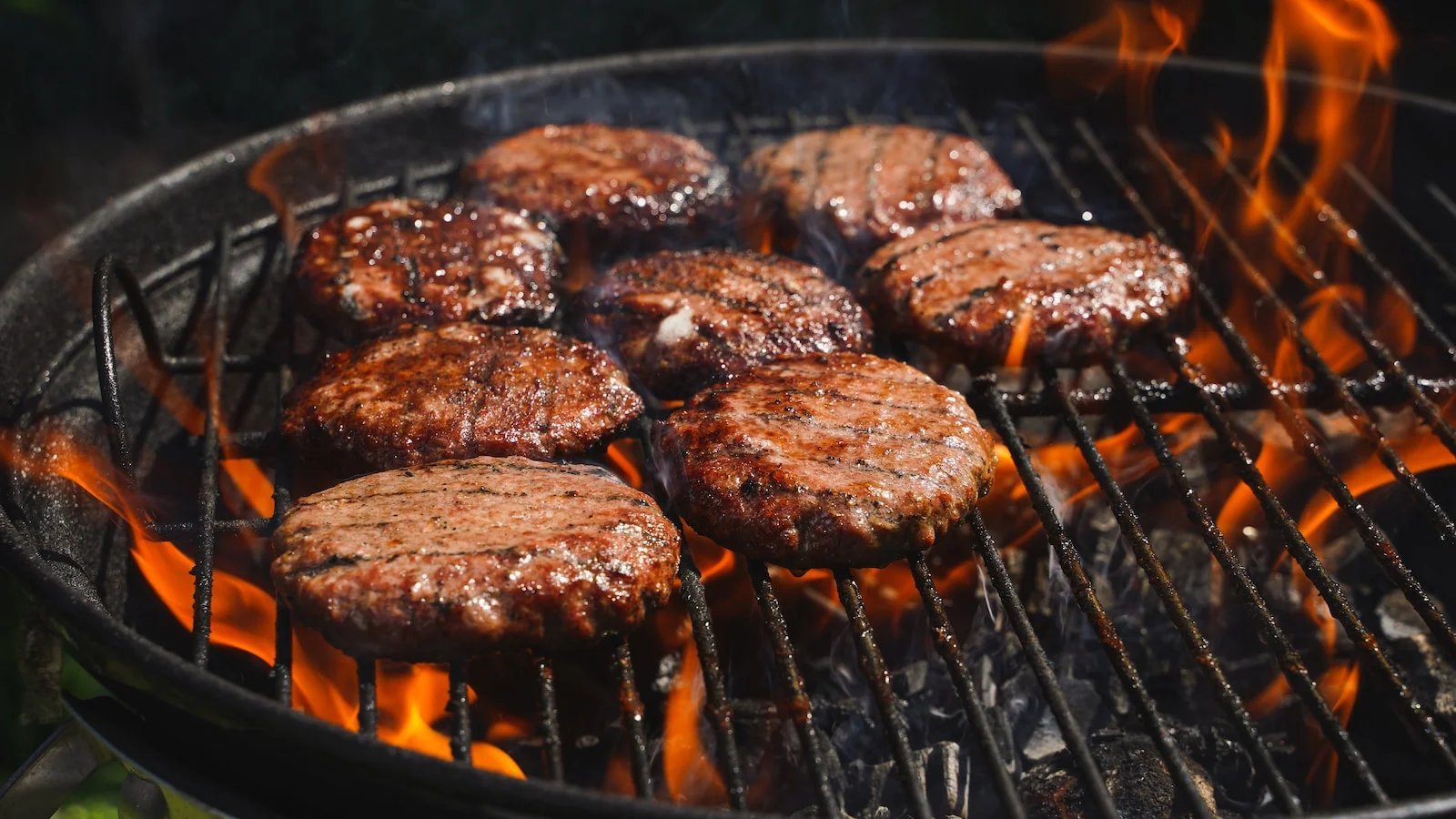
There’s nothing sadder than a burger that’s dry in the middle. You did everything right — good beef, hot grill, perfect timing — and still, sawdust. Dry burgers aren’t a meat problem or a grill problem. They’re a technique problem, and every cause has a specific fix. Here’s how to grill burgers without them drying out, from meat selection to the moment they hit the bun.
Start With the Right Meat: 80/20 Ground Chuck
Fat is moisture insurance. 80/20 ground chuck (80% lean, 20% fat) is the ideal burger grind — enough fat to stay juicy, enough structure to hold together. Here’s what happens with other grinds:
- 90/10 or leaner: dries out almost inevitably on a grill. Save lean beef for meatloaf and tacos.
- Pre-formed patties: often overworked and too lean. Form your own when possible.
- Chuck specifically: the best flavor-to-fat balance for burgers. Ask the butcher for a coarse grind if you want steakhouse texture.
Form Patties Like You Mean It (Gently)
- Handle minimally. Overworking compresses the meat into a dense puck that squeezes out juices. Mix seasonings in with a light hand, form loosely — the patty should barely hold together.
- Make them wider than the bun — burgers shrink as fat renders. A patty that matches the bun raw will be too small cooked.
- Press a dimple into the center with your thumb. Burgers puff up in the middle as they cook; the dimple counteracts it for even cooking (and even juiciness).
- Season the outside, generously, just before grilling. Salt and coarse pepper on the exterior — salting the mix in advance can draw out moisture and toughen texture.
- Cold patties on a hot grill. Form patties, refrigerate 15–30 minutes. Cold fat renders more slowly, keeping the interior juicy while the exterior sears.
Grill Hot and Fast — Then Leave Them Alone
- Full heat, direct. Preheat the grill screaming hot (450–500°F). You want a hard sear that locks in juices — a lukewarm grill steams burgers instead of searing them.
- Oil the grates, not the burgers. A wadded paper towel with high-heat oil, held in tongs, wiped across the grates prevents sticking.
- Flip once. Every flip is an opportunity to lose juices. Sear 3–4 minutes, flip, 3–4 minutes more. Done.
- Never press with the spatula. That sizzle when you smash the burger? That’s juice leaving. It’s the #1 burger crime. Step away from the spatula.
- Close the lid for thicker patties (¾”+) — it cooks the center through without torching the outside.
Temperature: The Real Answer to “When Is It Done?”
Time is a guess; temperature is knowledge. The USDA recommends 160°F for ground beef (grinding distributes bacteria throughout, unlike steak). Use an instant-read thermometer:
- Pull at 155°F — carryover cooking brings it to 160°F during the rest.
- Insert the thermometer horizontally into the side of the patty for the most accurate reading.
- If you prefer your burgers less done, understand the trade-off: below 160°F carries real food safety risk with ground beef. Grinding your own from whole cuts (or buying from a trusted butcher who grinds to order) reduces but doesn’t eliminate the risk.
Rest Them (Yes, Burgers Too)
Rest 3–5 minutes before serving. Juices redistribute instead of flooding the bun on first bite. Tent loosely with foil — don’t wrap tightly or the crust steams soft.
The Bun and Build Matter
A dry-feeling burger is sometimes a bun problem: untoasted buns go soggy and make everything seem drier. Toast the buns cut-side down on the grill for 1–2 minutes — the crisp surface holds up to juices. And build smart: sauce on both bun halves creates a moisture barrier that keeps the bun intact and every bite juicy.
Extra Juiciness Insurance
- Mix in a panade: 1 slice of bread soaked in 2 tbsp milk per pound of beef, mixed in gently — the starch holds moisture. (Purists object; juicy-burger lovers don’t care.)
- A thumb of butter or cheese in the center (the “Juicy Lucy” approach) bastes from within.
- Don’t buy previously-frozen bargain beef for burgers — freezing damages cell structure and releases more juice during cooking.
Smash Burgers vs. Thick Pub-Style Patties
Two philosophies, both valid — pick based on your mood:
- Smash burgers: a loose ball of 80/20 beef smashed flat on a screaming-hot griddle or cast-iron pan, cooked 2–3 minutes total. Maximum crust (the Maillard reaction across the whole surface), lacy crispy edges, fast. The thinness means less juice inside — but the crust-to-interior ratio makes every bite intensely beefy. Best with 2–3 patties stacked per burger. Technique: smash hard in the first 30 seconds, then don’t touch.
- Thick pub-style: ⅓–½ lb hand-formed patties, dimpled, grilled 4–5 minutes per side. Juicy interior, pink center possible (with the food-safety caveats noted above), substantial and satisfying. The grill marks, the heft, the juice running down your arm — the classic backyard experience.
- Which is juicier? Thick patties, objectively — more interior mass retains more moisture. Smash burgers compensate with crust flavor.
- Which is easier? Smash burgers — no thermometer anxiety, no raw-center risk, done in minutes. Great for feeding a crowd fast.
- Can you smash on a grill? Not really — the meat falls through the grates. Smash burgers need a flat surface: cast-iron skillet, griddle, or grill with a cast-iron griddle plate. Thick patties are the grill’s native format.
Try both. Most burger obsessives end up with a preference, but the real answer is that both beat a dry, overcooked, pressed-with-a-spatula burger — which is what this whole guide was trying to save you from.
Cheese Strategy: The Melt Matters
Cheeseburgers deserve proper melting technique: add cheese in the last 1–2 minutes of cooking — any earlier and it overcooks into oiliness. Close the lid after adding cheese; the trapped heat melts it perfectly in 60–90 seconds. For extra melt, add a teaspoon of water to the grill (away from the burgers) and close the lid — the steam flash-melts cheese beautifully. Best melting cheeses: American (the undisputed melt champion), cheddar (sharp for flavor), Swiss, pepper jack. And the pro move: put cheese on both sides of thick patties by flipping once more after the first melt — double cheese, fully melted, no burnt cheese.
Round out the cookout: pick the best oil for deep frying if you’re frying sides too, and plan the full spread with good side dishes for a BBQ.
The Bottom Line
How to grill burgers without them drying out: use 80/20 chuck, handle the meat gently, dimple the center, grill screaming hot, flip once, never press, pull at 155°F and rest 5 minutes, and toast the buns. Every dry burger you’ve ever had violated at least two of these rules. Follow them all and you’ll serve burgers so juicy people ask what your secret is. Now you know — it’s not a secret, it’s just technique.