
 By admin
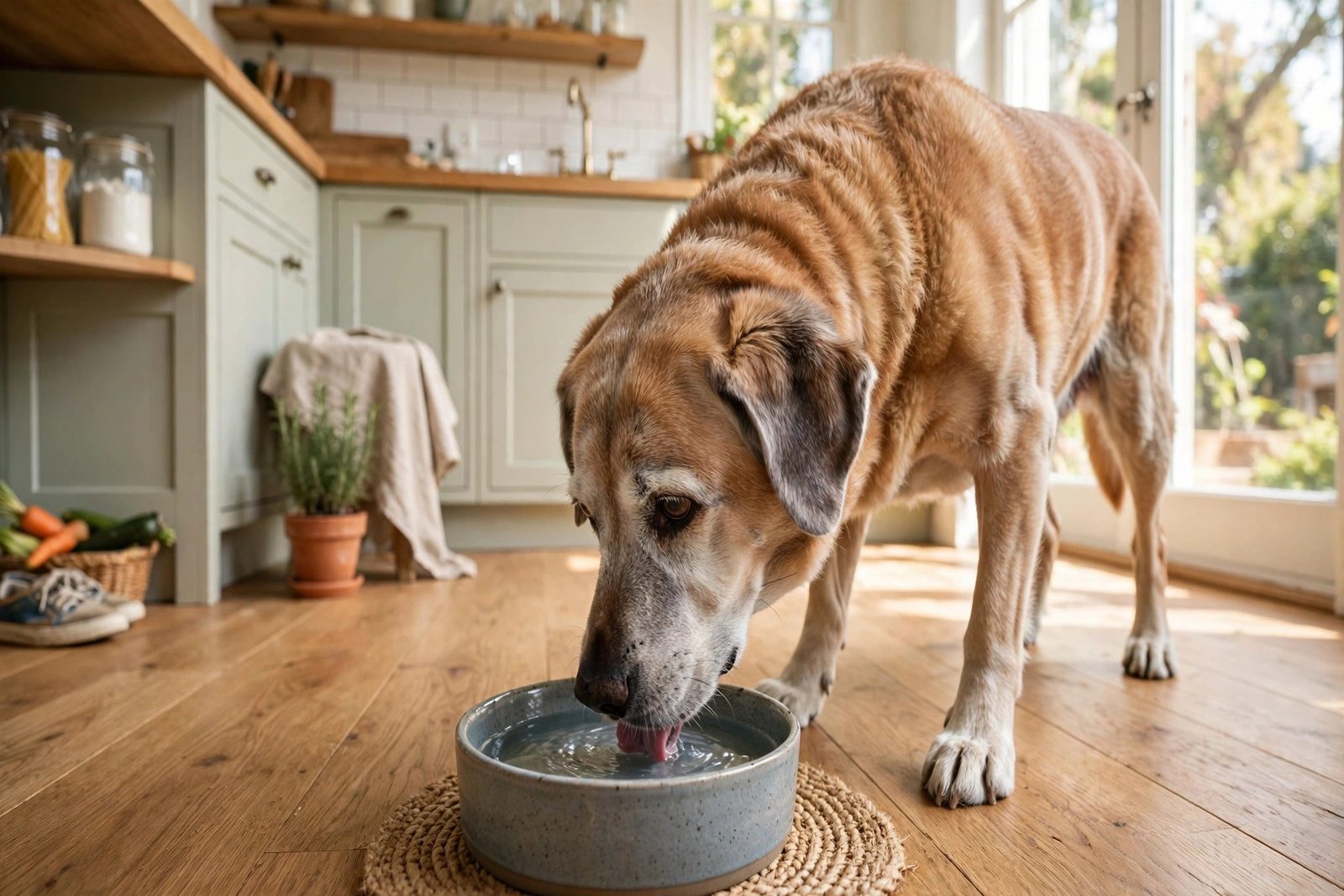
Your senior dog has always been a moderate drinker. Lately, though, the water bowl needs refilling twice as often, and the nighttime backyard trips have multiplied. Increased thirst in an older dog — veterinarians call it polydipsia — is one of those symptoms that’s easy to dismiss (“it’s been hot”) but genuinely deserves attention, because in senior dogs it frequently signals one of several common, treatable medical conditions.
This guide explains what’s normal versus excessive water intake, the medical causes behind sudden increased thirst in older dogs (kidney disease, diabetes, Cushing’s, and more), how to measure your dog’s intake at home, what the vet will test for, and how each condition is managed. The reassuring news up front: most causes are manageable, and catching them early makes an enormous difference.
How Much Water Is Normal — and What’s Excessive?
A healthy dog typically drinks about 1 ounce of water per pound of body weight per day — so a 50-pound dog drinks roughly 50 ounces (about 6 cups). Dogs on wet food drink less (the food supplies moisture); active dogs and hot weather push intake up. Puppies drink more relative to size. These are rough guides, not rules.
Veterinarians define polydipsia as consistently drinking more than 100 ml per kilogram of body weight per day (about 1.5 oz per pound — roughly 50% above normal). But you don’t need the math: you know your dog. The signal is a change — the bowl emptying faster than it used to, new nighttime drinking, accidents in a previously house-trained senior. Track it for 2–3 days: measure what you put down and what’s left. That number is gold for your vet. And note the companion symptom: excessive drinking almost always comes with excessive urination (polyuria) — more frequent trips, larger puddles, nighttime accidents. Thirst and urination are two sides of one coin.
Kidney Disease: The Most Common Cause in Seniors
Chronic kidney disease (CKD) affects an estimated 1 in 10 senior dogs, and increased thirst is often the first visible sign. Here’s the mechanism: healthy kidneys concentrate urine, extracting maximum water back into the body. Failing kidneys lose that ability — they produce large volumes of dilute urine, and the dog must drink constantly to keep up with the fluid loss. By the time symptoms appear, significant kidney function is already lost (kidneys have huge reserve capacity), which is why early detection matters so much.
Diagnosis is straightforward: bloodwork (elevated BUN and creatinine, plus the newer SDMA test that catches disease months earlier) and a urinalysis showing dilute urine. Management has advanced enormously — prescription kidney diets, phosphate binders, blood pressure medication, and subcutaneous fluids at home can keep dogs comfortable for years. The International Renal Interest Society (IRIS) staging guidelines help vets tailor treatment to disease stage. Catching CKD at stage 1–2 versus stage 4 is the difference between years of good quality of life and a crisis — which is why routine senior bloodwork every 6–12 months is one of the highest-value things you can do for an aging dog — unexplained lethargy in a senior is worth investigating rather than writing off as “just old age.”
Diabetes: The Thirst-Hunger-Weight-Loss Trio
Canine diabetes (similar to Type 1 in humans — the pancreas stops producing enough insulin) typically strikes middle-aged to senior dogs, with unspayed females and breeds like Miniature Schnauzers, Poodles, and Beagles at higher risk. The classic trio: drinking more, urinating more, and losing weight despite eating normally or more. Excess blood sugar spills into urine, dragging water with it — hence the dramatic thirst.
Other clues: cloudy eyes (diabetic cataracts can develop rapidly, sometimes within weeks), recurrent urinary tract infections (sugar-rich urine feeds bacteria), and lethargy. Diagnosis is a simple blood glucose test plus urine glucose. Treatment is very manageable: twice-daily insulin injections (most owners master the technique within days — the needles are tiny), consistent diet and feeding schedule, and regular glucose monitoring. Diabetic dogs live full, happy lives with treatment; untreated diabetes progresses to ketoacidosis, which is life-threatening. If your senior is drinking heavily and losing weight, don’t wait — that’s a same-week vet visit.
Cushing’s Disease and Other Hormonal Causes
Cushing’s disease (hyperadrenocorticism) — overproduction of cortisol, usually from a pituitary tumor — is a classic senior-dog thirst cause, most common in small breeds like Dachshunds, Terriers, and Miniature Poodles. The signature cluster: increased thirst and urination, increased appetite (unlike diabetes, where weight drops, Cushing’s dogs often gain a potbelly), thinning hair or bald patches on the torso, and thin, fragile skin.
Diagnosis involves specific hormone tests (ACTH stimulation or low-dose dexamethasone suppression test). Treatment is daily medication (trilostane/Vetoryl) that controls cortisol production, with periodic monitoring tests. Most dogs respond beautifully — owners often report their dog “got years younger” within weeks. Other hormonal causes of polydipsia include liver disease, hypercalcemia, and pyometra (uterine infection) in unspayed females — the last being a genuine emergency: an older unspayed female drinking excessively with vaginal discharge or lethargy needs immediate care. The Cornell University College of Veterinary Medicine publishes excellent owner-facing explainers on these endocrine disorders.
Medications and Non-Disease Causes
Not every thirsty senior is sick — sometimes it’s the prescription. Steroids (prednisone) famously cause dramatic thirst, urination, and hunger; diuretics (like furosemide for heart disease) increase urination by design; and some seizure and behavior medications affect water balance. If the thirst started within days of a new medication, call your vet — the dose may need adjusting, but never stop prescribed drugs without guidance.
Diet changes matter too: switching from wet to dry food increases water intake substantially (dry kibble is ~10% moisture vs. 75%+ in wet food), and salty treats or table scraps drive thirst. Hot weather and increased activity are legitimate short-term causes. The key question is always change from baseline: a dog that’s always been a big drinker on dry kibble is different from a dog whose intake doubled this month. And while you’re monitoring, knowing dehydration warning signs helps you judge whether the increased drinking is keeping up or falling behind.
What the Vet Visit Looks Like
Bring your 2–3 days of measured intake, notes on urination changes, appetite, weight, and energy, plus a list of all medications and diet. Expect: a physical exam, bloodwork (CBC, full chemistry panel including kidney values, glucose, liver values, electrolytes), and a urinalysis (concentration ability is the single most informative kidney test). These basics diagnose the great majority of polydipsia cases.
If basics are inconclusive, next steps may include urine culture (for hidden UTIs, common in seniors), blood pressure measurement, abdominal ultrasound, or specific hormone tests for Cushing’s. Costs vary, but the initial workup typically runs $200–$500 — and pet insurance, if you have it, covers diagnostic workups for new symptoms. Don’t skip the urinalysis to save money; it’s cheap and disproportionately informative.
Conclusion
A senior dog suddenly drinking much more water is telling you something — usually kidney disease, diabetes, Cushing’s, a medication effect, or a diet change. Measure the intake for a few days, note the accompanying symptoms (weight loss points toward diabetes, potbelly and hair loss toward Cushing’s, gradual onset toward kidneys), and get bloodwork and urinalysis done promptly. Most of these conditions are highly manageable when caught early, and the thirst that worried you becomes the early warning that bought your dog more good years. That’s not a symptom to fear — it’s information to act on.
Frequently Asked Questions
How much water should a senior dog drink per day?
Roughly 1 ounce per pound of body weight daily — a 50-pound senior drinks about 6 cups. Consistently exceeding 1.5 oz per pound qualifies as polydipsia and warrants investigation. Track intake for 2–3 days; that concrete number is far more useful to your vet than “a lot.”
Why is my old dog drinking so much water and peeing in the house?
The combination strongly suggests a medical cause — most commonly kidney disease, diabetes, or Cushing’s disease. The dog isn’t being disobedient; it physically can’t concentrate urine or hold the increased volume. This deserves a prompt vet visit with bloodwork and urinalysis.
Can kidney disease in dogs be cured?
Chronic kidney disease can’t be reversed, but it can be managed — often for years. Prescription diets, phosphate binders, blood pressure medications, and at-home subcutaneous fluids slow progression and maintain quality of life. Early-stage diagnosis makes the biggest difference.
Do steroids make dogs drink more water?
Dramatically, yes. Prednisone and similar corticosteroids famously cause thirst, urination, and hunger surges, sometimes within days. This is an expected side effect — tell your vet, as the dose may need adjusting. Never stop steroids abruptly without guidance.
When is increased thirst in a dog an emergency?
Same-day emergency if excessive thirst comes with vomiting, collapse, extreme lethargy, no urination at all, or — in an unspayed female — vaginal discharge (possible pyometra). Gradual increased thirst alone is “this week,” not “this hour” — but don’t let weeks pass.