
 By admin
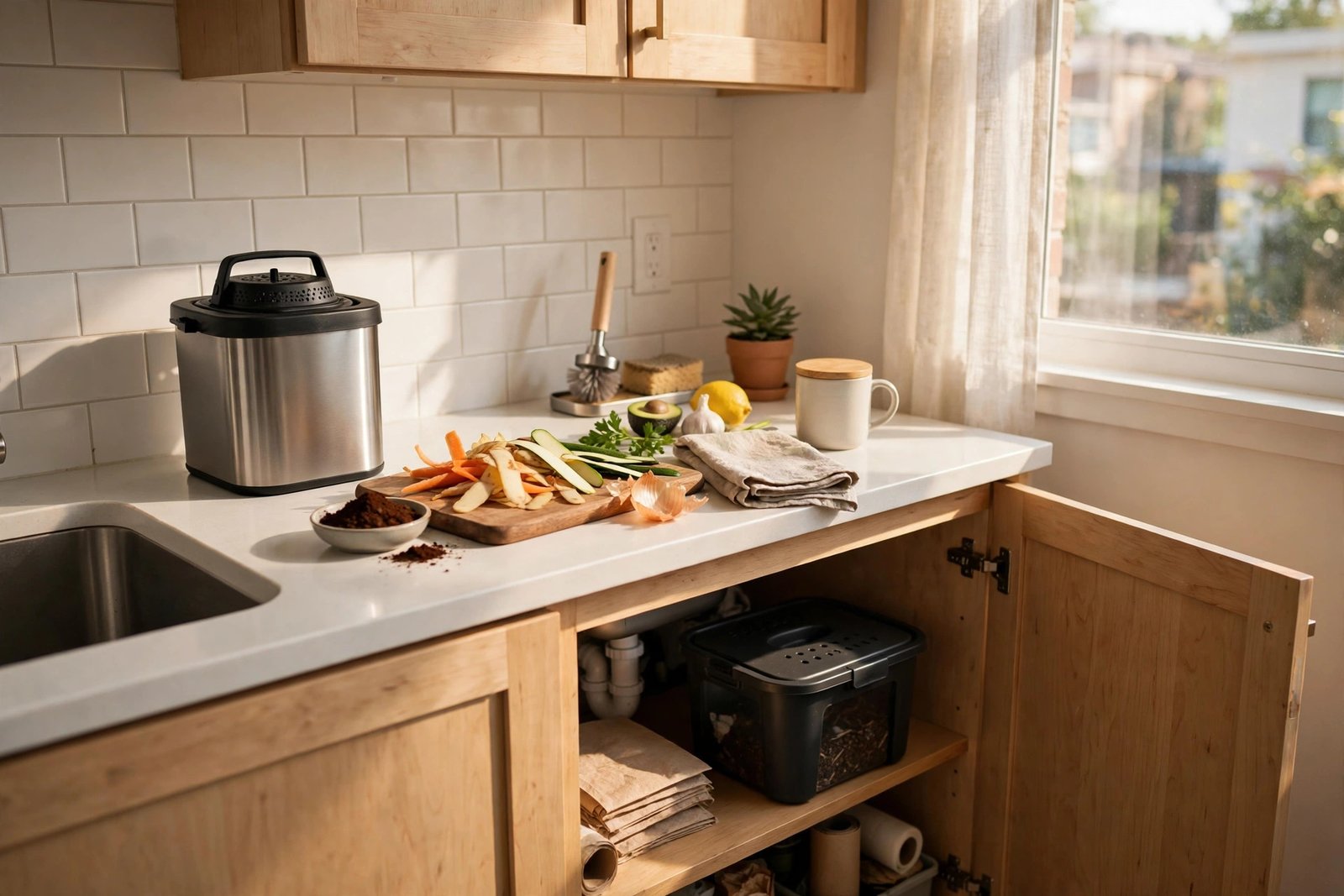
You do not need a backyard, a balcony, or even a windowsill garden to compost. If you live in an apartment with zero outdoor space, you can still turn your food scraps into rich, earthy compost right in your kitchen — without the smell, the mess, or the fruit-fly circus that most beginners fear.
Americans throw away roughly 30-40% of the food supply each year, and food waste is the single largest category of material sent to landfills, according to the EPA. When that food rots underground without oxygen, it releases methane — a greenhouse gas far more potent than carbon dioxide. Composting at home short-circuits that whole chain. This guide walks you through everything: which method fits your space, how to start this weekend, and what to do with the finished compost when you have no garden to feed.
Why Apartment Composting Works Even Without a Yard
The biggest misconception about composting is that it belongs outdoors in a big wooden bin. Modern small-space methods were designed specifically for apartments. A worm bin (vermicomposting) can live under your kitchen sink. A bokashi bucket sits in a cabinet. An electric composter looks like a sleek trash can and processes scraps in hours, not months.
Your motivation matters more than your square footage. A typical household generates 4-5 pounds of compostable scraps per week — coffee grounds, vegetable peels, eggshells, stale bread. Diverting that from the trash does three concrete things: it shrinks your garbage output noticeably (many apartment composters take out the trash half as often), it eliminates the sour smell of rotting food in your kitchen bin, and it keeps organic material out of landfills where it would generate methane. If you want a broader look at shrinking your household footprint, our guide on easy ways to be more eco-friendly at home covers composting alongside other high-impact habits.
The 3 Best Composting Methods for Small Spaces
Every apartment method works. The right one depends on your tolerance for worms, your budget, and how much effort you want to spend. Here is an honest comparison of the three systems that actually succeed in apartments.
Vermicomposting (Worm Bins)
A worm bin uses red wiggler worms to eat your scraps and produce castings — one of the richest natural fertilizers on earth. A bin the size of a storage tote fits under a sink or in a closet. Setup costs $40-80 for the bin, bedding, and a pound of worms. Done right, a worm bin has no smell at all; a healthy bin smells like fresh soil. You feed the worms 2-3 times per week, and they quietly process scraps into castings you harvest every 3-4 months. Worm castings also pair beautifully with starting a beginner garden.
Bokashi Fermentation
Bokashi is an anaerobic fermentation method from Japan. You layer food scraps in an airtight bucket with inoculated bran, press them down, and seal it. The microbes ferment the waste — including meat and dairy, which worm bins cannot handle. The bucket stays sealed, so odor is minimal (a slight pickle-like tang when you open it). After 10-14 days of fermenting, the pre-compost goes into a second bucket or a small soil bag to finish. Total footprint: two 5-gallon buckets that stack in a cabinet. Cost: $50-70 for a starter kit.
Electric Kitchen Composters
Devices like the Lomi or FoodCycler grind, heat, and dehydrate scraps overnight, reducing a bucket of food waste to a dry, odorless soil amendment. They are the easiest option by far — press a button and walk away — and they look like ordinary appliances. The downsides: cost ($300-500 upfront), electricity use, and the fact that the output is dehydrated food rather than true biologically active compost. It still makes an excellent soil amendment, but purists argue it lacks the microbial life of worm castings. If convenience is what will keep you composting consistently, this is your method.
What to Put In (and Keep Out)
The golden rule for apartment composting: when in doubt, leave it out. Greens (nitrogen-rich): fruit and vegetable scraps, coffee grounds and filters, tea bags (remove staples), fresh grass-free yard trimmings if you have a plant or two, and plain rice or bread. Browns (carbon-rich): shredded newspaper, cardboard egg cartons, paper towels (unbleached, chemical-free), dry leaves, and coconut coir.
Keep out: meat, dairy, and oils in worm bins (bokashi handles them); pet waste from cats or dogs; glossy or coated paper; anything labeled “compostable plastic” unless your system runs hot enough (most home systems do not — those plastics need industrial facilities); and diseased houseplant material. One contaminated batch can set you back weeks, so be conservative at first.
Killing the Smell Problem Before It Starts
Smell is the number-one fear, and it is almost entirely preventable. A properly maintained apartment compost system smells like nothing — or like forest soil. Odor comes from anaerobic (oxygen-starved) conditions, which happen when you add too many wet greens without enough dry browns, or when you let scraps sit in a sealed countertop container for days before feeding the bin.
Three habits prevent 95% of odor problems. First, always bury fresh scraps under dry bedding material. Second, chop scraps into small pieces — they break down faster and are less likely to rot anaerobically. Third, keep a small countertop container with a charcoal filter lid and empty it into your main system every 1-2 days rather than letting scraps stew. If your bin ever does develop a sour smell, the fix is boring and reliable: add a big handful of shredded newspaper and stop feeding for a few days. For general freshness strategies, see our tips on making your home smell nice without candles — the charcoal-filter trick works for kitchens too.
What to Do With Finished Compost When You Have No Garden
This is the question that stops most apartment dwellers before they start. The answer is simpler than you think. Options include: donating to a community garden (most accept finished compost gladly), gifting it to friends with plants, using it for your own houseplants (a top-dressing of worm castings twice a year transforms indoor plants), listing it free on local buy-nothing groups, or dropping it at a municipal compost collection site — many cities now accept finished compost at drop-off locations listed by the EPA’s home composting resources. For waste-reduction strategies beyond composting, see the EPA’s guide to reducing household waste.
Worm castings deserve special mention. A pound of castings diluted in water makes “compost tea” that houseplants love, and dry castings mixed into potting soil give your indoor jungle a slow-release nutrient source that synthetic fertilizers cannot match.
Common Mistakes That Doom Apartment Composters
Most failures follow the same script. Overfeeding is the classic: beginners dump every scrap into the bin daily, overwhelming the microbes or worms, and the system goes anaerobic and smelly. Feed modestly and increase only when scraps disappear quickly. Second: ignoring moisture. Your bin contents should feel like a wrung-out sponge — damp, not dripping. Too dry stalls decomposition; too wet invites odor. Third: wrong location. A worm bin next to a radiator or in a freezing garage-adjacent closet will kill your worms. Room temperature, out of direct sun, is perfect.
Conclusion
Composting in an apartment with no outdoor space is not a compromise version of “real” composting — for many households it is the most consistent, least smelly way to do it. Pick one method that fits your life: worms for the richest output, bokashi for maximum flexibility, or an electric composter for pure convenience. Start small this weekend with a countertop collection container, learn the greens-and-browns rhythm, and give your system a month to hit its stride. Within a season, you will be producing black gold from banana peels — and your trash can will have never been less gross. Your kitchen, your plants, and the planet all win.
Frequently Asked Questions
Will composting in my apartment attract fruit flies?
Not if you bury fresh scraps under dry bedding and empty your countertop container every day or two. Fruit flies breed on exposed rotting fruit, not inside a properly maintained bin. A layer of shredded newspaper on top is the simplest prevention.
How long does apartment composting take?
Worm bins produce harvestable castings in 3-4 months; bokashi ferments in 2 weeks plus 2-4 weeks of soil finishing; electric composters process a batch overnight. The timeline depends entirely on the method you choose.
Can I compost if my landlord prohibits it?
Most landlord rules target outdoor piles and balconies, not sealed indoor systems. A bokashi bucket or electric composter is invisible and odorless. Still, check your lease — and a worm bin under the sink rarely qualifies as the “composting” most leases envision.
Is a worm bin really odorless?
A healthy worm bin smells like damp earth, not garbage. Odor means something is wrong — usually too much food or too little bedding — and both are fixed in minutes with shredded newspaper.