
 By admin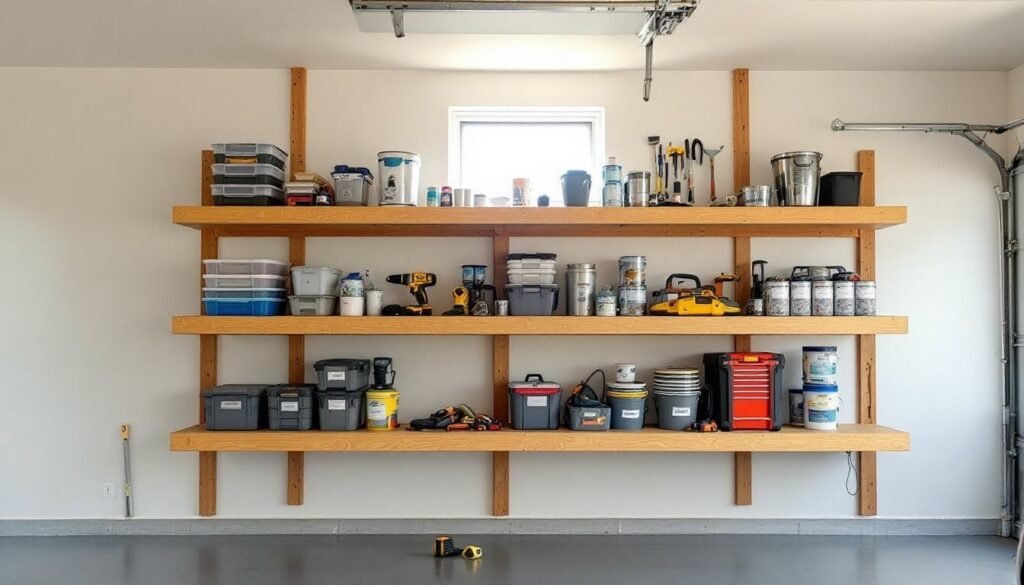
Every garage follows the same tragic arc: clean when you move in, then a slow descent into a maze of boxes, broken things, and mystery items you can’t reach. Organizing a garage feels overwhelming because you’re looking at the whole disaster at once. The secret — and the reason this works on a budget — is that garage organization is a sorting problem first and a storage-buying problem second.
Step 1: The Great Purge (Free)
Before buying a single bin, empty the garage. Yes, all of it — driveway, lawn, wherever it fits for a day. Then sort everything into four piles:
- Keep and use regularly (tools, sports gear, seasonal items in season)
- Keep but store (holiday decorations, camping gear, keepsakes)
- Donate/sell (the exercise bike, the third cooler, anything you haven’t touched in 2 years)
- Trash/recycle (dried paint, broken things you’ve been “meaning to fix,” mystery cables)
Be ruthless. Most garages are 30% stuff the owners don’t want. Removing it is free and instantly makes the space feel twice as big. For hazardous items (old paint, chemicals, batteries), check your city’s household hazardous waste drop-off — don’t trash them.
Step 2: Zone the Space (Free)
Divide the garage into zones based on how you actually live:
- Tools and workshop zone — near an outlet and workbench
- Sports and outdoor gear zone — near the door you use most
- Seasonal storage zone — the least accessible area (high shelves, back wall)
- Trash/recycling zone — near the garage door for easy curb trips
- Car zone — yes, actually leave room for the car. Mark it with tape on the floor so storage doesn’t creep back in.
Zoning prevents the #1 garage failure mode: putting things “wherever there’s space” until nothing is findable.
Step 3: Go Vertical — Walls and Ceiling (Cheap)
Garage floors are for cars and walking. Everything else goes up:
- Pegboard ($20–$30 per 4×8 sheet) for hand tools — outline each tool in marker so you know instantly what’s missing.
- Slatwall or track systems for heavier items — bikes, ladders, yard tools hang on hooks.
- Ceiling-mounted racks ($50–$100) for seasonal bins and camping gear — the most underused space in every garage.
- Shelving units — basic metal or heavy-duty plastic shelving ($40–$80 per unit) beats expensive “garage systems” for most people.
- Magnetic strips for small metal tools, drill bits, and fasteners.
The same vertical thinking transforms small kitchens — walls are free storage everywhere in the house.
Step 4: Bin Everything (Cheap but Strategic)
- Clear bins over opaque — you can see what’s inside without opening. Worth the small premium.
- One category per bin, labeled. “Christmas” is a category. “Miscellaneous garage stuff” is a junk drawer.
- Uniform bin sizes stack safely; random bins topple. Buy one size in bulk.
- Small parts organizers ($10–$15) for screws, nails, bolts — the little things that otherwise live in coffee cans.
Budget Breakdown: The $300 Garage Makeover
- 2 metal shelving units: $120
- Pegboard + hooks: $40
- 10 clear bins: $60
- Ceiling rack: $70
- Labels and misc: $10
That’s a genuinely transformed garage for $300 — less than one month of a storage unit rental, which is what disorganized garages eventually require.
Sports Gear and Bikes: The Space Hogs
Bikes eat floor space like nothing else. Wall-mounted bike hooks ($10–$15 each) or a ceiling hoist ($25) gets them up and out of the way. For balls and smaller gear, a large mesh bag or a tall laundry hamper contains the chaos. Golf clubs, skis, and fishing rods all have $15–$25 wall racks that beat leaning them in corners.
Maintain It: The 10-Minute Rule
Organization decays without maintenance. The fix is boring: everything has a labeled home, and anything that comes out goes back the same day. Do a 10-minute reset weekly — put strays back, break down boxes, sweep. It’s the difference between a garage that stays organized and one that needs this whole project again in two years.
If you’re on a whole-home organization kick, the same zone-and-vertical approach works in the laundry room too.
Garage Safety Basics (Do This During the Purge)
While everything’s out of the garage, handle the safety items that hide in the chaos:
- Chemical storage: paint, pesticides, automotive fluids, and solvents must be off the floor, sealed, labeled, and out of children’s reach — on high shelves or in a locking cabinet. Dispose of anything expired or unlabeled at hazardous waste collection.
- Fire extinguisher: every garage needs an ABC-rated extinguisher mounted near the door (not buried behind boxes). Check the gauge annually; replace every 10–12 years.
- Clear the electrical panel: code requires 3 feet of clear space in front of breaker boxes. The boxes stacked there have to go — permanently.
- Secure heavy items: anything that could fall on a person or a car (bikes on hooks, lumber racks, overhead storage) needs proper mounting into studs or joists — not drywall anchors.
- Carbon monoxide awareness: never run a car in a closed garage, even “just for a minute.” If the garage is attached, make sure the CO detector inside the house near the garage door works.
- Lighting: a dark garage is a tripping hazard. A bright LED shop light ($30) over the work area and motion-sensor lights at the entry prevent most garage injuries.
The Annual Garage Reset
Even organized garages drift. Once a year (spring is ideal), do a 2-hour reset: pull everything out of one zone at a time, purge what’s accumulated, re-label faded labels, check that ceiling racks are still secure, and sweep. Two hours annually prevents the slow slide back to chaos — and it’s dramatically easier than the initial full-day purge. Put it on the calendar like an oil change: maintenance, not emergency.
During your purge, handle old paint, pesticides, and automotive fluids per the EPA’s household hazardous waste guidance — most cities offer free drop-off days a few times a year.
The Bottom Line
How to organize a garage on a budget: purge ruthlessly first (free), zone the space by use, move everything vertical with pegboard/shelving/ceiling racks, bin by category with labels, and hang the bikes. About $300 and one hard weekend gets you a garage where you can find everything and — radical concept — park the car. The maintenance is just putting things back where they live.