
 By admin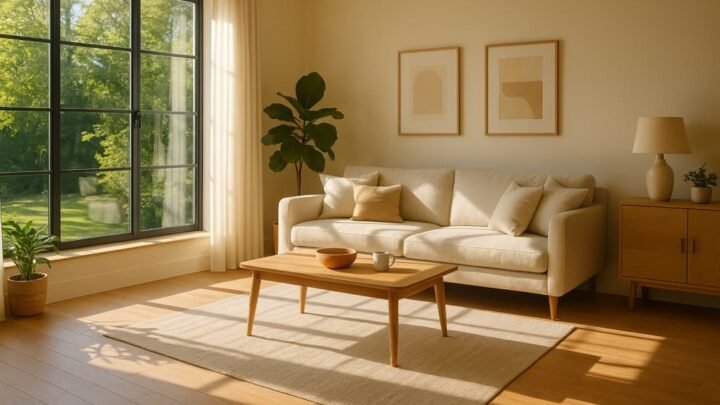
Some rooms just feel heavy. You walk in and the gloom hits you — dark corners, artificial light doing all the work, that cave feeling that makes you avoid the space. Natural light changes everything: it lifts mood, makes rooms feel larger, and even affects sleep quality. But what if your dark room has small windows, faces north, or sits under a porch roof? You can’t add a window everywhere — but you can absolutely create more natural light in a dark room with the right strategies.
1. Maximize What the Windows Give You
Before anything else, make sure you’re getting 100% of the light your windows offer:
- Clean the windows — inside and out. Dirty glass blocks a shocking amount of light.
- Remove or trim exterior obstructions: overgrown bushes, low branches, and awnings that block light. Sometimes the fix is outside.
- Ditch heavy curtains. Replace light-blocking drapes with sheer or semi-sheer panels that diffuse light while maintaining privacy. If you need blackout for sleep, use a double rod — sheers for day, blackout for night.
- Raise the curtain rod to near the ceiling and extend it beyond the window frame — this exposes the full glass instead of covering the edges.
- Remove window screens if you don’t need them — screens filter out a surprising amount of light. (Keep them where bugs are an issue.)
2. Bounce Light With Mirrors and Reflective Surfaces
This is the highest-impact trick for dark rooms:
- Mirror opposite or adjacent to windows — it doubles the perceived light and the perceived window. A large mirror here is worth more than any lamp.
- Mirrored or glass furniture — a glass coffee table, mirrored console, or metallic accents bounce light around instead of absorbing it.
- Glossy finishes: satin or semi-gloss paint reflects significantly more light than flat. Light-colored glossy surfaces are light multipliers.
- Light-colored floors or rugs: dark floors absorb light; a light area rug over dark flooring brightens the whole room.
3. Choose Light-Amplifying Colors
Paint is the cheapest light renovation there is:
- Light, warm whites on walls and — critically — the ceiling. A bright white ceiling is the single most effective painted surface for bouncing light downward.
- Paint the trim and doors the same light color as walls to eliminate shadow lines that chop up the room.
- Avoid dark accent walls in already-dark rooms — they absorb the little light you have. Save the moody colors for rooms with light to spare.
Our guide to paint colors for small rooms covers the specific shades that maximize brightness.
4. Rethink the Layout
- Keep the window wall clear. Tall furniture in front of windows blocks light deep into the room. Low-profile pieces near windows let light travel.
- Open the floor plan visually: remove unnecessary doors, widen cased openings, or replace a solid door with one that has glass panels — borrowed light from brighter adjacent rooms counts.
- Cut interior transoms or add a skylight for the bigger projects — a solar tube skylight ($500–$1,000 installed) pipes real daylight into windowless spaces like interior bathrooms and hallways with no structural drama.
5. Supplement Smartly (When Natural Isn’t Enough)
Sometimes you’ve maxed out the natural light and need help. The key: mimic daylight.
- Daylight-temperature bulbs (5000K) in dark rooms — they read as natural light to your brain, unlike warm bulbs that emphasize the gloom. Our light bulb guide has the full breakdown.
- Layer lighting: overhead + task + accent, so no corner sits dark. Dark corners make the whole room feel darker.
- Light therapy lamps ($30–$60) for rooms where you spend mornings — they genuinely help with mood and energy in dark spaces.
- Uplighting: floor lamps that bounce light off a white ceiling simulate the diffuse quality of daylight better than downlights.
6. The Bigger Moves (When You’re Ready)
- Enlarge windows — expensive ($1,000–$3,000+ per window) but transformative for chronically dark rooms.
- Glass-paneled interior doors borrow light between rooms.
- Skylights or solar tubes for top-floor dark rooms — nothing beats actual sky.
- Trim exterior trees strategically — sometimes one branch is the whole problem.
Dark Rooms That Work: Embracing the Cozy Instead
Here’s the contrarian option: not every dark room needs to be brightened. Some of the most beloved rooms in design are intentionally dark — libraries, home theaters, moody bedrooms, intimate dining rooms. If a room resists brightening (basement, north-facing, tiny windows), consider leaning in:
- Go dark deliberately: deep navy, forest green, or charcoal on all walls (including ceiling) makes a dark room feel intentional and cocoon-like instead of accidentally gloomy. Dark rooms feel smaller when half-hearted; they feel luxurious when committed.
- Layer warm artificial light: 2700K lamps at multiple heights — table lamps, floor lamps, sconces. Warm pools of light in a dark room feel like a high-end restaurant, not a cave.
- Assign the room a dark-friendly purpose: home theater, reading nook, wine bar, meditation space. These want low light.
- Rich textures: velvet, wood, leather, and wool look better in low light than bright — shadows add depth that flat bright light washes out.
The rule: brighten or commit — don’t linger in between. A half-brightened dark room (pale walls, inadequate light) is the worst of both worlds: it looks like a failed bright room. Either flood it with light using the strategies above, or embrace the darkness with intention. Both are valid design choices; only the middle ground is a mistake.
Solar Tubes: The Secret Weapon for Dark Spaces
If you have a windowless bathroom, dark hallway, or interior room, look into solar tubes (SunTunnel and similar): a small dome on the roof captures daylight and pipes it down a reflective tube to a ceiling diffuser. They cost $500–$1,000 installed — a fraction of a skylight — need no structural changes, install in half a day, and deliver genuine daylight (not a bulb’s approximation). For top-floor dark rooms, it’s the closest thing to adding a window without adding a window.
The Energy Department’s daylighting guide covers skylights, solar tubes, and window strategies in technical depth if you want to go beyond these room-level tricks.
The Bottom Line
How to create more natural light in a dark room: clean and unblock the windows, swap heavy curtains for sheers, add mirrors opposite windows, paint everything light (especially the ceiling), keep furniture low near windows, and supplement with daylight-temperature layered lighting. Most dark rooms aren’t actually lightless — they’re just light-blocked. Free the light that’s already trying to get in, and the room transforms.