
 By admin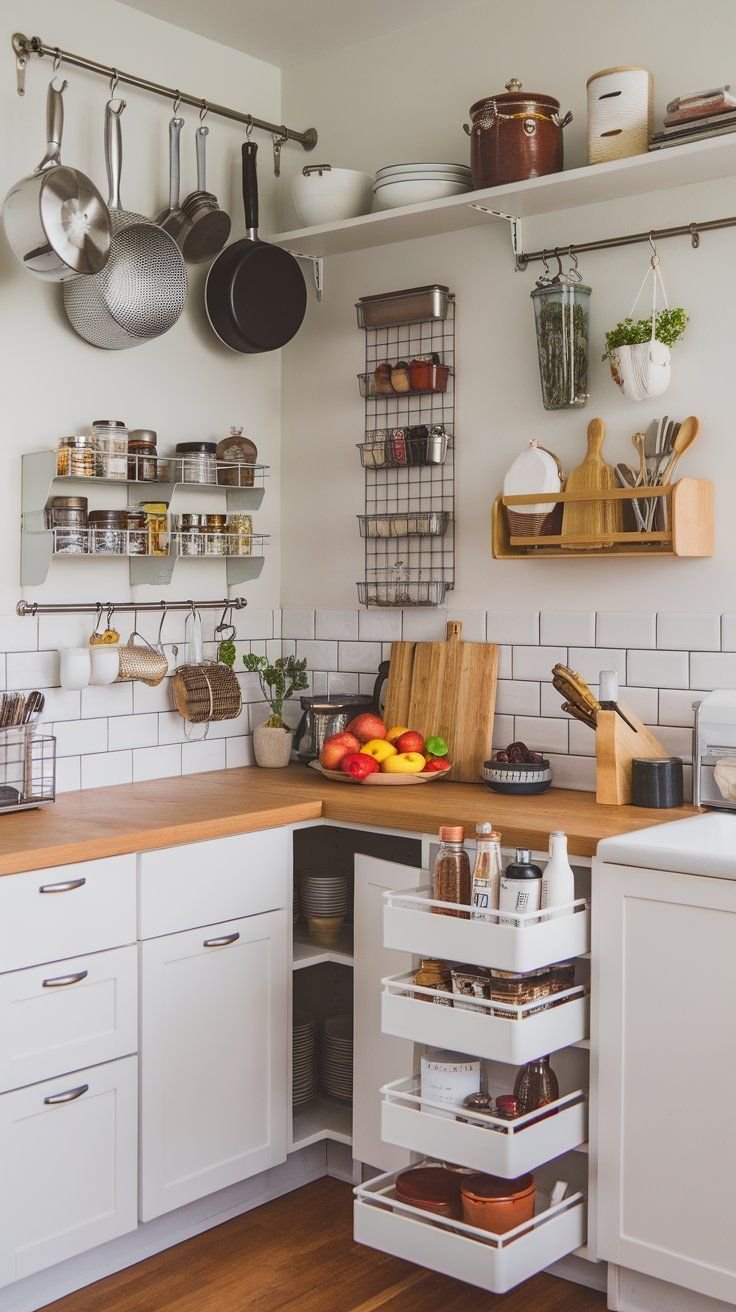
Small kitchens have a storage problem that no amount of “just declutter” advice solves. You still need pots, pans, dishes, spices, and food — they have to go somewhere. The trick isn’t owning less (though that helps). It’s using the space you have about three times more efficiently than you are right now.
Here’s how to add storage to a small kitchen without knocking down walls or spending a fortune.
Start With the Audit
Before buying a single organizer, pull everything out of one cabinet and be honest: how much of this do you actually use? The bread maker from 2019, the third set of mixing bowls, the novelty mugs — small kitchens can’t afford passengers. Donate or relocate the rarely-used stuff first. Every organizer you buy works twice as well in a cabinet that isn’t stuffed.
Use the Full Height of Your Cabinets
Most kitchen cabinets waste their vertical space. The area above your stacked plates? Dead air. Fix it:
- Shelf risers ($10–15) instantly double the usable levels inside a cabinet — mugs below, bowls above.
- Under-shelf baskets hook onto existing shelves for extra storage of wraps, small items, or spices.
- Stackable can racks turn a deep cabinet into an organized pantry for canned goods.
- Tension rods mounted vertically inside a cabinet create dividers for cutting boards and baking sheets.
Claim the Inside of Cabinet Doors
The inside of every cabinet door is free real estate:
- Over-the-door racks for spices, wraps, or cleaning supplies.
- Adhesive hooks for measuring cups and spoons.
- A mounted paper towel holder inside the under-sink cabinet door.
- A corkboard or whiteboard for the shopping list.
Go Vertical on the Walls
When cabinets are full, the walls are next:
- A pegboard (painted to match your kitchen) holds pots, pans, and utensils on what was dead wall space. Julia Child famously used one.
- Magnetic knife strips free up an entire counter or drawer that a knife block was eating.
- Floating shelves for everyday dishes and glasses — keep them tidy and they look intentional, not cluttered.
- A rail system (like IKEA’s KUNGSFORS) with S-hooks for utensils, small baskets, and even a tablet holder for recipes.
Fix the Worst Offenders: Corners and Deep Cabinets
Corner cabinets and deep lower cabinets are where kitchen items go to die. Rescue them:
- Pull-out organizers ($30–$80) convert deep cabinets into drawers that bring everything to you. This is the single highest-impact upgrade for lower cabinets.
- Lazy Susans for corner cabinets — the two-tier versions use vertical space too.
- Pull-down shelving for high cabinets if you can’t comfortably reach the top shelf.
Steal Space From Unexpected Places
- Above the fridge: that gap is perfect for a shallow basket with rarely-used items (holiday platters, the waffle iron).
- The side of the fridge: magnetic spice racks and wrap holders stick right on.
- Above the sink window: a small shelf for plants or everyday glasses.
- The toe-kick: shallow drawers that fit under base cabinets — perfect for baking sheets and flat pans.
- A rolling cart (narrow ones are ~8 inches wide) slides into the gap beside the fridge or stove for spices and oils.
Drawer Strategy
Deep drawers beat cabinets for accessibility — you see everything at once. If you’re doing any cabinet updating, consider converting lower cabinets to deep drawers; it’s the most-requested feature in kitchen remodels for a reason. In the meantime, drawer dividers and in-drawer knife blocks maximize what you have.
What About the Pantry?
No pantry? Create one. A tall, narrow bookcase in a nearby hallway or dining area, fitted with baskets and labeled jars, functions perfectly as a pantry. Over-the-door pantry organizers ($20–30) turn any closet door into serious storage. The goal is getting food out of the prime cabinet space so cookware can live where you actually cook.
For keeping that food fresh once it’s stored, our guide to keeping vegetables fresh longer pairs well with an organized pantry system.
The $50 Small Kitchen Storage Starter Kit
If you buy nothing else, these five items transform a small kitchen for about $50 total:
- 2 shelf risers ($20): put one in the plate cabinet and one in the mug cabinet. Instant double-decker storage where you need it most.
- Under-shelf basket 2-pack ($12): hooks onto an existing shelf for wraps, small boxes, or spice packets — uses air that was doing nothing.
- Over-the-cabinet-door organizer ($10): mounts on the inside of the under-sink door for sponges, brushes, and trash bags. Frees the precious cabinet floor.
- Magnetic knife strip ($8): mounts on the wall or inside a cabinet door, eliminates the knife block from the counter.
That’s it — $50, one Amazon order or one store trip, an hour of setup. These four items address the four worst space-wasters in small kitchens: dead vertical cabinet air, unused door interiors, counter-hogging knife blocks, and under-sink chaos. Everything else in this guide is optimization; this kit is the foundation. Start here, live with it for two weeks, then decide what else you actually need — you’ll buy less and use more of what you buy.
Maintaining It: The One-In-One-Out Rule
Small kitchens re-clutter fast. The defense: one in, one out. New gadget arrives? An old one leaves. It’s the only rule that permanently holds the line, because kitchen clutter isn’t a storage problem — it’s an accumulation problem. Do a 5-minute reset nightly (everything back in its home) and a 15-minute purge monthly. Organized once is a project; organized permanently is a habit.
One more high-impact move: replace a standard faucet with a pull-down model that has a built-in soap dispenser — it clears two bottles off the counter and the sink area instantly feels larger. Small kitchens are won at the margins: every item that lives in a cabinet instead of on the counter makes the room feel bigger and work better.
For more small-space inspiration, browse This Old House’s kitchen organization ideas — their before-and-after kitchen storage projects show these principles in real homes.
The Bottom Line
How to add storage to a small kitchen: audit and declutter first, then use full cabinet height with risers and under-shelf baskets, claim door interiors, go vertical with pegboards and rails, fix deep cabinets with pull-outs, and steal forgotten spaces like the fridge sides and toe-kicks. None of these require a contractor. Most cost under $50. And the cumulative effect is a kitchen that finally has a place for everything — which, in a small space, feels like gaining a whole new room.
[…] same vertical thinking transforms small kitchens — walls are free storage everywhere in the […]