
 By admin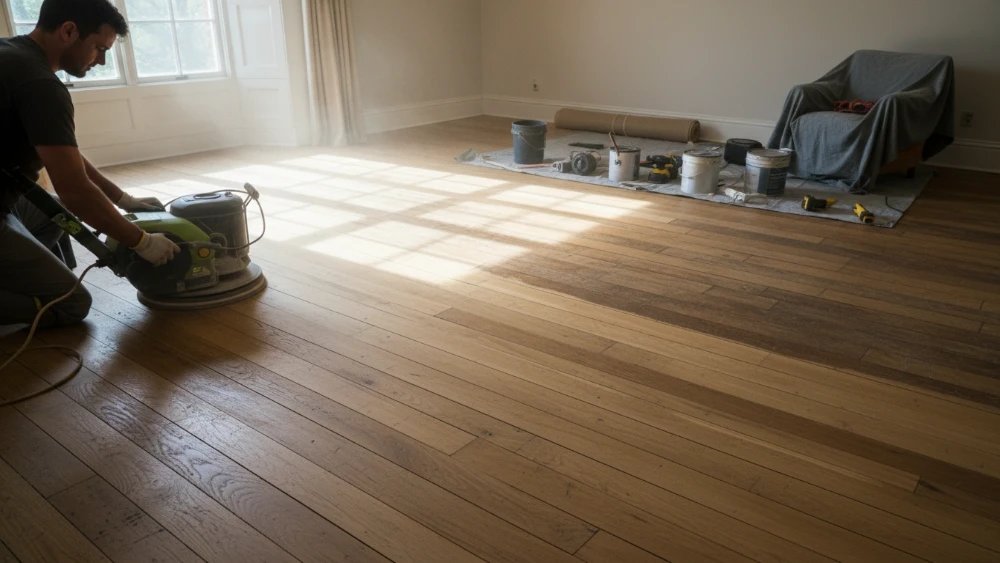
Your hardwood floors have seen better decades. They’re scratched, dull, maybe a little gray in the high-traffic lanes — and you’re standing there wondering whether to refinish or replace them. It’s one of the most common homeowner dilemmas, and the answer matters because the price difference is thousands of dollars.
Here’s the honest breakdown of when refinishing wins, when replacement is the smarter move, and what each actually costs.
Refinishing vs. Replacing: The Quick Comparison
| Refinishing | Replacing | |
|---|---|---|
| Cost | $3–$8 per sq ft ($1,500–$4,000 for 500 sq ft) | $8–$15+ per sq ft ($4,000–$8,000+ for 500 sq ft) |
| Timeline | 2–5 days | 1–2 weeks |
| Disruption | Dust and fumes; stay elsewhere ideally | Major; furniture out, possible subfloor work |
| Result | Like-new surface, same wood | Brand-new floor, your choice of material |
When Refinishing Is the Right Call
Refinishing wins in most cases. If your floors are solid hardwood with surface-level damage — scratches, dull finish, minor discoloration, worn traffic patterns — sanding and refinishing makes them look genuinely new. You’re removing the damaged top layer and applying fresh stain and protective finish.
Refinish when:
- The damage is surface-level: scratches, scuffs, dullness, light water marks.
- The floor is solid hardwood (not laminate or thin engineered wood) with enough thickness left for sanding.
- Boards are flat and stable — no warping, cupping, or movement underfoot.
- You like the wood species and just want it refreshed — or want to change the stain color, which refinishing handles easily.
- Budget matters — refinishing costs roughly half of replacement.
A quality refinish lasts 7–10 years before needing attention again, and solid hardwood can typically be refinished 4–6 times over its life. That’s potentially a century of floor.
When Replacement Makes More Sense
Sometimes the floor is past saving. Replace when:
- There’s structural damage: warped, buckled, or cupped boards from water damage, or soft/spongy spots indicating rot.
- The floor has been sanded too many times — if the tongue-and-groove is nearly exposed or nails are visible, there’s nothing left to sand.
- It’s laminate or thin engineered wood — these can’t be refinished, period. (This surprises a lot of homeowners.)
- You have pet damage deep into the wood — surface scratches refinish fine, but urine that’s penetrated deep leaves stains sanding can’t remove.
- You want a completely different material — switching to wide-plank oak, for example.
The “Worth It” Math
Here’s how I think about “is it worth it”: refinishing typically returns excellent value because hardwood floors are a top selling feature. The National Association of Realtors has consistently found hardwood refinishing among the highest-ROI interior projects. If your floors are solid wood and structurally sound, refinishing is almost always worth it — it’s cheaper, faster, less wasteful, and the result looks new.
Replacement is worth it when the floor is genuinely failing or when you’re already doing a major renovation where the incremental disruption is minimal. Don’t replace solid, refinishable hardwood just for a trend — you’ll spend $6,000 to get what $2,500 of refinishing would have delivered.
DIY or Hire Out?
Sanding floors is rentable-DIY-able but genuinely difficult to do well — drum sanders gouge floors in inexperienced hands, and the dust is brutal. Most homeowners are happier hiring this one out at $3–$8 per sq ft. If you’re determined to DIY, practice on a closet first, and budget for the learning curve. For simpler projects to build your skills, start with our easy DIY projects for beginners.
One related fix worth knowing: if your floors are structurally fine but squeaky, that’s often a separate, much cheaper repair than refinishing.
Choosing a Finish
If you refinish, you’ll choose between oil-based polyurethane (rich amber tone, strong fumes, longer cure time) and water-based polyurethane (clear, low odor, faster drying, slightly less rich). For most homes today, water-based is the better pick — you can sleep in the house sooner and the clear finish shows the wood’s true color. Go with at least three coats for durability.
What Refinishing Actually Involves: Day by Day
If you’ve never lived through a refinish, here’s the realistic timeline so you can plan:
- Day 1 — Sanding. The crew sands with progressively finer grits (typically 36 → 60 → 100). This is the loud, dusty day — even with dust containment systems, fine dust gets everywhere. Plan to be out of the house.
- Day 2 — Stain (optional) + first coat. If you’re changing color, stain goes on first. Then the first coat of polyurethane. The house smells strongly (less so with water-based finishes).
- Day 3 — Second coat. Light buffing between coats, then the second coat of finish.
- Day 4 — Third coat + cure begins. Final coat goes on. You can walk on it in socks after 24 hours, but no furniture for 3–5 days and no rugs for 2–4 weeks while the finish fully hardens.
Practical tips: move all furniture out (pros charge extra if they do it); remove wall hangings near the floor (vibration); plan to sleep elsewhere for 2–3 nights if using oil-based finish; and keep pets completely away until fully cured — paw prints in fresh polyurethane are permanent. Water-based finishes cut the odor and cure time significantly, which is why most pros recommend them now despite the slightly higher material cost.
Changing Color During Refinishing
Refinishing is your chance to change the stain color entirely — honey oak to modern gray-brown, for example. The sanding removes the old color completely, so you’re starting from bare wood. Test stain samples on the actual floor (in a closet) before committing; stain looks dramatically different on your wood, in your light, than on the sample board. Going darker is easy; going significantly lighter may require bleaching, which adds cost and complexity.
For species hardness ratings and finish durability data, the National Wood Flooring Association publishes the industry’s reference guides — useful when deciding whether your floors are worth saving.
The Bottom Line
Is it worth refinishing hardwood floors or replacing them? If the wood is solid and the damage is on the surface, refinish — it’s half the cost, takes days not weeks, and the results look new. Replace only when there’s structural damage, the floor can’t be sanded again, or it’s laminate masquerading as hardwood. When in doubt, have a flooring pro assess the thickness and condition; most will tell you honestly which route makes sense, because they’d rather earn your refinishing job than lose you to sticker shock.
[…] not annoyance issues. And if the floors are beyond what squeak repair can address, our guide to refinishing vs. replacing hardwood floors covers the bigger […]