
 By admin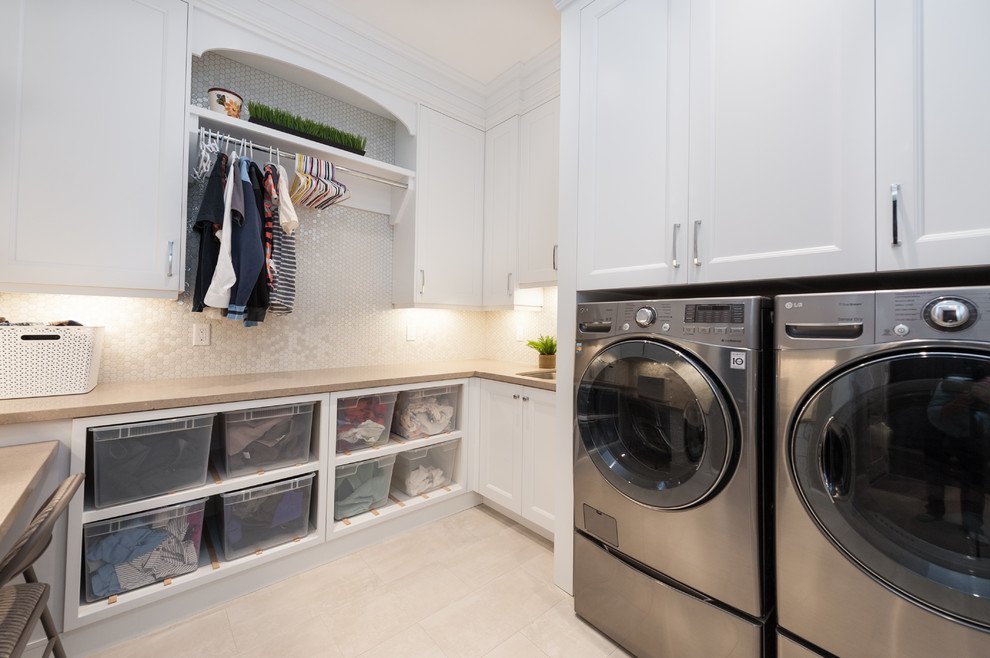
The laundry room is the most neglected room in the house. It’s where appliances go to be ignored — bad lighting, no counter space, detergent balanced on top of the dryer, and a floor that’s seen things. But you spend hours there every week, and a few smart changes can make your laundry room genuinely functional instead of merely tolerable.
Start With the Layout Basics
Function in a laundry room comes down to workflow: sort → wash → dry → fold → put away. Every step should have a dedicated spot within arm’s reach.
- Sorting: A triple-sorter hamper (lights/darks/delicates) means clothes arrive pre-sorted. No more digging through a mountain.
- Washing: Detergent, stain remover, and dryer sheets live on a shelf or in a cabinet directly above or beside the washer — not across the room.
- Drying: A wall-mounted drying rack or retractable clothesline for delicates, plus easy dryer access.
- Folding: This is the #1 missing piece in most laundry rooms. A counter over front-load machines, a wall-mounted drop-down table, or even a sturdy shelf at counter height changes everything.
Add a Folding Surface (Why the Counter Matters Most)
If you have front-loading machines, a countertop across the top is the single best upgrade — butcher block, laminate, or even a sheet of plywood with edge banding. Suddenly you have a real folding station. For top-loaders, a wall-mounted fold-down table ($40–$80) gives you the surface only when you need it.
Go Vertical: Walls and Doors
Laundry rooms are usually small, so vertical storage is everything:
- Cabinets or open shelving above the machines for detergent, stain treatments, and cleaning supplies. Open shelves are cheaper and make it easy to see what you have.
- A pegboard for lint rollers, small tools, and mesh laundry bags.
- Over-the-door organizers for ironing supplies, spray bottles, and sewing kits.
- A wall-mounted ironing board cabinet — folds flat against the wall, frees up floor space permanently.
Solve the Drying Problem
Delicates, activewear, and anything that shouldn’t see a dryer need a home:
- Retractable wall-mounted clotheslines ($20–$30) — pull out when needed, vanish when not.
- Wall-mounted accordion drying racks — fold flat, hold a full load of delicates.
- A hanging rod above the counter for hang-dry shirts straight from the washer.
Lighting and Flooring
Most laundry rooms have one sad overhead bulb. Add a bright LED fixture (4000K — you want to see stains accurately) and the room instantly feels more usable. If the room has no window, good lighting matters even more.
For flooring, laundry rooms need water resistance — a burst hose is a when-not-if event. Luxury vinyl plank or tile handles it; if you have other flooring, at least put a water alarm ($10) behind the washer. It’s the cheapest insurance in the house.
The Deep-Clean and Maintenance Corner
A functional laundry room often doubles as the cleaning hub:
- A utility sink if you have space and plumbing access — for hand-washing, soaking stains, and filling mop buckets. It’s the most-requested laundry room feature for a reason.
- A broom/mop holder mounted on the wall keeps cleaning tools off the floor.
- A small trash bin for lint, dryer sheets, and pocket treasures.
Make It Pleasant (You’ll Spend Time Here)
This sounds frivolous, but it matters: paint the walls a color you like, add a washable rug, put up a small piece of art. A laundry room that doesn’t feel like a dungeon makes the chore measurably less miserable. Good lighting choices and a $30 gallon of paint are the cheapest mood upgrade in the house.
If your laundry area is part of a larger organization project, the same principles apply to organizing a garage on a budget — zones, vertical storage, and everything having a home.
Laundry Closets (Not Rooms): The Same Ideas, Smaller
Many homes don’t have a laundry room — just a closet with stacked machines. Every principle still applies, compressed:
- Above the machines: a single shelf for detergent and supplies. In a closet, this is your only storage — make it count with small bins so nothing gets lost in the back.
- The door is your wall: over-the-door organizers on the closet doors hold ironing supplies, stain sticks, dryer sheets, and the sewing kit. Bi-fold doors can each hold a narrow organizer.
- Pull-out folding surface: a fold-down table mounted to the wall beside the closet, or a countertop that slides over the machines when the doors are open. Even a sturdy TV tray stored in the closet beats folding on the bed.
- Rolling cart in the gap: the 8-inch rolling cart fits between the washer and the wall — detergent, dryer sheets, and stain remover exactly where you need them.
- Retractable clothesline inside: mount it wall-to-wall inside the closet for delicates. It disappears when not in use.
- Lighting: closet laundry areas are notoriously dark. A $15 battery-powered LED motion light inside the closet changes everything — it turns on when you open the doors.
- Sorting: a hanging triple-sorter bag on the back of the closet door replaces the hamper entirely.
The closet version won’t have a utility sink or acres of counter — but with vertical thinking, it can be just as functional per square foot as a dedicated room.
The Laundry Room Audit (Do This First)
Before buying organizers, track one week of laundry reality: how many loads, what piles up (clean clothes waiting to fold? sorting chaos?), and where the friction is. Most people discover their problem isn’t storage — it’s workflow. The family that never folds needs a folding station, not more shelves. The one drowning in delicates needs drying space, not bins. Audit first, buy second, and you’ll spend half as much solving the actual problem.
Pair your layout upgrades with the Energy Department’s laundry efficiency tips — washing in cold water and cleaning the dryer vent cut both energy bills and drying time.
The Bottom Line
How to make your laundry room more functional: design around the sort-wash-dry-fold workflow, add a folding surface, go vertical with shelving and pegboards, solve air-drying with wall-mounted racks, upgrade the lighting, and make it pleasant enough that you don’t dread going in. None of this requires a remodel — a weekend and a few hundred dollars turns the most ignored room in the house into one of the hardest-working.