
 By admin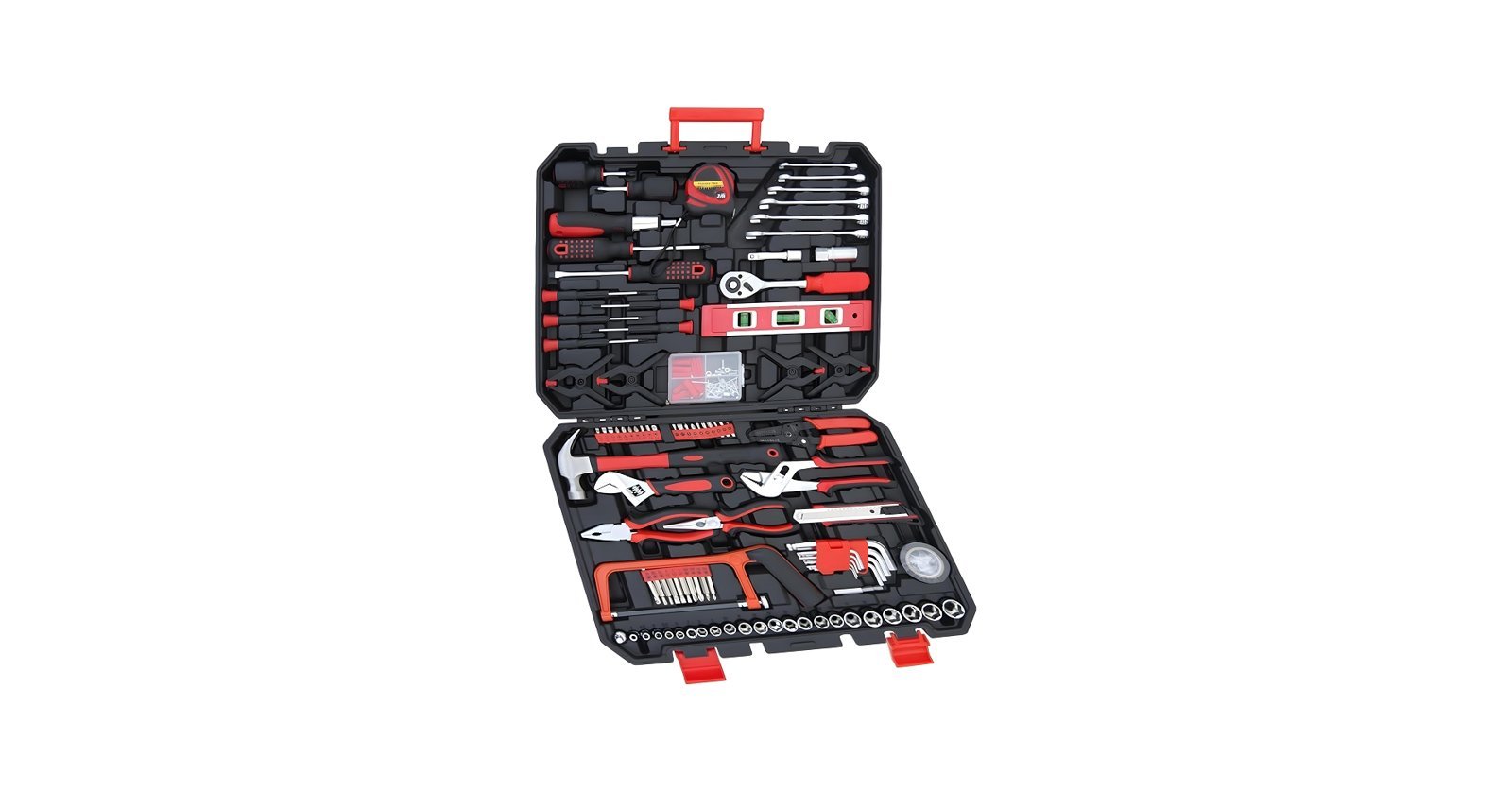
Every homeowner has the same origin story: something breaks at 9 PM, you own nothing but a butter knife and optimism, and you pay $150 for a repair that needed a $12 tool. Building a basic toolkit before you need it is one of the smartest investments in homeownership. But walk into a tool aisle and the options are paralyzing — so here’s exactly what tools every homeowner needs, nothing more, in the order you should buy them.
Tier 1: The Essentials (Buy These First)
These handle the vast majority of household tasks. Total cost: $100–$150.
- Cordless drill/driver (12V or 20V). The single most useful tool you can own. Drives screws, drills holes, assembles furniture, hangs everything. A 12V model handles 95% of homeowner tasks and is lighter; 20V if you want more power. Buy into a battery platform (DeWalt, Milwaukee, Ryobi) since you’ll add tools later.
- Tape measure (25 ft). Self-explanatory, non-negotiable.
- Hammer (16 oz). Curved claw for pulling nails.
- Screwdriver set. At minimum: #2 Phillips, flathead, and a set of precision drivers for electronics and eyeglasses.
- Adjustable wrench (10″). Covers most nuts and bolts without a full wrench set.
- Pliers set: slip-joint pliers and needle-nose. You’ll reach for these constantly.
- Level (24″ or torpedo). For hanging shelves, pictures, curtain rods — anything that shouldn’t be crooked.
- Utility knife. With extra blades. Opens boxes, cuts everything, scores drywall.
- Stud finder. The $15 electronic kind. Essential before drilling into walls.
Tier 2: The Problem-Solvers (Buy As Needed)
These pay for themselves the first time you use them instead of calling someone. Total: $100–$200 as you accumulate.
- Plunger (both types). A cup plunger for sinks, a flange plunger for toilets. Every home needs both before the emergency, not after.
- Plumber’s wrench / basin wrench. For the faucet repair you’ll eventually do — see our guide to fixing a leaky faucet.
- Hex key / Allen wrench set. Furniture assembly, bike repairs, faucet handles — they hide everywhere.
- Putty knife set. For spackling, scraping, and caulking.
- Caulk gun. A $10 dripless model. You’ll use it for bathrooms, windows, and trim.
- Voltage tester (non-contact). Before touching any electrical work. $15 that prevents genuinely dangerous mistakes.
- Headlamp. Under sinks, in attics, behind appliances — you need both hands and light simultaneously more than you’d think.
- Step ladder (4–6 ft). Not a chair. Chairs are how ER visits happen.
Tier 3: The Project Tools (Buy Per Project)
Don’t buy these until a project demands them:
- Circular saw — for cutting lumber and plywood. The gateway to real carpentry.
- Random orbit sander — for refinishing furniture, prepping paint, smoothing everything.
- Wet/dry shop vacuum — for renovations, car cleaning, and every mess a regular vacuum can’t handle.
- Pipe wrench — for serious plumbing beyond faucet washers.
- Multimeter — when the voltage tester says “something’s wrong” and you need details.
Safety Gear (Not Optional)
- Safety glasses. Wear them for drilling, sawing, sanding, and anything overhead. Eye injuries are the most common DIY injury and the most preventable.
- Work gloves. A decent general-purpose pair.
- Dust masks/respirator. Basic masks for sanding; a real respirator with P100 filters for anything involving old paint, insulation, or heavy dust.
- Hearing protection. For sustained power tool use.
What NOT to Buy (Yet)
Beginners consistently overbuy: full socket sets (you’ll use three sockets), specialty tile saws, expensive miter saws, and anything “pro grade” before you’ve done the project that needs it. Buy tools for the project in front of you, not the workshop of your dreams. Our easy DIY projects for beginners are all doable with Tier 1 tools only — that’s deliberate.
Where to Buy and How to Save
- Stick to one battery platform for cordless tools — bare tools (no battery) are dramatically cheaper once you own batteries and a charger.
- Buy refurbished from manufacturer outlets for 30–50% off — power tools refurbish well.
- Holiday sales (Father’s Day, Black Friday) are when tool deals peak.
- Borrow or rent the expensive single-use tools — a tile saw you’ll use once belongs at the rental counter, not in your garage.
For project-specific safety guidance, OSHA’s homeowner resources and tool manufacturers’ safety sheets are worth reading before your first big project.
Tool Storage That Actually Works
Tools scattered across the house are tools you can’t find when you need them. You don’t need a fancy workshop — you need one home for everything:
- A 5-gallon bucket with a tool organizer sleeve ($20 total) is the best starter system — portable, cheap, holds the Tier 1 essentials, and goes wherever the project is. Professionals use these for a reason.
- A small tool bag or box for the next step up — look for one with a rigid opening that stays open while you work.
- Pegboard for the garage or utility room once your collection grows — visibility means you’ll actually use what you own instead of rebuying it.
- The “one home” rule: every tool lives in exactly one spot, and returns there after use. This single habit saves more time than any organizational product.
- Keep the emergency subset accessible: plunger, flashlight, adjustable wrench, and the breaker-box key where you can grab them in the dark. Not buried in the garage behind the holiday decorations.
Resist the giant rolling tool chest until you have enough tools to fill it — an empty 52-inch chest is a monument to aspirations, not organization. Grow the storage with the collection.
Borrow vs. Buy: The Smart Rule
Buy tools you’ll use 3+ times a year. Borrow or rent everything else. Tile saws, drain augers, carpet stretchers, pressure washers — these are rental-counter items, not garage items. Most neighbors are happy to lend a tool they’ve used twice, and tool libraries (free, in many cities) lend everything from drills to lawn mowers. The money you save not buying single-use tools funds the quality versions of the tools you use constantly.
The Bottom Line
What tools does every homeowner need? Start with the Tier 1 essentials — drill, tape measure, hammer, screwdrivers, wrench, pliers, level, utility knife, stud finder — for about $100–$150. Add Tier 2 problem-solvers as situations arise. Buy Tier 3 project tools only when a project demands them. And always buy the safety gear. The right $12 tool at 9 PM beats a $150 emergency repair call every single time.
[…] complaint history on the Better Business Bureau before hiring — and compare the job against the tools every homeowner needs to decide if it’s a DIY task […]