
 By admin
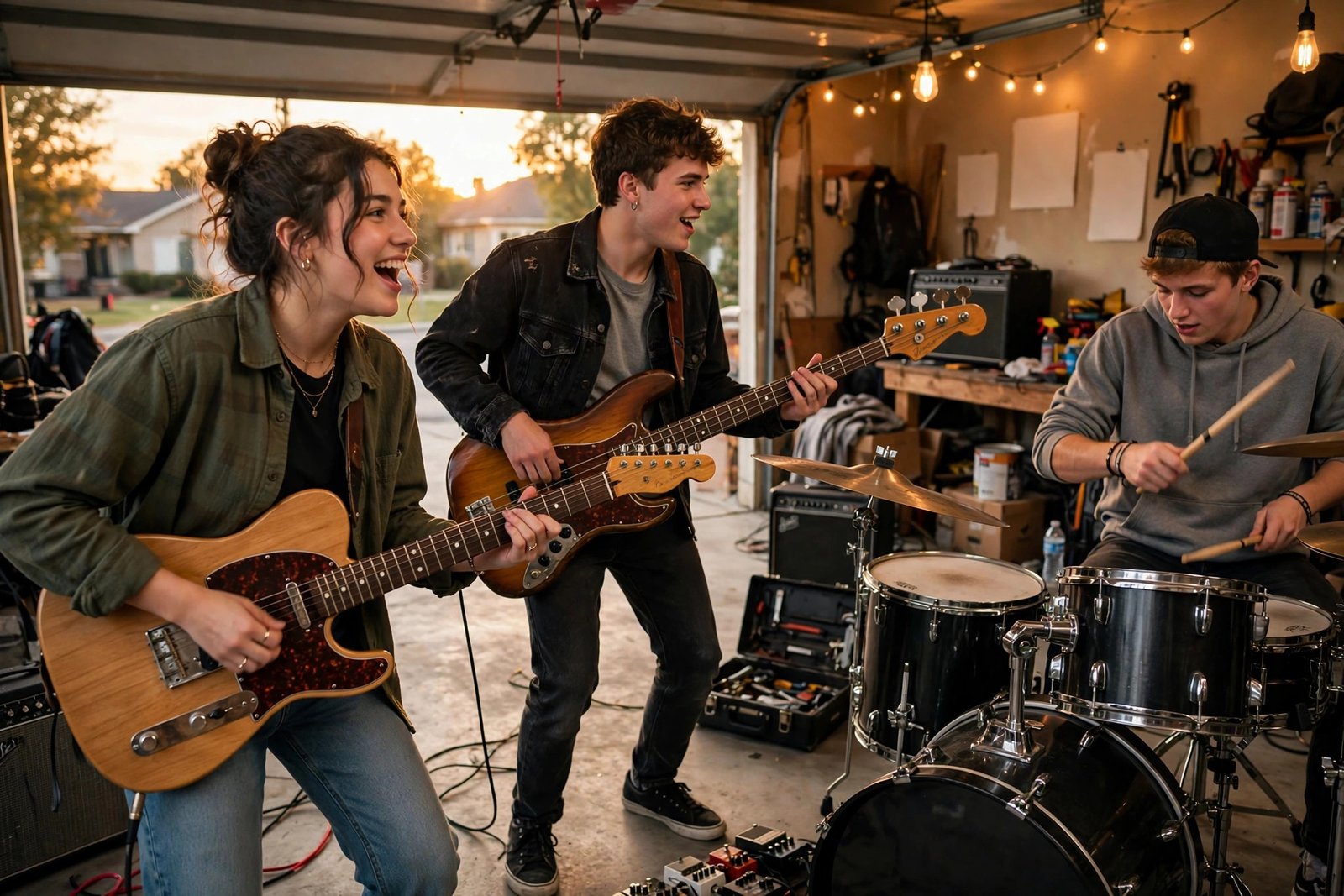
Starting a band with no connections feels impossible — every musician seems to already know every other musician, gigs go to established acts, and you’re on the outside of a scene you can see but can’t enter. But every band that exists started exactly where you are: with strangers who became bandmates. The West Coast — with its dense music cities, open-mic culture, and endless Craigslist/Facebook musician listings — is actually one of the easiest places in America to build a band from zero.
This guide covers finding your people, defining the project so the right people join, rehearsing productively, playing your first shows, and growing from a garage project into a real band.
Know What Band You’re Starting (Before You Recruit)
“Let’s start a band” attracts no one; “starting an indie-rock band, influences: Arctic Monkeys meets Alvvays, aiming for 2 gigs/month by fall, rehearsing Tuesdays in Oakland” attracts exactly the right people. Define: genre and 3–4 reference bands, commitment level (hobby vs. serious), rehearsal schedule you can actually keep, and goals (fun? gigs? recording?). Write it down — this becomes your recruiting ad and your filter.
Be honest about skill level: “beginner-friendly, learning together” finds patient collaborators; claiming “semi-pro” when you’re not wastes everyone’s time. Decide the lineup you need (most rock bands: guitar, bass, drums, vocals — keys/synth optional) and which roles you fill vs. need. Clarity here prevents the #1 band killer: mismatched expectations discovered three months in. The NAMM musician resources include guidance on forming and managing musical groups.
Finding Musicians: Where Strangers Become Bandmates
Online (highest volume): Craigslist’s musician section (still the West Coast standard — check daily, post a detailed ad), Facebook groups (“[Your City] Musicians Wanted,” genre-specific groups), BandMix, and Reddit’s r/bedroombands and city subreddits. Your ad should include: what you play, what you need, influences, commitment level, rehearsal location/schedule, age range if relevant, and a recording or video of your playing — ads with audio get 10x the responses.
In person (highest quality): open mics and jam nights — the single best musician-meeting hack. Go regularly, play, talk to people; the musicians you click with musically reveal themselves. Music stores (Guitar Center bulletin boards, local shops), community college music programs, and School of Rock adult programs are full of players looking for bands. Audition smart: meet for coffee first (personality fit matters as much as chops), then jam on 2–3 songs. One jam tells you 90% of what you need — do they listen? Do they show up prepared? Are they fun to be around for 3 hours? Trust the jam. Local scenes are discoverable — finding free live music puts you in the rooms where musicians gather, and affordable concert tickets let you study working bands up close.
Rehearsing Like a Band, Not a Hangout
Bands die in unfocused rehearsals. Structure every session: setlist first (decide the 5–8 songs before anyone arrives), work the weak spots (don’t play the easy songs on loop — drill transitions, endings, and the parts that fall apart), record everything (a phone in the room captures arrangement issues you’d never notice while playing). End each rehearsal with clear homework: “learn the bridge by Tuesday.”
Rehearsal space on the West Coast: hourly rehearsal studios ($20–$40/hr split 4 ways is cheap) in LA, SF, Seattle, Portland; storage-unit setups for the committed; someone’s garage for the lucky. Agree on cost-splitting upfront — money ambiguity poisons bands. And establish the democracy early: who decides the setlist? How are disagreements resolved? Bands that discuss governance while everyone still likes each other survive; bands that wing it explode at the first real disagreement. The Recording Academy offers resources on the business basics every new band should understand.
First Gigs: From Zero to Stage
Don’t wait until you’re “ready” — readiness comes from gigging, not rehearsing. Gig 1–3: house parties, open mics (graduate from attendee to featured act), and battle-of-the-bands nights — low stakes, real audiences. Gig 4–10: approach small venues and bars with a tight 30-minute set, a demo recording, and realistic expectations (weeknight slots, small guarantees or door splits). Booking: email venue bookers concisely — who you are, links to live video (not studio recordings — bookers want to see you perform), and specific date asks. Follow up once; bookers are busy, not ignoring you.
Promote every show like it matters: social media, flyers at record stores, personal invites (each member brings 10 people = 40-person crowd = venue wants you back). Play tight, start on time, don’t drink excessively — professionalism gets you rebooked faster than talent. Record every gig on video; six months of gig footage becomes your booking portfolio. The jump from “band that rehearses” to “band that gigs” is the moment it becomes real.
Growing Up: Money, Recording, and Staying Together
Money: open a band fund early — gig income goes in, expenses (rehearsal space, merch, recording) come out, split transparently. Decide splits in writing before money exists; handshake deals over $500 always end badly. Recording: a 3-song EP at a decent local studio ($1,000–$3,000) or a careful DIY home recording gives you something to promote and book with — you don’t need an album. Songwriting credits: agree upfront how writing splits work (equal split regardless of contribution is simplest and prevents most fights).
Staying together: communicate directly about problems (passive aggression kills bands), respect everyone’s time (start rehearsals on time, learn your parts), and remember why you started — fun. The bands that last aren’t the most talented; they’re the ones whose members still enjoy being in a room together after two years. Protect that above all.
Conclusion
Starting a band with no connections on the West Coast is a solvable problem: define the project clearly, recruit through Craigslist/Facebook/open mics with audio in your ad, audition via jam sessions, rehearse with structure, gig before you feel ready, and handle money and decisions in writing from day one. Every band you admire was once four strangers in a room. Your only job is to find your four strangers — and the West Coast is full of them, looking for exactly you.
Frequently Asked Questions
How do I find a drummer? (Everyone asks this.)
Drummers are the scarcest resource — recruit accordingly. Offer what drummers want: a real rehearsal space (they can’t practice quietly at home), committed bandmates, and gigs (drummers get the most offers, so give them reasons to choose you). Consider electronic drums for rehearsal to make hosting easier. And treat your drummer well — replacing one mid-stream is brutal.
What if I’m not good enough to be in a band yet?
“Good enough for what?” Beginner-friendly bands exist at every level — advertise honestly as learning together and you’ll find peers. Playing with others accelerates improvement dramatically (timing, listening, dynamics can’t be learned alone). Don’t wait for some imagined readiness threshold; the band is the training.
How much does starting a band cost?
Beyond instruments you own: rehearsal space ($80–$160/month split), basic PA if the space lacks one, demo recording ($500–$3,000), and merch later. A lean start runs $50–$100/month per member. The expensive version (pro studio album, van, tour) comes much later — don’t front-load costs before you have gigs.
How do we handle creative disagreements?
Establish decision rules early: majority vote? Bandleader decides? Songwriter has final say on their song? Most functional bands use “the person who cares most decides, but everyone gets heard.” Rotate who chooses covers. And separate the music from the ego — “this arrangement isn’t working” is about the song, not the person.