
 By admin
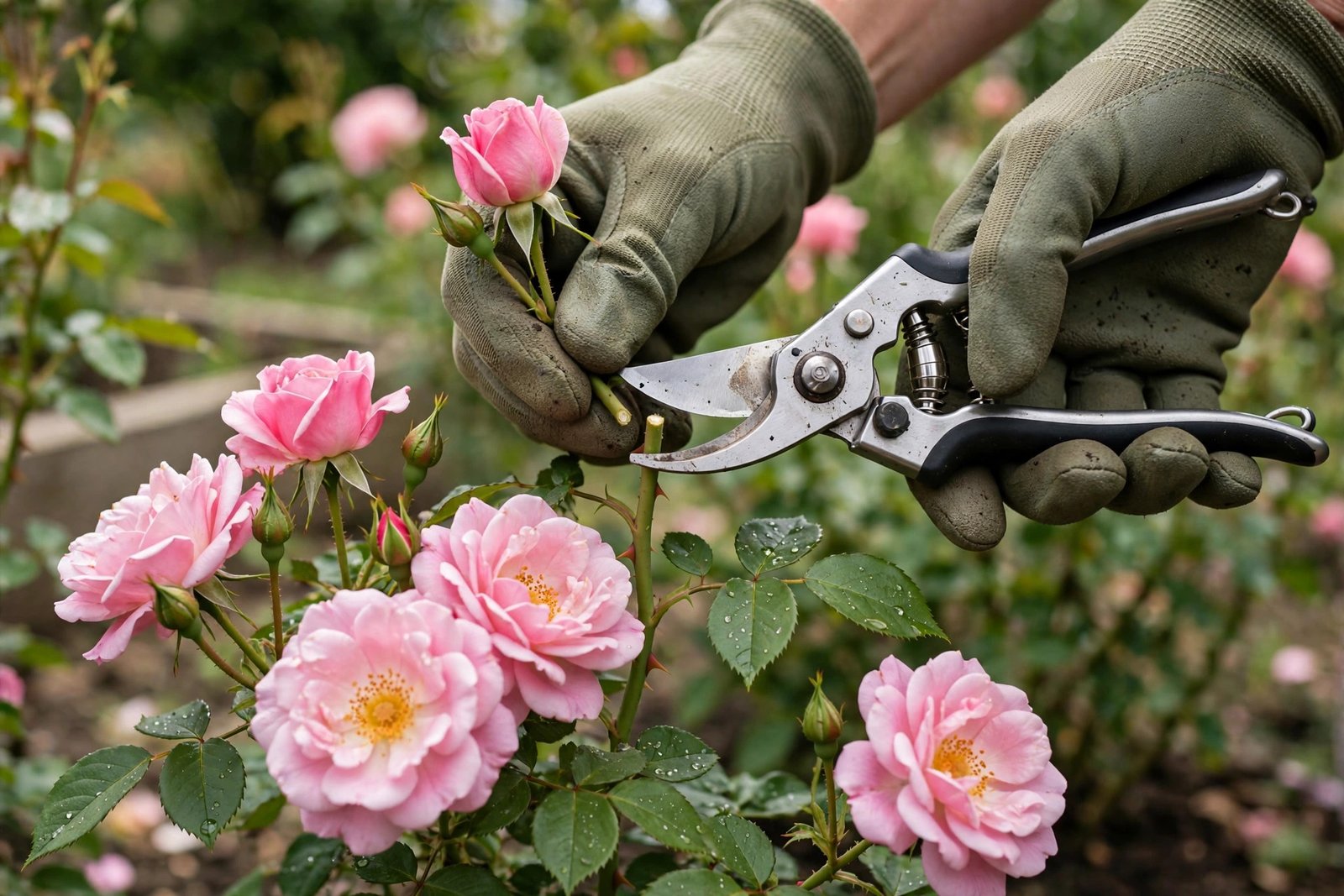
Roses have a reputation for being fussy, and pruning is where most gardeners’ anxiety peaks — cut too much and you fear you’ve killed it; cut too little and you get leggy, disease-prone bushes with few blooms. Here’s the reassuring truth: roses are far tougher than their reputation. They evolved to be grazed, frozen, and hacked back, and they respond to proper pruning with explosive growth and abundant flowers. You’d have to try hard to actually kill a rose by pruning.
This guide covers when to prune, the essential cuts, shaping for health and blooms, what to do with neglected roses, and the mistakes that actually cause harm.
When to Prune: Timing by Rose Type
Most modern roses (hybrid teas, floribundas, grandifloras): prune in late winter/early spring, just as buds swell but before leaves emerge — typically February–March in most US zones. Pruning then directs the plant’s spring energy into strong new growth. Once-blooming roses (many old garden roses, climbers): prune right after flowering in summer — they bloom on old wood, so spring pruning removes the flower buds. Repeat-blooming climbers: light shaping in late winter, main pruning after the first flush.
Deadheading (removing spent blooms) happens all season and isn’t “pruning” — it’s maintenance that encourages rebloom. In fall, stop deadheading 6–8 weeks before first frost (let hips form — it signals dormancy) and avoid heavy pruning that stimulates tender growth frost will kill. Regional timing varies enormously — the Old Farmer’s Almanac provides zone-specific pruning calendars.
Tools and the Five Essential Cuts
You need: sharp bypass pruners (not anvil — they crush stems), long-handled loppers for thick canes, thick gauntlet gloves (rose thorns are no joke), and rubbing alcohol or bleach solution to disinfect between plants (prevents disease spread). Sharp tools make clean cuts that heal fast; dull tools crush and invite disease.
The five cuts: 1) Remove dead wood — brown, shriveled canes cut back to live green/white pith. 2) Remove diseased wood — spotted, cankered canes, cut well below the damage. 3) Remove crossing canes — rubbing canes wound each other; keep the stronger, better-positioned one. 4) Open the center — remove inward-growing canes to create a vase shape; airflow prevents fungal disease. 5) Shorten remaining canes by one-third to one-half, cutting 1/4 inch above an outward-facing bud at a 45° angle. That outward-facing bud is the key — it directs growth away from the center, maintaining your open vase. The National Gardening Association offers illustrated pruning guides for visual learners.
Shaping for Health and Maximum Blooms
The goal shape is an open-centered vase: 3–5 strong main canes radiating outward, center clear for air and light. This isn’t aesthetic fussiness — roses with crowded centers develop black spot, powdery mildew, and rust because moisture lingers. Airflow is disease prevention. Remove weak, spindly growth (pencil-thin canes won’t support good blooms) and any suckers from below the graft union (they’re rootstock, not your rose variety — they steal energy).
For bloom quantity: hybrid teas pruned harder (leaving 3–4 strong canes at 12–18 inches) produce fewer but larger, show-quality blooms; pruned lighter, they produce more but smaller flowers. Floribundas pruned moderately give masses of clustered blooms. Deadhead correctly all season: cut back to the first 5-leaflet leaf below the spent bloom, at an outward-facing bud — this is “mini-pruning” that triggers rebloom cycles. Stop deadheading in fall as noted above. Healthy pruning habits pair with overall garden joy — gardening as a relaxing hobby starts with confidence in basics like these.
Rescuing a Neglected Rose
Inherited an overgrown, tangled monster? Don’t panic — roses survive radical renovation. Year 1 (late winter): remove all dead, diseased, and crossing wood; cut remaining canes back hard (12–18 inches for bush roses). It looks brutal; the rose will respond with vigorous new growth. Year 2: shape the new growth properly using the five cuts. Climbers: never cut all canes to the ground (you’ll lose years of structure) — instead remove the oldest 1–2 canes entirely each year, tie new growth horizontally (horizontal canes bloom far more than vertical ones), and shorten laterals.
Feed after renovation pruning: compost around the base and a balanced rose fertilizer as growth begins — the plant needs resources for its comeback. Water deeply and mulch. Most “dead” roses aren’t dead — scratch the bark: green underneath means alive. Even roses cut to the ground often resprout from the crown (though grafted roses may resprout as rootstock — watch for different-looking growth). Patience: a renovated rose takes a full season to show its gratitude, then rewards you for years. Building the bed around your roses matters too — beginner garden setup covers the foundations.
Mistakes That Actually Harm Roses
Pruning once-bloomers in spring: removes the entire year’s flowers — the most common timing error. Know your rose type. Leaving diseased wood: canker and dieback spread from infected canes; cut well into healthy tissue and disinfect tools between cuts on diseased plants. Flush cuts and stubs: cut 1/4 inch above the bud — long stubs die back and invite disease; flush cuts damage the bud. Pruning in fall in cold climates: stimulates growth that winter kills, weakening the plant.
Never pruning: the most common “mistake” of all — unpruned roses become tangled, diseased, and bloom poorly. Remember: roses want to be pruned. They evolved with grazing animals and harsh winters; your pruners are gentler than nature. The gardener who prunes confidently (even imperfectly) gets better roses than the one who prunes fearfully or not at all.
Conclusion
Pruning roses without killing them is straightforward: time it right (late winter for repeat bloomers, after flowering for once-bloomers), make the five essential cuts with sharp disinfected tools, shape for an open vase, deadhead through the season, and don’t fear cutting hard — roses rebound vigorously. Your roses aren’t fragile; they’re waiting for you to prune with confidence. This spring, sharpen those pruners, pull on the gauntlets, and cut boldly — your roses will repay courage with the best bloom season they’ve ever had.
Frequently Asked Questions
How far back can I cut a rose bush?
Healthy established bush roses tolerate being cut to 12–18 inches in late winter — they’ll regrow vigorously. Don’t cut into old, thick, gray wood with no live buds unless renovating a neglected plant (even then, leave some structure). The harder you prune, the fewer but larger the blooms.
Should I seal pruning cuts with anything?
Generally no — modern rosarians don’t recommend sealants; clean cuts heal naturally, and sealants can trap moisture and disease. The exception: in areas with cane borers, some gardeners seal large cuts with white glue. Proper 45° cuts above outward buds need no treatment.
Why are my roses all leaves and no flowers?
Common causes: too much nitrogen fertilizer (pushes foliage), insufficient sun (roses need 6+ hours), pruning at the wrong time (removed flower buds), or the plant is putting energy into rootstock suckers. Also, first-year roses often prioritize establishment over blooms — patience.
Can I prune roses in summer?
Light summer pruning (deadheading, removing spent blooms, cutting back leggy growth) is fine and encouraged. Heavy structural pruning in summer stresses the plant and stimulates growth at the wrong time — save major cuts for late winter. Once-blooming roses get their main prune right after their summer flowering.