
 By admin
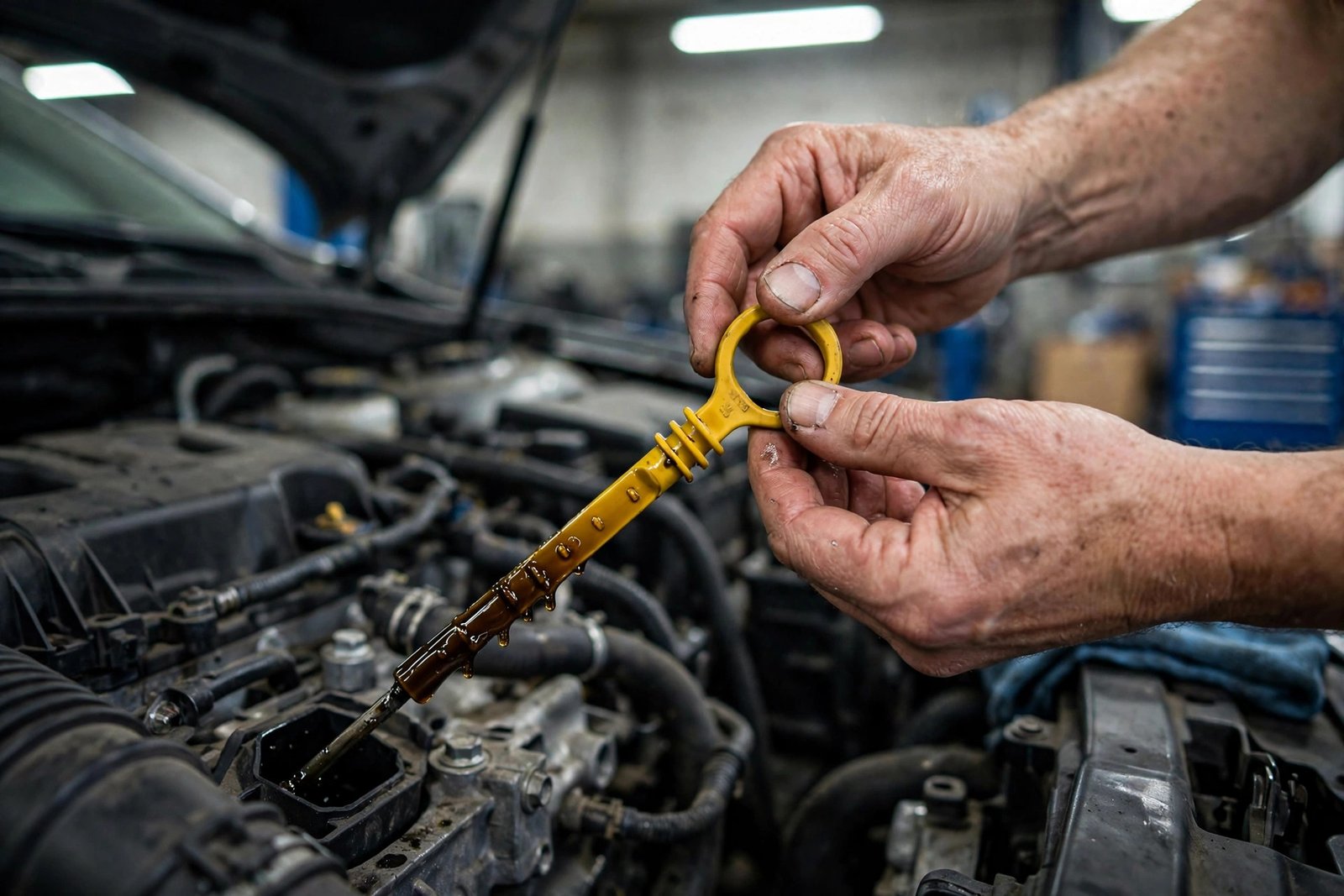
Pop the hood, pull the dipstick, glance at the oil — simple, right? Yet most drivers do it wrong: checking on a hot engine, misreading the level, or not knowing what the oil’s color and texture are telling them. And the stakes aren’t trivial — low oil is the number one cause of catastrophic engine failure, a $4,000–$8,000 event that a 60-second check prevents. Your car’s oil level is the single most informative vital sign you can read yourself, but only if you read it correctly.
Here’s how to check your car’s oil level correctly: the exact procedure, how to read what you find, what the oil’s appearance reveals about your engine’s health, and how often to check based on your car’s age and habits.
The Correct Procedure (Step by Step)
1. Park on level ground. Even a slight incline skews the reading — oil pools to one side of the pan. A driveway slope can show a false low or hide a real one.
2. Wait for the engine to cool slightly. Check with the engine off, ideally 5–10 minutes after driving (lets oil drain back into the pan) or cold in the morning (the most accurate — all oil has settled). Checking immediately after shutdown reads low because oil is still circulating up top.
3. Locate, pull, wipe, reinsert, read. Pull the dipstick (usually a bright yellow or orange loop handle), wipe it completely clean with a lint-free cloth or paper towel, reinsert it fully, then pull it again for the reading. The first pull is always contaminated by splashed oil — the wipe-and-re-dip is what makes the reading accurate.
4. Read the level. The dipstick has markings — dots, lines, crosshatching, or MIN/MAX indicators. The level should sit between the marks, ideally near the top. The distance between MIN and MAX typically represents one quart.
5. Assess the oil’s condition (details below), then reinsert the dipstick fully — an improperly seated dipstick can trigger check-engine lights and allow contaminants in.
Note: some newer vehicles (many BMWs, Audis, recent Mercedes) have no dipstick — they use electronic oil level sensors accessed through the dashboard menu. Check your manual; the electronic reading requires the engine at operating temperature on level ground, and the procedure differs by brand.
Reading What You Find: Level Diagnosis
At or near MAX: perfect. Check again in a month (or per your schedule below).
Midway between marks: acceptable, but monitor — if it was at MAX last month and mid now, you’re consuming oil and should track the rate.
At or below MIN: add oil immediately — you’re roughly a quart low, and running at minimum accelerates wear. Add the correct viscosity (check your oil cap or manual — using the wrong weight causes real harm), half a quart at a time, rechecking after each addition. Don’t overfill: excess oil foams, reduces lubrication, and can damage catalytic converters.
No oil on the dipstick: you’re 2+ quarts low — potentially dangerous. Add oil before driving anywhere; if the oil light is on, do not drive — have it towed or add oil on the spot. Driving with the oil light illuminated can seize an engine in minutes.
Reading the Oil’s Appearance: Your Engine’s Blood Test
The dipstick reveals more than level — oil condition diagnoses engine health:
Amber and translucent: healthy, relatively fresh oil. Dark brown to black: normal for oil with miles on it — color alone doesn’t condemn oil (detergents suspend contaminants, darkening is their job). Judge by mileage since change, not color. Milky or frothy (like chocolate milk): coolant mixing with oil — head gasket failure, cracked block, or (in mild cases) condensation from short-trip driving. If it persists after a long drive, get professional diagnosis immediately — this is serious. Metal particles or glitter: internal component wear — magnetic drain plug inspection and professional assessment needed promptly. Gasoline smell: fuel dilution from short trips, leaking injectors, or worn rings — change the oil and investigate if persistent. Gritty texture: contaminated oil or extended interval — change immediately.
Understanding oil types helps you maintain properly between checks — and before any long drive, fluid checks belong on the list in our budget road-trip planning guide. The API’s motor oil resources explain the certification marks to look for on the bottle.
How Often to Check: The Schedule
Newer cars (under 75,000 miles): monthly checks suffice for most — modern engines with tight tolerances consume little oil. Older cars (75,000+ miles): every other fuel fill-up — worn rings and seals increase consumption, and the rate accelerates. Known oil consumers: some engines (certain Audis, BMWs, Subarus) are designed with higher consumption — weekly checks and a quart in the trunk. Before long trips: always — highway miles at sustained RPMs reveal consumption that city driving hides. After any oil change: verify the shop filled correctly (overfills and underfills both happen).
Track consumption: note the date, mileage, and level each check. A car using a quart every 1,000 miles needs attention (possible PCV valve, worn seals); a quart every 3,000–5,000 miles in an older car is often acceptable. The trend matters more than any single reading — sudden increases signal new problems.
Topping Off: Doing It Right
Use the exact viscosity your manufacturer specifies (e.g., 0W-20) — it’s printed on the oil cap and in the manual. In a pinch, one grade different is acceptable temporarily, but don’t make a habit of it. Add through the oil filler cap (not the dipstick tube), half a quart at a time, waiting a minute and rechecking between additions. Keep a quart of your car’s oil in the trunk — it’s the cheapest roadside insurance you own. And record what you add: chronic topping-off without addressing consumption is treating the symptom while the engine deteriorates.
If you find yourself adding oil frequently, the underlying causes range from trivial (stuck PCV valve, $20 part) to serious (worn piston rings, valve seals). A consumption test at a trusted shop quantifies the rate and identifies the source — and vetting that shop uses the same discipline as finding a reliable contractor for home repairs: reviews, estimates in writing, no pressure tactics. FuelEconomy’s maintenance tips quantify how neglected upkeep costs you at the pump.
Conclusion
Checking oil correctly takes 60 seconds: level ground, engine off 5+ minutes, pull-wipe-reinsert-read, assess both level and condition. Do it monthly for newer cars, every other fill-up for older ones, and always before road trips. Learn to read the oil’s story — amber is happy, milky means coolant intrusion, glitter means internal wear, gas smell means dilution. And treat consumption trends as early warnings, not inconveniences. The dipstick is the cheapest diagnostic tool ever invented, and the engines that last 250,000 miles belong overwhelmingly to the owners who use it.
Frequently Asked Questions
Should I check oil when the engine is hot or cold?
Either works if done right: cold (morning) is most accurate since all oil has drained to the pan; or wait 5–10 minutes after shutdown. Never check immediately after turning off — circulating oil gives a falsely low reading.
How low can oil get before engine damage?
Damage risk rises sharply below the MIN mark (about a quart low). The oil warning light means pressure has already dropped — damage may be occurring. Never drive with the oil light on; add oil or tow the vehicle.
What color should engine oil be?
New oil is amber/translucent; used oil darkens to brown/black normally — color alone doesn’t indicate bad oil. Milky (coolant contamination), glittery (metal wear), or gasoline-smelling oil are the colors/textures that signal real problems.
Can I mix different brands of oil?
Yes, if the viscosity and specification match (e.g., two 5W-30 synthetics meeting API SP). Mixing brands is safe; mixing viscosities or conventional with synthetic works in emergencies but isn’t ideal long-term. Consistency beats brand loyalty.
Why is my car using oil but not leaking?
Internal consumption — worn piston rings, valve stem seals, or PCV system issues burn oil without external leaks (check for blue exhaust smoke on startup or deceleration). Some consumption is normal with age; sudden increases warrant professional diagnosis.