
 By admin
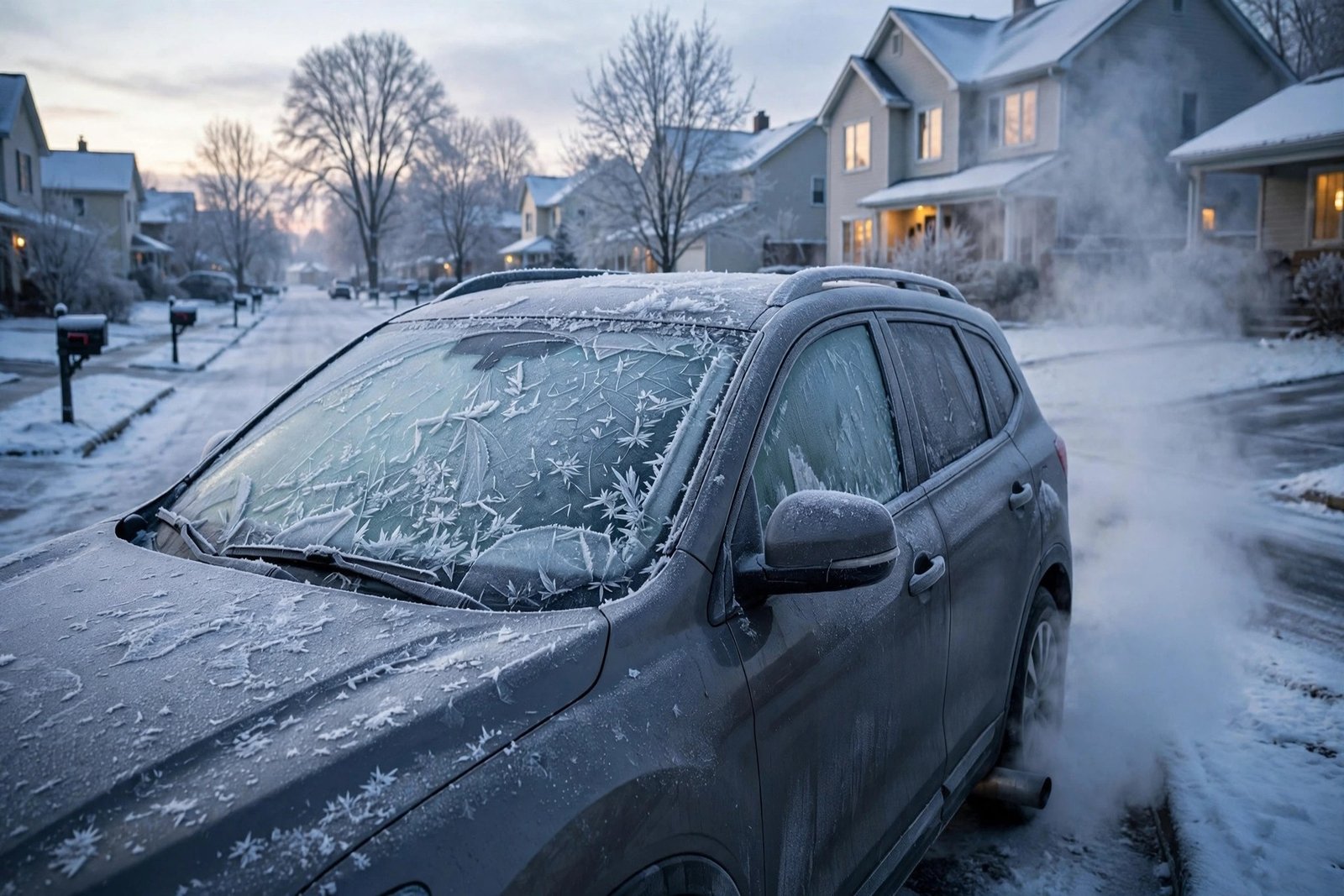
On a bitter January morning, the ritual feels almost sacred: start the car, crank the heat, go back inside for ten minutes while it “warms up.” Your grandparents did it, your neighbors do it, and the idle purr of a warming engine sounds like responsible car ownership. Here’s the uncomfortable truth from automotive engineers: on any modern car, that long warm-up idle is doing more harm than good — wasting fuel, wearing the engine, and polluting the neighborhood for no benefit.
This article explains what idling actually does to your engine in winter, why the old warm-up advice is outdated, how much fuel and money long idles really cost, and what you should do instead on freezing mornings. There are a few legitimate exceptions — we’ll cover those too — but for most drivers, the best warm-up procedure takes about thirty seconds.
What Idling Actually Does to Your Engine
An idling engine is running in its least efficient, least healthy state. At idle, the engine turns slowly with minimal load, which means incomplete combustion: fuel doesn’t burn as completely as it does under driving load. Some of that unburned fuel washes past the piston rings and dilutes the engine oil — a phenomenon engineers call fuel dilution. Diluted oil lubricates worse, and in winter, when oil is already thick and slow to circulate, that matters.
Idling also keeps the engine in its dirtiest operating zone for emissions. The catalytic converter — the device that scrubs pollutants from exhaust — needs heat to work, and at idle it warms up far more slowly than when you’re driving. A car idling for ten minutes in a driveway produces a disproportionate share of its morning pollution while going exactly nowhere. Modern engines are designed to be driven gently to warm up, not to sit and shiver in the driveway.
The Warm-Up Myth (and Where It Came From)
The “warm up your car for ten minutes” rule is a leftover from the carburetor era. Cars built before the mid-1980s genuinely needed several minutes of idle: carburetors couldn’t meter fuel properly when cold, and a cold engine would stall or stumble if you drove off immediately. Your grandparents weren’t wrong — for their cars.
Every car sold in the US for the last 30+ years uses electronic fuel injection, which precisely meters fuel for cold conditions from the first crank. The engine computer enriches the mixture, raises the idle speed slightly, and manages everything automatically. The Department of Energy’s idle-reduction guidance is blunt: today’s engines need no more than 30 seconds of idling before driving, even in cold weather. Driving gently warms the engine — and the transmission, wheel bearings, and tires, which idling never warms at all — far faster than sitting still.
How Much Fuel Long Idles Really Waste
The numbers surprise most people. A typical 4-cylinder engine burns roughly a third to half a gallon of fuel per hour at idle; a V6 or V8 burns more like half to three-quarters of a gallon. Ten minutes of idling every winter morning for three months burns around 8–15 gallons — that’s $25–$50 literally evaporating in your driveway each winter, and heavier vehicles waste more.
Scale it up and it’s staggering: the DOE estimates personal-vehicle idling wastes about 3 billion gallons of fuel annually in the US. Beyond the wallet hit, you’re getting zero miles per gallon during every one of those minutes — it’s the single worst fuel economy your car will ever achieve. If you’re planning a budget-conscious road trip this winter, killing the driveway idle is the easiest fuel saving you’ll ever make.
Engine Wear, Oil Dilution, and Carbon Buildup
Fuel washing past cold piston rings doesn’t just dilute oil — over time it accelerates wear on cylinder walls and bearings. Extended idling also promotes carbon deposits on intake valves and in the combustion chamber, because incomplete combustion leaves residues that hard driving would otherwise burn off. Direct-injection engines, common in most modern cars, are particularly prone to intake-valve carbon buildup, and chronic idling makes it worse.
There’s also the battery angle: at idle, the alternator spins slowly and may not fully keep up with the electrical load of headlights, blower motor, heated seats, and defroster all running. Repeated long idles in winter — the season when batteries are already weakest — can leave the battery chronically undercharged. Short version: the engine wears more, the oil degrades faster, and the battery suffers, all while the car sits still.
Emissions and Idling Laws You Should Know
Many drivers don’t realize idling is actually restricted by law in much of the country. Dozens of states and hundreds of cities limit unnecessary idling — commonly to three or five minutes — with fines that can reach several hundred dollars for repeat violations. These laws originally targeted diesel trucks, but many apply to passenger vehicles too, and enforcement around schools (where idling parents create a cloud of exhaust children walk through) has been increasing.
The EPA’s data on vehicle emissions shows idling contributes meaningfully to local air pollution, including nitrogen oxides and fine particulates. One often-cited comparison: idling for over 10 seconds uses more fuel than restarting the engine, so the old “it’s worse to turn it off and on” belief is also a myth for modern cars with durable starters. Your engine, your wallet, your neighbors’ lungs, and in many places the law all point the same direction.
What to Do Instead on Freezing Mornings
The correct winter routine: start the engine, give it about 30 seconds (enough to buckle up, set your mirrors, and clear the windshield), then drive off gently. Keep RPMs moderate and avoid hard acceleration or high speeds for the first few minutes. The engine reaches operating temperature far faster under light load than at idle — typically within 5–10 minutes of driving versus 20+ minutes of idling.
For comfort without the idle: a block heater (common in northern states, often a factory option) pre-warms the engine using household electricity — far cheaper and cleaner than idling. Heated seats and steering wheels warm you directly and draw modest power. And clearing snow and ice off the car while it runs its 30 seconds means you’re productive during the only idle time you need. Making your whole routine more efficient — like cutting wasted energy at home — starts with questioning the habits that feel normal but aren’t.
The Legitimate Exceptions
Fairness requires acknowledging when idling makes sense. In extreme cold (well below zero), a minute or two of extra idle is reasonable. Diesel engines, especially older ones, genuinely need longer warm-ups. If your windshield is iced over and you can’t see safely, idle with the defroster running until visibility is adequate — safety beats efficiency every time. Turbocharged engines benefit from a brief idle cooldown after hard driving, not before. And if you’re stuck waiting in the car in dangerous cold, staying warm matters more than the fuel.
Remote starters deserve a note: they’re fine as a comfort tool if you limit the runtime. Most systems default to 10–15 minutes, which is far longer than the engine needs — set yours to the minimum, or start it as you put your boots on rather than from the breakfast table.
Conclusion
The ten-minute winter warm-up is a habit from a different automotive century. Modern fuel-injected engines need about thirty seconds of idle, then gentle driving — which warms everything faster, burns less fuel, produces fewer emissions, and causes less wear. Keep the exceptions in mind for truly extreme cold and safety situations, but retire the driveway idle as a daily ritual. Your engine, your fuel budget, and the air on your street will all be better for it.
Frequently Asked Questions
How long should I warm up my car in winter?
About 30 seconds for any modern fuel-injected car, then drive gently for the first few minutes — the engine warms roughly twice as fast under light load as it does idling.
Is using a remote starter bad for my car?
Not inherently — it’s the duration. A 2–3 minute remote start on a frigid morning is harmless; the 10–15 minute factory default wastes fuel and adds wear. Set the shortest runtime.
Is it illegal to idle my car?
In many places, yes — dozens of states and hundreds of municipalities limit unnecessary idling to 3–5 minutes, with fines. Many target commercial vehicles, but passenger cars are often covered too.
Does idling charge the car battery?
Barely — at idle the alternator spins slowly and may not recharge a depleted battery, especially with the heater running. A 20-minute drive charges far more than 20 minutes of idling.
Is it worse to restart the engine than to keep idling?
For modern cars, restarting uses only seconds’ worth of fuel — idling more than ~10 seconds burns more than a restart. Turn it off if parked more than a minute.