
 By admin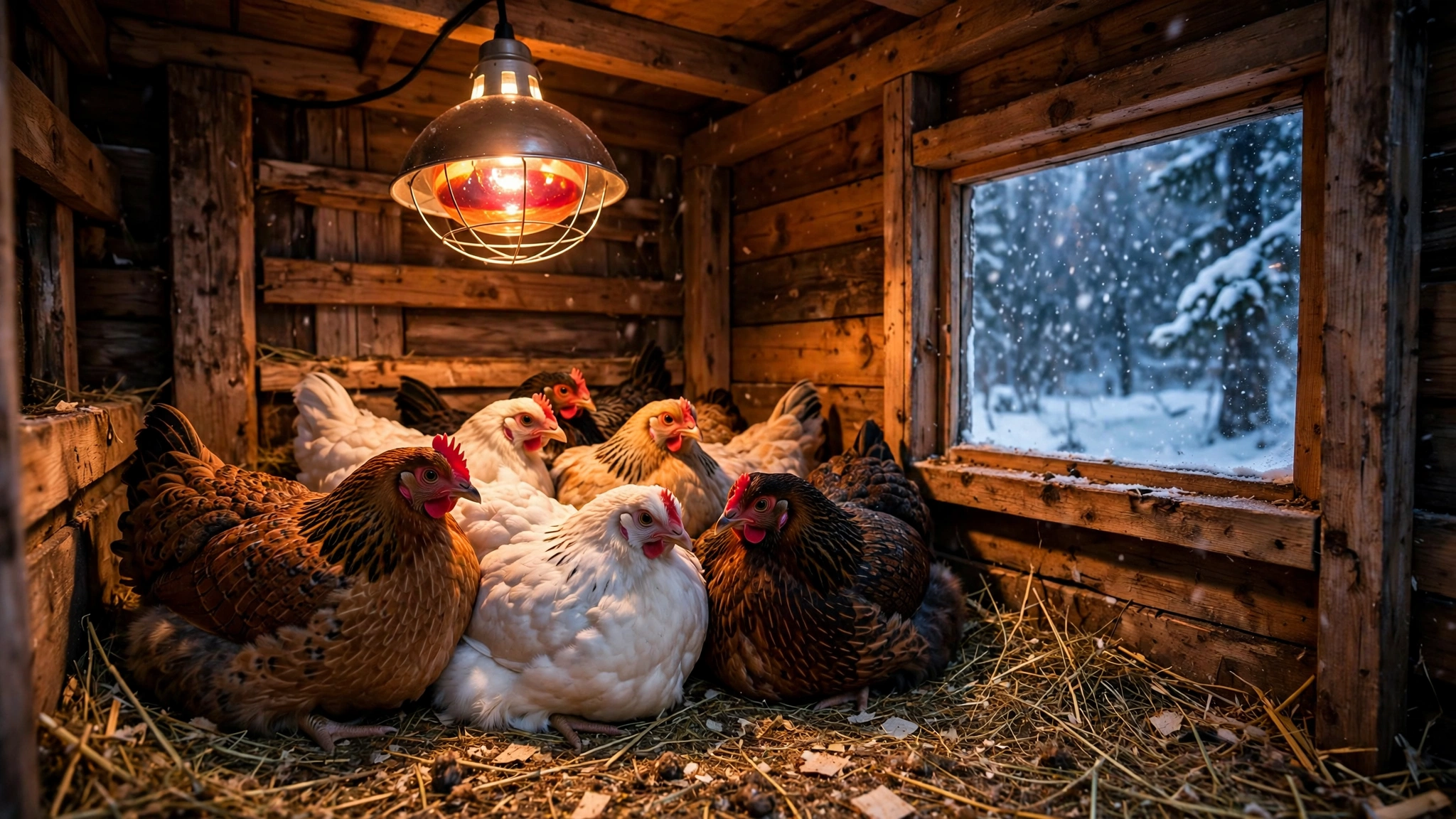
Quick Answer: Keep chickens warm in winter with a dry, draft-free coop that still has good ventilation, the deep litter method for natural floor heat, and unfrozen water at all times. Most cold-hardy breeds handle temperatures well below freezing without supplemental heat — moisture and drafts kill more chickens than cold itself.
How Cold Is Too Cold for Chickens?
Chickens are far tougher in winter than most new keepers expect. A healthy, fully feathered chicken wearing its natural down coat can handle temperatures down to 0°F (-18°C) and below, especially cold-hardy breeds like Plymouth Rocks, Orpingtons, Wyandottes, and Australorps. Their feathers trap warm air against the body, and they fluff up and tuck their heads to conserve heat.
The real winter killers are moisture and drafts, not cold air. Damp conditions lead to frostbite on combs and wattles, and respiratory illness thrives in humid, ammonia-laden air. A dry coop at 10°F is safer than a damp, drafty one at 30°F.
The Coop: Draft-Free but Ventilated
This is the single most important winter principle, and it confuses many beginners. Your coop must block drafts (cold air blowing directly on roosting birds) while still providing ventilation (steady air exchange up high to carry away moisture and ammonia).
- Seal drafts at roost level: Patch holes and gaps in walls where wind hits the birds directly. A simple test: on a windy day, hold a lit incense stick at roost height — smoke should drift lazily, not blow sideways.
- Ventilate up high: Leave vents, eaves gaps, or windows open near the roof peak. Warm, moist air rises and exits; fresh air enters without chilling the birds below.
- Never seal a coop airtight: An airtight coop traps humidity from breath and droppings, creating frostbite and respiratory disease conditions.
- Insulate if you like, but it’s optional: Insulation helps in extreme climates but is not required for most US winters if ventilation is right. If you insulate, cover it — chickens will peck and eat exposed foam insulation.
The Deep Litter Method: Free Floor Heat
Deep litter is a time-tested winter strategy. Instead of cleaning the coop floor, you keep adding fresh bedding (pine shavings work best) over the old, building a layer 6 to 12 inches deep. Beneficial microbes compost the droppings from below, generating gentle heat and keeping the floor dry.
To do it right: start with 4 inches of pine shavings in fall, stir the litter weekly, add fresh shavings when it looks matted, and sprinkle food-grade diatomaceous earth or agricultural lime to control odor and moisture. In spring, clean it all out — you will have excellent compost for the garden. Avoid cedar shavings (respiratory irritant) and straw as a base layer (it mats and molds).
Roosts: Wide, Flat, and Draft-Free
Chickens keep their feet warm by sitting on them, so roosts should be wide and flat — a 2×4 laid with the 4-inch side up is ideal. Round dowels force toes to curl around the perch, exposing them to frostbite. Position roosts away from windows and vents, higher than the nest boxes (chickens instinctively roost at the highest point), and allow 8 to 10 inches of roost space per bird so they can huddle.
Water: The Winter Battle
Chickens need liquid water every day, and dehydration in winter is a genuine risk because everything freezes. Your options:
- Heated waterers: The most reliable solution. Heated dog bowls or heated poultry waterers (around $30–$50) keep water liquid down to extreme cold.
- Manual swapping: Bring fresh warm water out twice daily and swap frozen containers. Labor-intensive but works.
- Insulated tricks: Placing waterers on thick rubber mats, using dark-colored containers in sun, or floating a ping-pong ball to slow ice formation — these buy time but won’t survive hard freezes.
Never put water inside the sleeping area of a small coop — spills create the moisture you are fighting. Keep water in the run or a covered area instead.
Feeding for Winter Warmth
Digestion generates body heat, so winter is the time to feed generously. Keep layer feed available at all times, and offer cracked corn or scratch grains as an evening treat — the complex carbohydrates digest slowly overnight, acting like an internal furnace while birds roost. A little extra protein (mealworms, black oil sunflower seeds) helps maintain condition. Grit and oyster shell should remain available free-choice as always.
Should You Heat the Coop?
For most backyard flocks in most of the US, no. Supplemental heat creates dependency (a power outage then becomes deadly), fire risk, and disrupts the birds’ natural acclimation. Heat lamps are the leading cause of coop fires every winter — hundreds of coops burn annually in the US.
Exceptions where gentle heat makes sense: chicks under 6 weeks old, sick or injured birds, and non-cold-hardy breeds (like Silkies or Seramas) in severe climates. If you must heat, use a flat-panel radiant heater designed for coops — far safer than heat lamps — mounted where birds can’t contact it, and always on a thermostat.
Protecting Combs, Wattles, and Feet From Frostbite
Large-combed breeds (Leghorns, Rhode Island Reds) are most vulnerable. A thin smear of petroleum jelly or coconut oil on combs and wattles before extreme cold snaps adds a moisture barrier. Keep bedding dry, eliminate drafts at roost level, and check birds’ feet regularly. Frostbitten tissue turns pale, then black — never rub it; let it warm gradually and consult a vet if tissue dies.
The Run in Winter
Chickens still want outdoor time on all but the worst days. Wrap the windward sides of the run with clear tarps or greenhouse plastic to create a windbreak while letting light in. Shovel paths or lay straw over snow — most chickens refuse to walk on snow. A covered area with dry ground keeps them active and reduces coop boredom (and the pecking problems that come with it).
Will Hens Keep Laying in Winter?
Egg production drops in winter because hens need 14 to 16 hours of light to lay consistently. You can add supplemental light on a timer (a simple 40-watt bulb coming on early morning works) to maintain laying, or let your flock take a natural rest — many keepers prefer giving hens the break, since it extends their productive years. Either way, keep protein levels up and collect eggs frequently so they don’t freeze and crack.
Further Reading
- How Cold Is Too Cold for Chickens? (2026) Winter Guide
- How to Keep Chicken Water From Freezing: Step-by-Step Guide (2026)
- How Much Space Do Chickens Need? Complete Answer (2026)
- ASPCA’s pet care resources
- AKC’s dog breed guide
Frequently Asked Questions
Do chickens need a heater in winter?
Usually not. Healthy adult chickens of cold-hardy breeds handle subzero temperatures with a dry, ventilated coop. Heat creates fire risk and dangerous dependency on electricity.
What temperature is too cold for chickens?
Most breeds tolerate 0°F and below. Watch for frostbite risk below about 10°F, especially in large-combed breeds, and take extra precautions below -10°F.
Can chickens get frostbite?
Yes — combs, wattles, and feet are vulnerable, especially in damp, drafty conditions. Dry bedding, good ventilation, and petroleum jelly on combs are the best prevention.
Should I close the coop vents in winter?
No — never close all ventilation. Moisture buildup causes more winter deaths than cold. Keep high vents open and block only direct drafts at bird level.
How do I keep chicken water from freezing without electricity?
Swap in fresh warm water twice daily, use dark rubber containers in sunny spots, and insulate with straw bales around the waterer. In hard freezes, though, a heated waterer is the only truly reliable option.
Conclusion
Winter chicken-keeping success comes down to a simple formula: dry bedding, no drafts at roost level, open vents up high, liquid water, and plenty of feed. Skip the heat lamp, trust the feathers nature gave them, and your flock will come through spring healthy — and probably still laying. The chickens have been handling winter far longer than we have been keeping them; our job is just to give them a dry place to do it.