
 By admin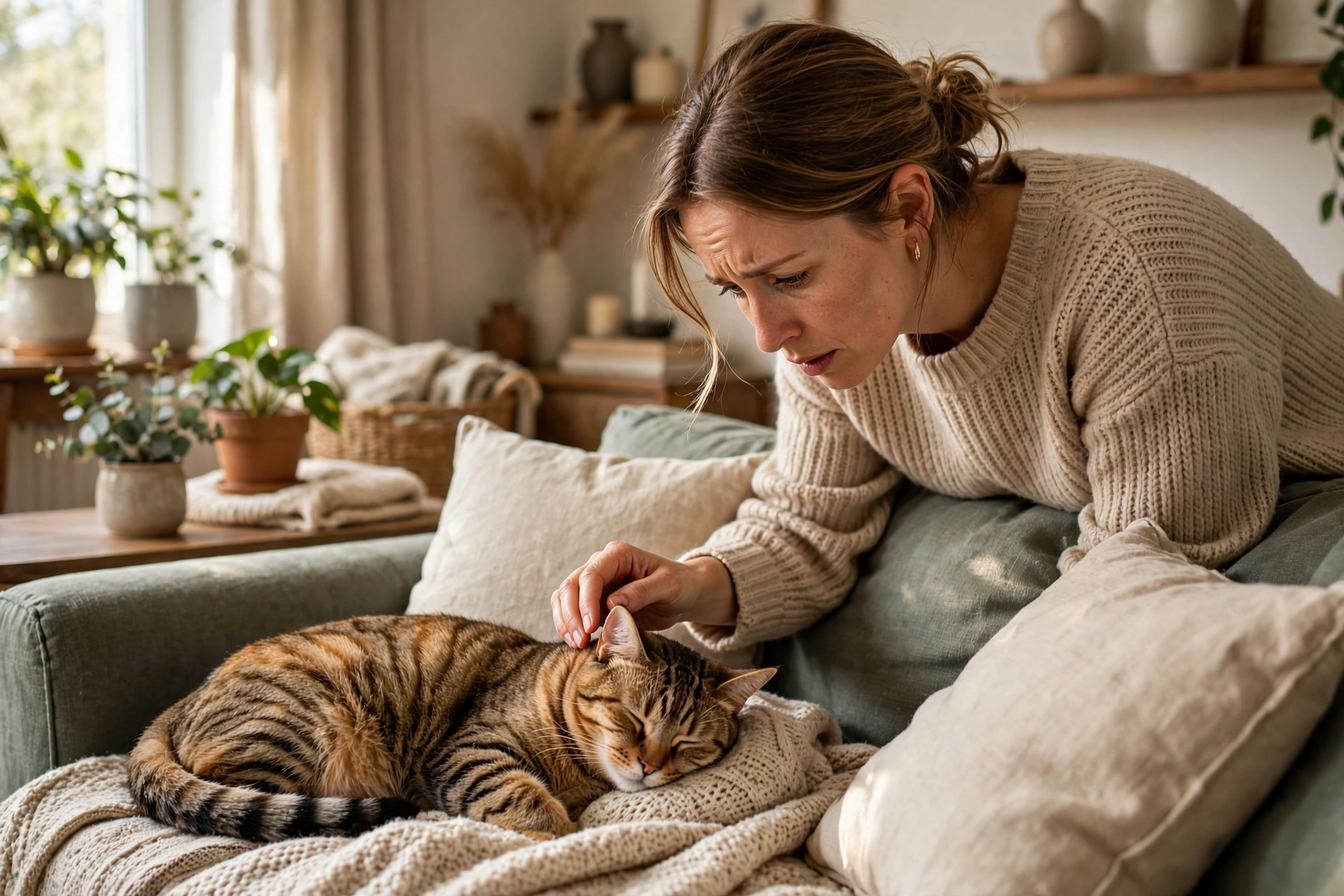
Quick Answer: A cat has a fever when its body temperature rises above 102.5°F (normal is 100.4–102.5°F). Signs include warm ears and paws, lethargy, loss of appetite, shivering, and rapid breathing. The only reliable way to confirm a fever is with a rectal thermometer — if the reading is 103°F or higher, call your veterinarian.
What Is a Normal Temperature for a Cat?
A healthy cat’s body temperature runs warmer than a human’s: 100.4 to 102.5°F (38 to 39.2°C). Anything above 102.5°F counts as a fever, and a reading of 106°F or higher is a medical emergency that can damage internal organs. Kittens and stressed cats may run slightly higher temporarily, so context matters — a single borderline reading right after a car ride is less alarming than a sustained high temperature at rest.
Signs Your Cat May Have a Fever
Cats are masters at hiding illness, so you will need to watch closely. Common signs include:
- Warm ears, nose, and paws: A dry, warm nose alone means little, but ears that feel noticeably hot can signal fever.
- Lethargy: A feverish cat sleeps far more than usual and shows no interest in play.
- Loss of appetite: Refusing food for more than 24 hours is always worth a vet call, fever or not.
- Shivering or trembling: Despite feeling hot, feverish cats may shiver as their body tries to raise its temperature further.
- Rapid breathing or panting: Cats rarely pant; when they do, something is wrong.
- Hiding: A social cat that suddenly retreats under the bed may be sick.
- Dehydration: Check by gently pinching the skin between the shoulder blades — if it stays tented instead of snapping back, your cat is dehydrated.
- Decreased grooming: A feverish cat often stops grooming, leaving its coat dull and unkempt.
Important: you cannot diagnose a fever by touch alone. Warm ears might just mean your cat was napping in a sunny spot. A thermometer reading is the only confirmation.
How to Take Your Cat’s Temperature
The rectal method is the gold standard — ear thermometers made for pets exist but are less accurate.
- Use a digital rectal thermometer designated for pets only. Flexible-tip models are more comfortable.
- Lubricate the tip with petroleum jelly or water-based lubricant.
- Have a helper gently but firmly hold the cat, or wrap the cat snugly in a towel with only the rear exposed.
- Insert the thermometer about half an inch to one inch into the rectum. Never force it.
- Wait for the beep (usually under a minute), then read the temperature.
- Clean the thermometer thoroughly with soap and water or rubbing alcohol afterward.
If your cat becomes extremely distressed or aggressive, stop — a vet visit is safer than a wrestling match that injures you both. Many clinics will check temperature during a quick tech appointment.
Common Causes of Fever in Cats
Infections
Bacterial infections (abscesses from fights, urinary tract infections), viral infections (feline leukemia, FIV, upper respiratory viruses), and fungal infections are the most common fever triggers.
Inflammation Without Infection
Conditions like pancreatitis, immune-mediated diseases, and certain cancers can cause fever. Post-vaccination fevers are also common and usually resolve within 24 to 48 hours.
Fever of Unknown Origin
Sometimes, despite bloodwork, X-rays, and ultrasound, no cause is found. These cases often resolve on their own but require monitoring to make sure nothing serious is brewing.
Home Care for a Cat With a Mild Fever
- Keep your cat hydrated: Offer fresh water frequently. A cat water fountain can encourage drinking. In a pinch, offer low-sodium chicken broth or water from a tuna can (no onion or garlic).
- Offer tempting food: Warm the food slightly to release aroma. If your cat won’t eat for 24 hours, call the vet — cats that stop eating risk fatty liver disease.
- Provide a quiet, comfortable resting spot: Keep the room at a comfortable temperature, not cold.
- Monitor closely: Recheck temperature every few hours and watch for worsening symptoms.
Never give your cat human fever reducers. Acetaminophen (Tylenol) is fatally toxic to cats — even a single tablet can kill. Ibuprofen (Advil) and aspirin are also dangerous. Only medications prescribed by your veterinarian are safe.
When to Call the Veterinarian
Call your vet promptly if:
- Temperature is 103°F or higher
- Fever lasts more than 24 to 48 hours
- Your cat refuses food for more than 24 hours
- You see vomiting, diarrhea, difficulty breathing, or extreme lethargy
- Your cat is a kitten, senior, or has a chronic illness (these cats deteriorate faster)
- Temperature reaches 106°F — this is an emergency, go immediately
What the Vet Will Do
Expect a physical exam, temperature check, and likely bloodwork to look for infection or inflammation. Depending on findings, the vet may recommend X-rays, ultrasound, or a fever panel. Treatment targets the underlying cause — antibiotics for bacterial infections, fluids for dehydration, and appetite stimulants or assisted feeding if your cat won’t eat. The vet may also prescribe a safe feline fever reducer for comfort while the underlying issue is treated.
How to Comfort a Sick, Feverish Cat
Beyond the medical basics, comfort care helps a feverish cat recover faster and with less stress. Keep things quiet: move your cat’s bed to a calm room away from household traffic, loud TVs, and other pets that might pester it. Maintain gentle warmth: offer a soft blanket or a microwavable pet-safe heating pad on a low setting — but always leave room for the cat to move away if it gets too warm, since feverish cats can overheat. Encourage eating: warm wet food to just above room temperature to boost its smell, offer small amounts frequently, and try high-value options like plain cooked chicken or meat-based baby food (no onion or garlic). Stay nearby but not hovering: many cats find their owner’s calm presence soothing — sit with your cat, speak softly, and offer gentle petting if it leans into your hand. Avoid forcing interaction if the cat wants solitude; hiding is a natural coping behavior. Keep a simple log: note temperature readings, food and water intake, and litter box output — this record is invaluable if you end up at the vet, turning vague worry into actionable data.
Preventing Fevers: Vaccination and Parasite Control
Many fever-causing illnesses are preventable. Core vaccines (FVRCP — feline viral rhinotracheitis, calicivirus, panleukopenia — plus rabies, as required by law in most US states) protect against the most common infectious causes of fever. Kittens need a series of boosters; adults need regular boosters on your vet’s schedule. Year-round parasite prevention matters too — fleas, ticks, and intestinal parasites can all trigger fever and secondary infections. Keep cats indoors or supervise outdoor time to reduce exposure to fights (abscesses are a top fever cause in outdoor cats), contaminated water, and wildlife. Finally, annual wellness exams catch brewing problems — dental disease, early kidney issues, hidden infections — before they erupt into fever. Prevention is cheaper, kinder, and far less stressful than treating a seriously ill cat.
Further Reading
- How to Tell If My Cat Is Pregnant: Step-by-Step Guide (2026)
- How to Tell How Old a Kitten Is: Step-by-Step Guide (2026)
- How Do You Know If a Kitten Has Rabies: What You Need to Know (2026)
- Humane Society of the United States
- ASPCA’s pet care resources
Frequently Asked Questions
Can I tell if my cat has a fever by feeling its nose?
No. A warm, dry nose is not a reliable fever indicator — healthy cats can have warm noses after sleeping. Use a thermometer.
What temperature is a fever in cats?
Above 102.5°F (39.2°C). Normal range is 100.4–102.5°F.
Will a cat’s fever go away on its own?
Mild, short-lived fevers (like post-vaccine) often resolve within a day or two. Persistent or high fevers need veterinary attention to find and treat the cause.
Can stress cause a fever in cats?
Yes — stress-induced hyperthermia can temporarily push a cat’s temperature to 103–104°F, for example during a vet visit. True fever from illness does not drop quickly once the cat calms down, which helps distinguish the two.
Is it safe to cool a feverish cat with water?
Do not douse your cat in cold water or use ice — rapid cooling can cause shock. If your vet advises cooling for a dangerously high fever, they will do it in a controlled clinical setting.
Conclusion
Spotting a fever early gives your cat the best chance of a quick recovery. Learn the signs, keep a pet thermometer on hand, and remember the golden rules: confirm with a reading, never use human medications, and call your vet if the fever is high, persistent, or paired with not eating. Your attentiveness is your cat’s best medicine.
[…] How to Tell If Cat Has Fever: Step-by-Step Guide (2026) […]