
 By admin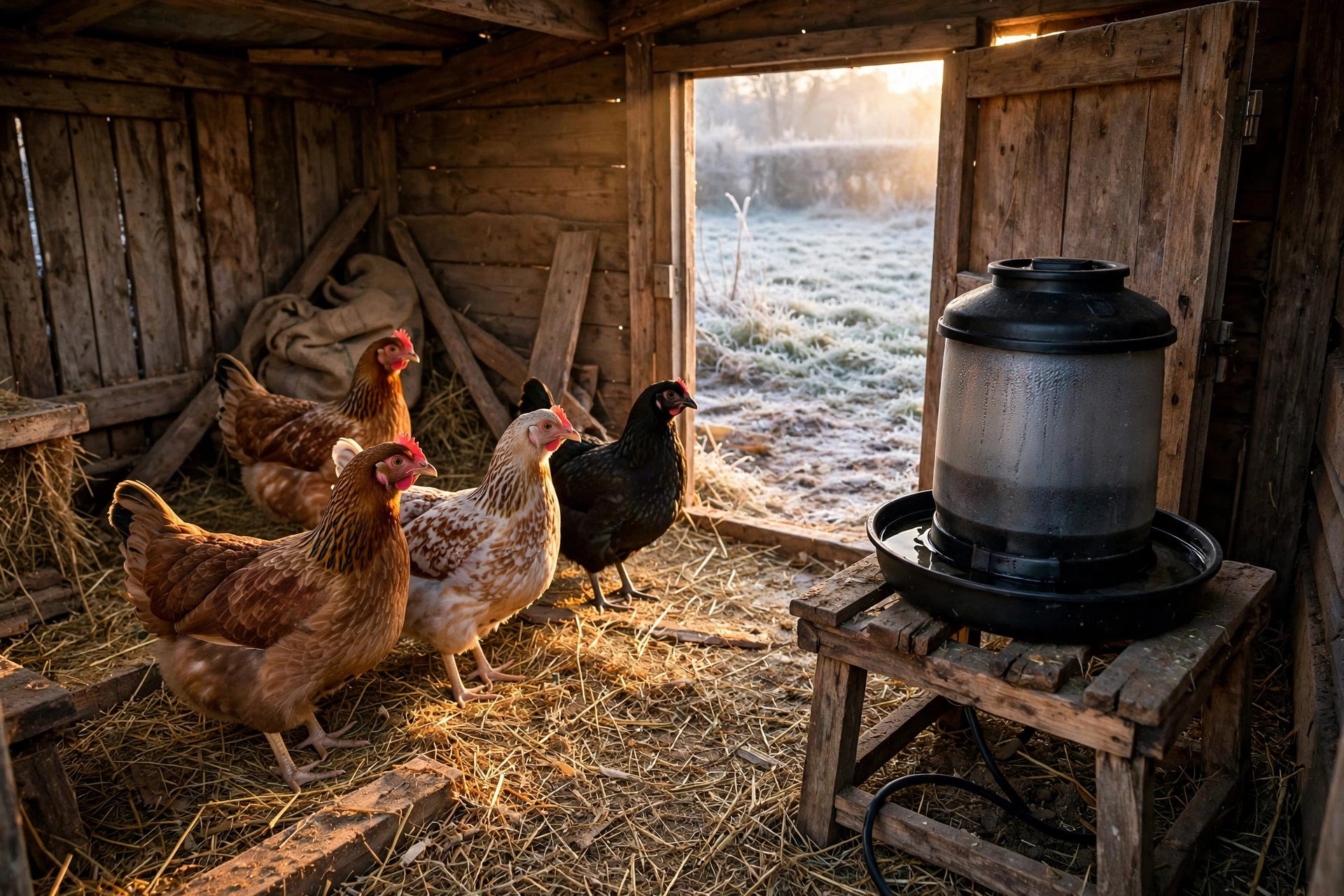
Quick Answer: The most reliable way to keep chicken water from freezing is a heated poultry waterer or heated base ($30–$60). No-outlet alternatives include black rubber tubs in sunlight, insulating the waterer, floating ping pong balls to break surface ice, and swapping water twice daily.
Chickens need constant access to fresh water, even in the dead of winter. A laying hen drinks roughly a pint of water a day, and dehydration in cold weather is a genuine danger — it drops egg production, weakens immune systems, and in extreme cases can kill birds. The challenge: standard plastic or metal waterers freeze solid overnight in much of the US. Here is how backyard flock owners keep water liquid all winter, with and without electricity.
Why Frozen Water Is Dangerous for Chickens
Chickens will not eat snow as a water substitute the way some wildlife does — or at least not enough of it. Even a few hours without liquid water stresses birds. In freezing weather, chickens also use extra energy staying warm, which increases their water needs. A frozen waterer discovered at 7 a.m. may mean your flock has been without water since the previous afternoon. Make liquid water a non-negotiable part of your winter routine.
Best Electric Solutions (Most Reliable)
Heated Poultry Waterers
Purpose-built heated waterers (brands like Farm Innovators and K&H) have built-in thermostats that kick on around 35°F. They typically cost $30 to $60 and are the set-and-forget gold standard. Choose a size that matches your flock — a 3-gallon heated waterer serves about a dozen hens for a day or two.
Heated Bases
If you already own a metal waterer you like, a heated base ($35–$50) sits underneath it and keeps the contents thawed. Important: heated bases are designed for metal waterers, not plastic — plastic can warp or melt.
Submersible De-Icers
Pond or bucket de-icers ($25–$40) drop into an open water container and keep a hole open in the ice. They work well in 5-gallon buckets fitted with poultry nipples, a popular DIY winter setup.
Safety note: Any electric option needs an outdoor-rated extension cord and ideally a GFCI outlet. Keep cords out of reach of pecking beaks and secure them so they cannot fall into bedding.
No-Electricity Methods That Actually Work
Black Rubber Tubs in Sunlight
Black rubber feed tubs absorb solar heat and are nearly indestructible — you can stomp ice out of them without cracking. Place the tub in the sunniest spot in the run. In moderately cold climates (above ~20°F), this alone can keep water liquid through the day.
The Twice-Daily Swap
Keep two waterers. Bring one inside overnight, and swap them morning and evening with fresh lukewarm (not hot) water. It is labor-intensive but bulletproof, and many keepers in very cold regions do exactly this.
Insulate the Waterer
Wrap the waterer in insulation — an old tire with the waterer nested inside is a classic trick. The tire absorbs daytime heat and the insulation slows overnight freezing. Foam board boxes work too.
Ping Pong Balls
Floating a few ping pong balls on the water’s surface keeps the surface agitated in light wind, delaying ice formation. This only buys you time in mild freezes (a few degrees below freezing), not in single digits — but it is free and worth doing.
The Salt-Water Bottle Trick
Fill a sealed plastic bottle with strong salt water and float it in the waterer. Salt water freezes at a lower temperature, and the bobbing bottle agitates the surface. Like ping pong balls, this helps in mild cold only. Never add salt directly to drinking water — it is toxic to chickens in excess.
Placement Matters More Than You Think
- Inside the coop: The coop stays several degrees warmer than outside, especially with birds roosting. A waterer inside the coop freezes later — but watch for spilled water raising humidity, which causes frostbite. Nipple waterers minimize spills.
- Out of the wind: Wind chill accelerates freezing. Tuck waterers against the coop wall or inside a sheltered corner of the run.
- In the sun: Southern exposure buys you several extra degrees during the day.
What NOT to Do
- Never use antifreeze or automotive de-icers. They are lethal to chickens and every other animal.
- Do not add salt, sugar, or molasses to drinking water as antifreeze. Small amounts will not stop freezing and large amounts harm the birds.
- Do not pour boiling water into a frozen plastic waterer. The thermal shock can crack it — use warm, not scalding, water.
- Do not run indoor space heaters near waterers. Fire risk in a coop full of bedding and dust is extreme.
Winter Watering Routine (Checklist)
- Check water at least twice daily — morning and late afternoon
- Break and remove surface ice, or swap in a thawed waterer
- Scrub waterers weekly; algae and biofilm grow even in winter
- Watch combs and wattles for frostbite, which dehydration worsens
- Keep a spare waterer thawing indoors as backup
How Much Water Do Chickens Need in Winter?
A laying hen drinks roughly a pint (16 oz) of water per day, and winter does not reduce that need the way owners assume. Cold, dry air increases respiratory moisture loss, and birds burn extra calories staying warm — both push water needs up, not down. Dehydrated hens show pale combs, lethargy, and a sharp drop in egg production within days.
One underappreciated detail: chickens drink more when water is lukewarm rather than ice-cold. Refilling with room-temperature water on frigid mornings is not spoiling them — it measurably increases intake. Some keepers add a tablespoon of raw apple cider vinegar per gallon; the evidence for health benefits is thin, but many flocks seem to find the taste appealing and drink more readily. It is harmless at that dilution, so there is little downside to trying it.
Further Reading
- How to Keep Chickens Warm in Winter: Step-by-Step Guide (2026)
- How Long Can Lobsters Live Out of Water? Complete Answer (2026)
- How to Stop a Kitten from Biting: Step-by-Step Guide (2026)
- AKC’s dog breed guide
- American Society for the Prevention of Cruelty to Animals
Frequently Asked Questions
Can chickens drink from a heated dog bowl?
Yes — heated pet bowls ($25–$35) work fine for small flocks and are widely available. The open design means more evaporation and faster dirtying, so clean them often.
Will warm water freeze faster (the Mpemba effect)?
Under some conditions, hot water can freeze faster than cold. Use lukewarm water, not hot, when refilling — it encourages drinking without any downside.
Do I need to heat the whole coop to keep water thawed?
No, and you should not. Heating coops creates fire risk and prevents birds from acclimating. Focus heat (if any) on the waterer itself, not the air.
How cold is too cold for the ping pong ball trick?
It helps down to roughly the mid-20s °F. Below that, ice wins — switch to heated or swapped waterers.
Can I use a birdbath heater for chickens?
Birdbath de-icers work in open containers but are not always rated for the volumes chickens need, and curious hens may peck at cords. Poultry-specific heaters are a safer bet.
The Bottom Line
A heated waterer is the easiest reliable answer for most backyard flocks. Without power, the combination of black rubber tubs, good placement, insulation, and a twice-daily swap routine will get your birds through winter with liquid water every day. Whatever method you choose, check water twice daily — your hens are counting on it.
[…] How to Keep Chicken Water From Freezing: Step-by-Step Guide (2026) […]