
 By admin
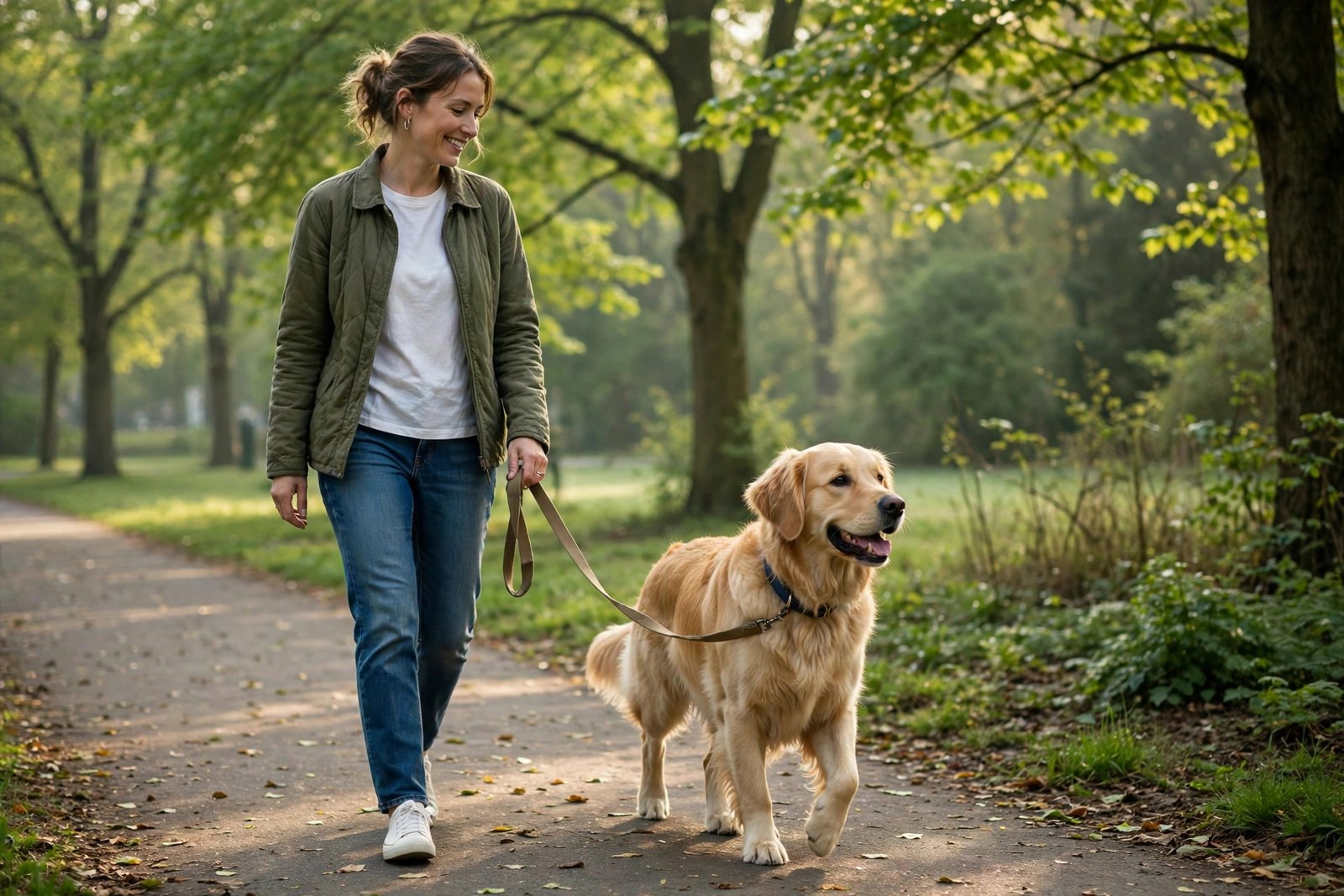
Walking your dog should be the best part of your day — instead, for millions of owners, it’s an arm-wrenching tug-of-war that ends with a sore shoulder and a dog that’s learned pulling gets them where they want to go faster. The good news: pulling is one of the most fixable behavior problems in dog training. Dogs pull because it works, and when you change what works, the pulling stops — usually within two to four weeks of consistent practice.
This guide covers why dogs pull, the equipment that helps (and the kind that harms), the stop-and-go method that actually works, and how to proof the behavior for real-world distractions.
Why Your Dog Pulls (It’s Not Dominance)
Forget the outdated “dominance” theory — dogs pull for a simple reason: opposition reflex plus reward history. When the leash tightens, a dog’s instinct is to push against the pressure (try it: gently pull a dog’s collar and watch them lean in). And every time pulling has gotten them to the interesting smell faster, they’ve been rewarded for it. Pulling works, so they keep doing it. You’re not fighting your dog’s personality; you’re fighting physics and learning history.
This reframe matters because it tells you the solution: make pulling stop working and make loose-leash walking pay better. No alpha rolls, no leash jerks, no “showing them who’s boss” — modern behavioral science is clear that aversive methods suppress behavior through fear while damaging your relationship. The American Kennel Club’s training resources reflect the current consensus: reward-based loose-leash training outperforms punishment-based methods in both speed and reliability.
Equipment: Set Yourself Up to Succeed
Start with the right gear. A front-clip harness (leash attaches at the chest) is the single best tool for pullers — when the dog lunges, the chest attachment gently turns them toward you instead of letting them power forward. It’s humane, effective, and recommended by most certified trainers. Pair it with a standard 6-foot leash — not a retractable leash, which actively teaches pulling by rewarding forward pressure with more line.
Avoid choke chains, prong collars, and shock collars. Beyond the welfare concerns, they don’t teach the dog anything — they just suppress pulling through pain, and the behavior returns the moment the collar comes off (or the dog decides the squirrel is worth the pain). For strong pullers, a head halter (like a Gentle Leader) gives excellent control while you train, but introduce it gradually with treats — most dogs hate the sensation at first. Good gear manages the problem; training solves it. Traveling with a trained walker opens doors — see pet-friendly hotel tips for trips with your well-mannered dog.
The Stop-and-Go Method: Boring but Unbeatable
Here’s the core technique. Rule: the walk only moves forward when the leash is loose. The instant the leash tightens, you become a tree — stop dead, no forward motion, no yanking back. Wait. The moment the dog glances back, loosens the leash, or steps toward you — mark it (“yes!”) and reward, then walk on. Repeat hundreds of times.
The first sessions are maddening: you’ll take three steps, stop, wait, take two steps, stop. A walk around the block takes 30 minutes. This is normal — you’re rewriting months or years of “pulling works” history, and it takes repetitions. Keep sessions short (10–15 minutes) and end on success. Within a week, most dogs start checking in voluntarily; within 2–4 weeks of daily practice, the default changes from pulling to walking near you. The secret ingredient is consistency: every walk, every family member, same rules. One person letting the dog pull “just this once” undoes days of training.
Adding Distractions and Real-World Proofing
Dogs don’t generalize well — perfect leash manners in your quiet street mean nothing at a busy park. Proof systematically: master the basics in low-distraction environments first, then gradually add difficulty — busier streets, then parks at off-hours, then the full Saturday-morning dog park gauntlet. At each new level, expect regression; that’s information, not failure. Drop back to shorter sessions and higher-value rewards.
For specific triggers (squirrels, other dogs, skateboards), use the “look at that” game: when your dog notices the trigger, mark and reward for looking at you instead of lunging. Over time, the trigger itself becomes the cue to check in with you — this is classical conditioning doing the heavy lifting. Carry exceptional treats (real chicken, cheese) reserved only for high-distraction training; kibble won’t cut it against a squirrel. And manage the environment while training: walk at quieter times, cross the street from triggers, and remember that a tired dog trains better — a quick game of fetch before a training walk takes the edge off. A calm, exercised dog also means a calmer home; keeping house with pets gets easier when walks stop being chaos.
Troubleshooting Common Problems
“My dog only pulls with my partner, not me.” Different handlers, different histories — the dog has learned the rules differ. Everyone must train identically. “He’s perfect until he sees another dog.” You’re over threshold — increase distance from triggers and rebuild. Reactivity often needs a certified trainer’s eyes; there’s no shame in hiring one. “Treats don’t work — he ignores them outside.” Your treats aren’t high-value enough, or the dog is too aroused to eat (also over threshold). Go somewhere easier with better food. “It’s been a month with no progress.” Honestly audit consistency: is everyone following the rules on every walk? Are sessions long enough? Most “training failures” are consistency failures, not dog failures.
Conclusion
Teaching your dog to walk on a leash without pulling comes down to one principle applied relentlessly: forward motion is the reward for a loose leash, and pulling earns a full stop. Get a front-clip harness, ditch the retractable leash, practice in short daily sessions, and proof gradually against distractions. In a month, walks transform from battles into what they should have been all along — the best part of both your days.
Frequently Asked Questions
How long does it take to stop a dog from pulling?
With consistent daily practice (10–15 minutes), most dogs show clear improvement in 1–2 weeks and reliable loose-leash walking in 3–6 weeks. Older dogs with years of pulling history take longer — but they absolutely can learn. The variable that matters most is handler consistency, not the dog’s age.
Are no-pull harnesses cruel?
Front-clip harnesses are widely considered humane — they redirect rather than punish, with no pain or choking. They’re a management tool, not a training substitute: use the harness for control while you train the behavior. Head halters require careful introduction but are similarly humane when fitted correctly.
Should I use treats forever on walks?
No — fade them gradually. Once the behavior is reliable, shift to intermittent rewards (every third check-in, then random), then replace food with life rewards: sniffing, greeting, moving forward. The leash skills stay because the walk itself becomes the reward for walking nicely.
My dog pulls only toward other dogs — is that different?
Yes — that’s leash reactivity or over-excitement, not simple pulling, and it needs desensitization work (graduated exposure at sub-threshold distances) rather than just stop-and-go. If your dog barks, lunges, or can’t take treats near other dogs, consult a certified professional dog trainer (CPDT-KA) — the ASPCA’s dog behavior resources can help you find qualified help — reactivity is very fixable with the right protocol.