
 By admin
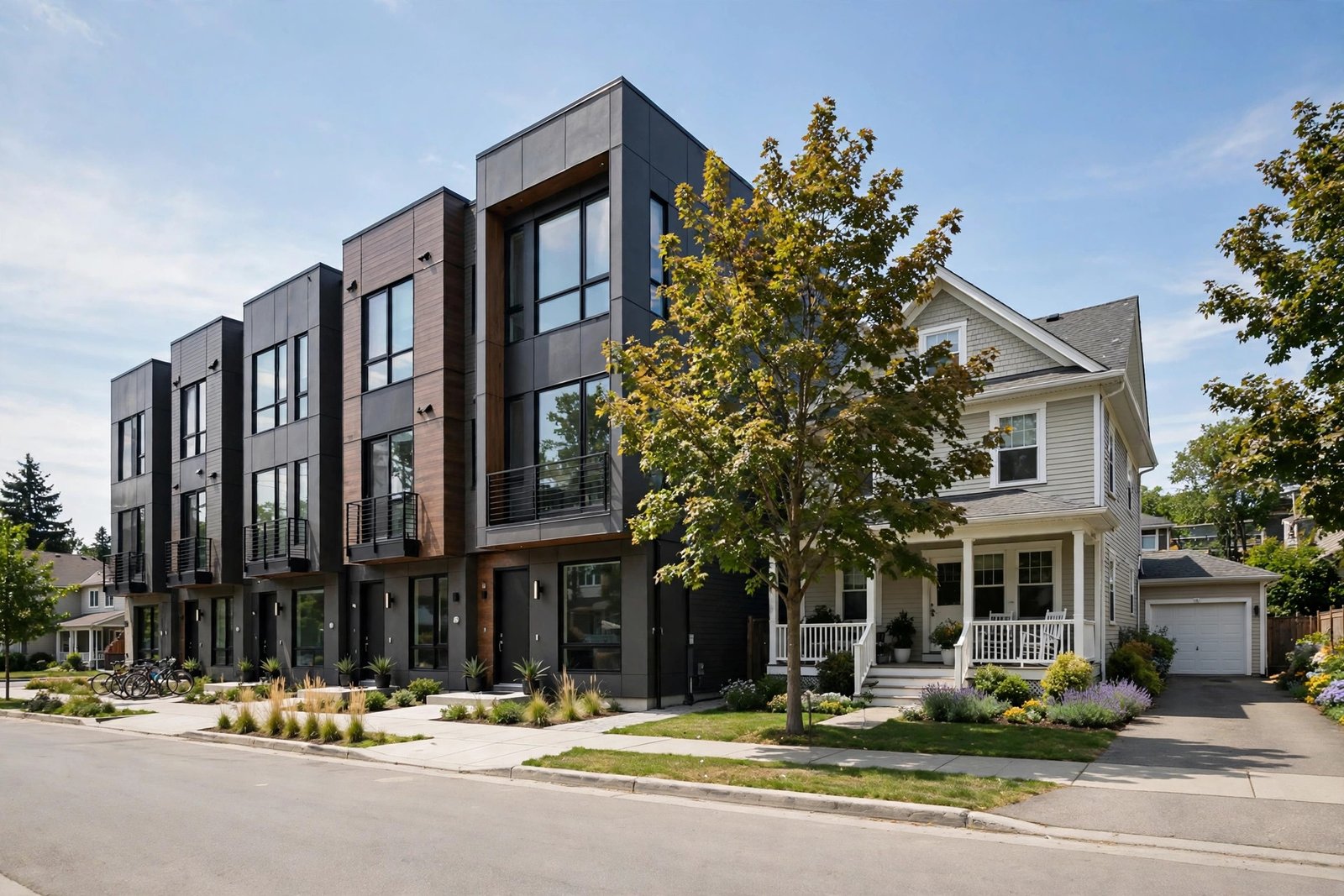
You’re torn between two listings: a 1,400-square-foot townhouse in a walkable neighborhood for $425,000, and a 1,900-square-foot single-family home twenty minutes further out for $460,000. The townhouse means less maintenance and a shorter commute; the single-family means a yard, no shared walls, and room to grow. This isn’t just a lifestyle choice — it’s a financial decision with decades of consequences for your wealth, flexibility, and daily happiness.
Townhouse vs. single-family is the classic first-buyer dilemma, and the right answer depends on your budget, timeline, tolerance for HOAs, and how you weigh convenience against control. Here’s the honest comparison across every dimension that actually matters.
Cost Comparison: It’s Not Just the Price Tag
Townhouses typically cost 10–20% less than comparable single-family homes in the same area — the headline advantage. But total cost of ownership tells a fuller story. Townhouse HOA dues ($200–$500/month typical, higher in cities) cover exterior maintenance, insurance on the structure, landscaping, and amenities — costs single-family owners pay directly and irregularly. Run the 10-year comparison: a $425,000 townhouse with $350/month HOA versus a $460,000 single-family with $200/month in averaged maintenance. The townhouse’s HOA alone costs $42,000 over the decade — narrowing the price gap substantially.
Financing is broadly similar, though some lenders scrutinize condo/townhouse developments (owner-occupancy ratios, HOA financial health, pending litigation) more carefully — budget extra time for HOA document review. Insurance differs meaningfully: townhouse HOAs typically carry a master policy on the structure, so you need only interior “walls-in” coverage ($300–$600/year) versus full homeowner’s insurance ($1,500–$2,500/year) for single-family. Property taxes follow assessed values — lower purchase price usually means lower taxes, a quiet townhouse advantage.
Lifestyle: What Daily Life Actually Feels Like
The townhouse experience
Less maintenance is the core pitch — no lawn to mow, no exterior painting, snow removal handled. For busy professionals, frequent travelers, and first-time buyers intimidated by home maintenance, this is genuinely life-changing. The trade-offs: shared walls (noise depends entirely on construction quality — concrete/steel buildings are quiet; wood-frame can be not), HOA rules governing everything from paint colors to pet breeds to rental restrictions, smaller or nonexistent yards, and less privacy. You’re buying into a community with governance — which is wonderful when it’s well-run and maddening when it isn’t.
The single-family experience
Total control: renovate anything (with permits), landscape freely, park where you want, make noise without neighbor diplomacy. Privacy, yard space for kids and dogs, and room to expand (additions, ADUs where allowed). The price: every maintenance burden is yours — the roof, the lawn, the plumbing, the everything. Budget 1–3% of value annually and 5–10 hours monthly of your time, or the money to hire it out. Our homeowner’s essential tools guide covers what single-family ownership actually requires you to own and know.
Appreciation and Resale: The Wealth Question
Historically, single-family homes appreciate faster than townhouses — the land underneath is the appreciating asset, and townhouses include less of it. During strong markets the gap narrows; during downturns, townhouses often fall further and recover slower. But local dynamics dominate: a townhouse in a walkable, supply-constrained urban neighborhood can outperform a single-family home in an overbuilt suburb. Evaluate the specific submarket, not the property type in the abstract.
Resale liquidity also differs: single-family homes appeal to the broadest buyer pool (families especially), while townhouses attract first-time buyers, downsizers, and investors — a solid but narrower market. HOA health directly affects townhouse resale: underfunded reserves, pending special assessments, or litigation can torpedo values and kill deals during buyer due diligence. Always review HOA financials, meeting minutes, and reserve studies before buying — this single step prevents the most expensive townhouse mistakes.
The FHFA House Price Index lets you compare appreciation across property types and metros — check your market’s actual history rather than relying on national generalizations.
The HOA Factor: Townhouse’s Make-or-Break Variable
The HOA is the townhouse’s shadow partner in your investment. Healthy HOAs (70%+ reserve funding, professional management, reasonable dues, clear rules) protect values and reduce your hassle. Troubled HOAs (depleted reserves, special assessments looming, litigation, draconian or arbitrary enforcement) destroy both quality of life and resale value. Red flags in HOA documents: special assessments under discussion, reserves below 30% funded, frequent fee increases, high delinquency rates among owners, pending lawsuits, and rental caps below 50% (which also affects your financing options and future flexibility).
Single-family HOAs exist too (many subdivisions have them), but their scope is typically limited to common areas and architectural guidelines — a lighter touch than the full building maintenance role in townhouse communities.
Decision Framework: Which Fits Your Life?
Choose the townhouse if: your budget stretches further with the lower price point; you value low maintenance over control; you want walkability and urban amenities; you’re buying your first home and want training wheels on homeownership; or your timeline is 5–10 years (enough to build equity, short enough that appreciation gaps matter less).
Choose single-family if: you need yard space (kids, dogs, gardening); you want renovation freedom and long-term expansion options; you plan to stay 10+ years (appreciation and control compound); you’re sensitive to noise or value privacy highly; or HOA governance makes your skin crawl on principle.
Consider the hybrid path: buy the townhouse now, build equity for 5–7 years, then trade up to single-family. This is the most common wealth-building sequence for young buyers in expensive markets — the townhouse isn’t the forever home, it’s the launchpad. Just ensure the townhouse’s HOA allows the flexibility you’ll need (some restrict renting, which complicates keeping it as an investment later).
Conclusion
The townhouse offers affordability, low maintenance, and location — paid for with HOA dues, shared walls, and slower appreciation. The single-family offers control, privacy, land, and historically stronger appreciation — paid for with higher prices and total maintenance responsibility. Neither is universally better; the right choice is the one matching your budget reality, lifestyle needs, and time horizon. Run the 10-year total cost comparison, read the HOA documents like a forensic accountant, and buy the home that fits the life you’ll actually live — not the one that impresses at dinner parties.
Single-family ownership means handling more repairs yourself — our guide to finding a reliable contractor for home repairs covers vetting pros for the jobs you won’t DIY, and U.S. Census housing data tracks how each housing type is trending.
Frequently Asked Questions
Do townhouses appreciate as much as single-family homes?
Historically no — single-family homes typically appreciate faster because land (the appreciating component) makes up more of the value. But location dominates: townhouses in supply-constrained, walkable areas can outperform single-family homes in overbuilt suburbs.
Are HOA fees worth it for a townhouse?
They’re worth it when they replace costs you’d pay anyway (exterior maintenance, insurance, landscaping) at similar or lower total cost with less hassle. They’re not worth it when dues are high, reserves are underfunded, and special assessments loom — always review HOA financials before buying.
Is a townhouse harder to sell than a house?
Slightly — the buyer pool is narrower (fewer families with children, for example), and HOA issues can kill deals during due diligence. But well-located townhouses in healthy communities sell readily; the discount is in appreciation rate, not liquidity.
Can I rent out my townhouse later?
Depends entirely on the HOA — many cap rentals at 20–50% of units or impose waiting periods. Verify rental policies before buying if future landlording is part of your plan. Single-family homes (outside HOAs) face no such restrictions.
What’s the biggest hidden cost of townhouse living?
Special assessments — one-time HOA levies for major projects that can run $5,000–$30,000+. Review the reserve study: underfunded reserves predict future assessments with depressing reliability.