
 By admin
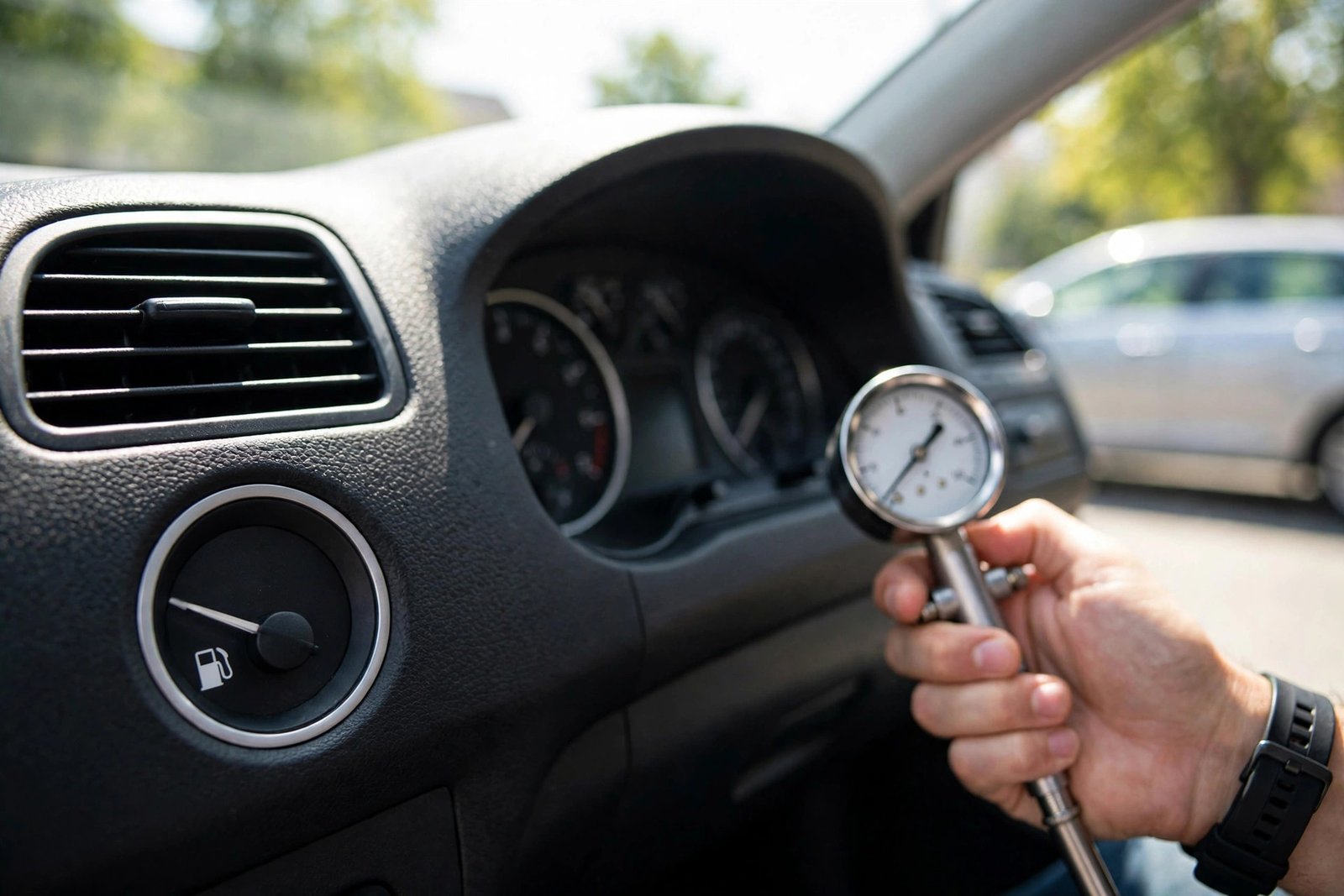
Improving your car’s fuel efficiency usually brings to mind expensive upgrades — new tires, performance parts, engine tunes. But the biggest fuel savings are free: they come from how you drive, how you maintain what you already have, and what you carry. The EPA estimates that aggressive driving alone can lower gas mileage by 15–30% on the highway, which means most drivers are leaving hundreds of dollars a year on the table through habits, not hardware.
This guide covers the no-cost and low-cost moves that genuinely improve MPG: driving techniques, maintenance basics, weight and drag reduction, and the myths that waste your money.
Drive Like Your Wallet Depends on It (Because It Does)
The single biggest factor in your fuel economy is your right foot. Aggressive driving — rapid acceleration, hard braking, speeding — is the #1 mileage killer. On the highway, every 5 mph over 50 mph costs you roughly like paying an extra $0.25–$0.35 per gallon, because aerodynamic drag increases exponentially with speed. Dropping from 75 to 65 mph on a long trip can improve highway mileage 10–15%.
Practice “smooth and steady”: accelerate gently, anticipate stops so you coast rather than brake, and maintain constant speed. Cruise control on flat highways helps; on hilly terrain, it can hurt (it floors the throttle uphill), so use your judgment. Avoid idling — restarting a modern engine uses less fuel than idling for more than 30–60 seconds, so kill the engine in long drive-thru lines. These habits alone can save the average driver $300–$500 per year. The DOE’s FuelEconomy.gov driving tips quantify each technique’s impact.
Maintenance You’re Probably Skipping
No upgrades needed — just maintenance you may be neglecting. Tire pressure is the big one: underinflated tires increase rolling resistance, and the DOE estimates proper inflation improves mileage up to 3%. Check monthly (tires lose ~1 PSI per month naturally) and inflate to the door-jamb sticker value, not the tire’s max. Air filters: on older carbureted cars a clogged filter hurt mileage significantly; on modern fuel-injected cars the effect is smaller, but a dirty filter still restricts performance — replace per your manual.
Motor oil: using the manufacturer’s recommended grade (often 0W-20 in modern cars) improves mileage 1–2% over thicker oil. Spark plugs and oxygen sensors: worn plugs and failing O2 sensors can tank mileage 10%+ while triggering no obvious symptoms — if your mileage has mysteriously dropped, these are prime suspects. None of this is an “upgrade”; it’s the baseline maintenance your car was designed around. Skip the gimmicks: fuel additives, “performance” chips, and magnetic fuel savers have been repeatedly debunked — the Department of Energy maintains guidance on which aftermarket products actually work (almost none of them).
Lighten the Load and Cut the Drag
Every 100 pounds of extra weight cuts mileage roughly 1% — clean out the trunk. That golf bag, toolbox, and case of water you’ve been hauling for months are costing you real money. Roof racks and cargo boxes are worse: an empty roof rack can reduce highway mileage 5–10% through aerodynamic drag, and a loaded cargo box can cost 15%+. Remove roof accessories when you’re not using them; it takes five minutes and pays all summer.
Windows vs. air conditioning is the classic debate, and the answer is speed-dependent: below ~45 mph, open windows are more efficient; above that, aerodynamic drag from open windows exceeds the A/C’s fuel cost, so roll them up and use the A/C. In stop-and-go city driving, windows down wins; on the highway, A/C wins. Either way, don’t blast the A/C at max on a mild day — moderate settings sip fuel. Planning a long drive? These budget road-trip strategies pair perfectly with efficiency driving.
Plan Smarter Trips
A cold engine uses more fuel — combining multiple errands into one trip with a warmed-up engine uses far less gas than several cold-start trips. Route planning matters too: a slightly longer highway route at steady speed often beats a shorter stop-and-go route through town. Use traffic apps to avoid idling in congestion; 30 minutes of gridlock can burn a gallon doing nothing.
Carpool when you can — splitting fuel four ways quarters your cost — and question short trips entirely. A two-mile drive is the least efficient trip your car makes (cold engine, rich fuel mixture); walking or biking it saves 100% of the fuel. Track your mileage for a month with an app or even a notebook: measuring makes the savings visible, and visible savings reinforce the habits. If your driving needs are changing anyway, compare renting versus rideshares for trips where your own car is the expensive option.
Myths That Waste Your Money
“Premium gas gives better mileage.” Only if your car requires it. In cars designed for regular, premium provides zero benefit — you’re donating money to oil companies. “Warming up the car helps.” Modern engines need ~30 seconds; extended idling just burns fuel. “Manual transmissions always beat automatics.” Not anymore — modern automatics and CVTs typically match or beat manuals. “Overinflating tires helps.” Slightly, but at the cost of uneven wear and worse handling — stick to the recommended pressure. “Drafting trucks saves fuel.” Technically true, practically suicidal — never tailgate for mileage.
Conclusion
The most satisfying part of efficiency driving is that the savings compound every single week you practice them. Improving fuel efficiency without upgrades is about discipline, not dollars: smooth driving, proper tire pressure, regular maintenance, a lighter car, and smarter trip planning. Together these free habits can improve your real-world mileage 15–25% — worth $400–$800 a year for the average driver. Start with tire pressure and your right foot this week; they’re the two highest-return moves and they cost nothing. Check your tire pressure this weekend, ease off the accelerator on your next highway trip, and watch each fill-up stretch a little further. Small habits, practiced consistently, turn any car into a more efficient one — and the savings show up at every single fill-up for years.
Frequently Asked Questions
What’s the fastest free way to improve my MPG?
Slow down on the highway and drive smoothly. Dropping from 75 to 65 mph plus gentle acceleration and coasting to stops can improve mileage 10–20% immediately — no tools, no purchases, just a calmer right foot. Check tire pressure the same day for another easy 1–3%.
Does cruise control actually save gas?
On flat highways, yes — it maintains steady speed better than most human feet. On hilly terrain, it can use more fuel by aggressively accelerating uphill; there, gentle manual throttle control wins. Use cruise on flat interstates, drive manually in the hills.
How much does extra weight really affect fuel economy?
About 1% per 100 pounds in a typical sedan — modest, but it adds up with roof cargo (5–15% penalty from drag). The bigger wins are behavioral: aggressive driving costs 15–30%, while a clean trunk might save 1–2%. Do both, but prioritize the driving.
Are fuel additives worth buying?
Generally no. Reputable testing consistently shows aftermarket fuel additives don’t meaningfully improve mileage in healthy engines. If your mileage has dropped suddenly, the cause is almost always maintenance-related (tire pressure, air filter, spark plugs, oxygen sensor) — fix the real problem instead of buying a bottle.