
 By admin
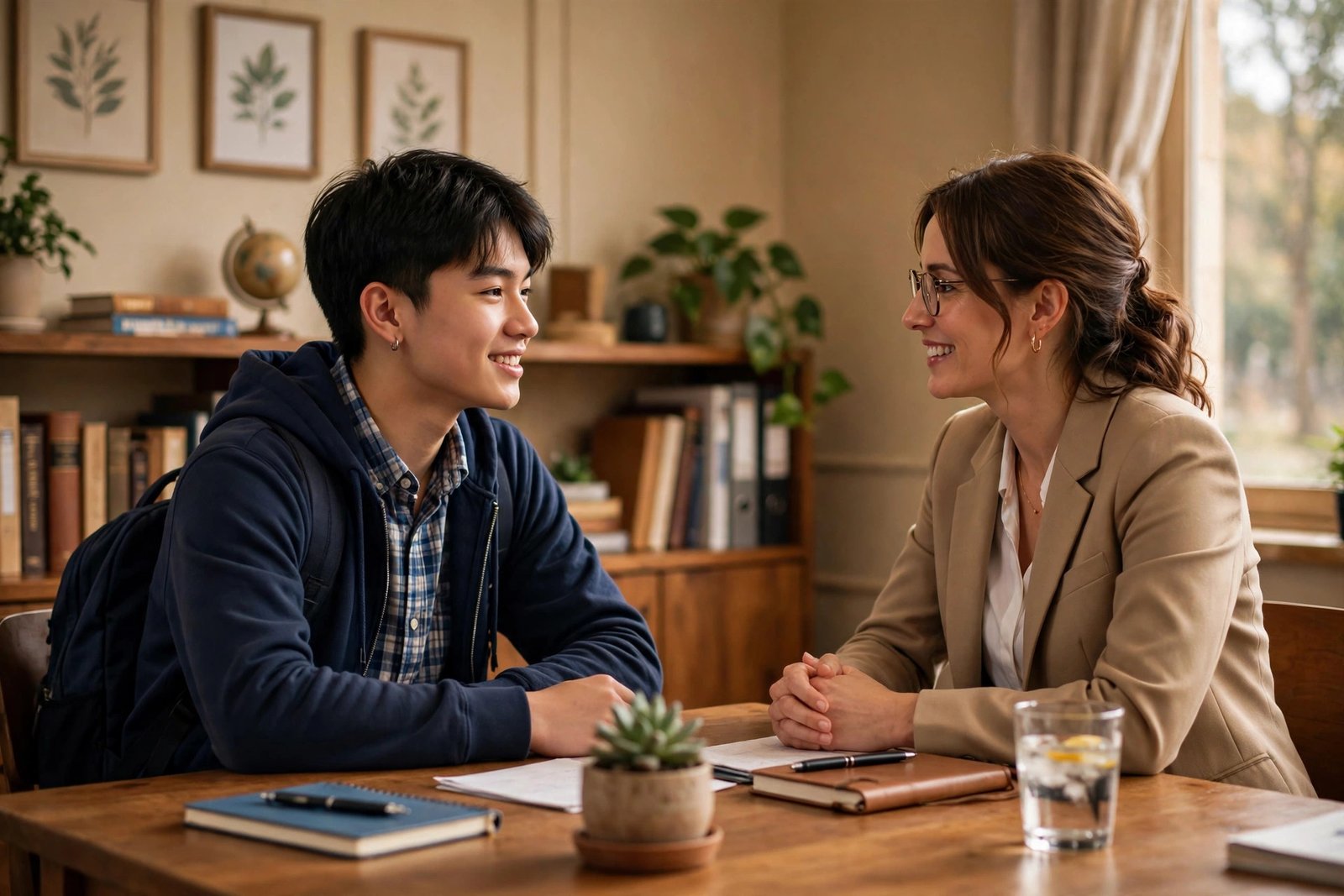
The college interview: thirty minutes that feel like they decide your future. Most students either over-prepare (memorizing answers until they sound robotic) or under-prepare (winging it and rambling). Both approaches waste the opportunity. Here’s what the interview actually is — a conversation to assess fit, maturity, and genuine interest — and how to walk in confident, be yourself at your best, and leave a memorable impression.
What the Interview Really Evaluates
First, the reassurance: for most colleges, the interview is a small factor — it rarely makes an application, though a terrible one can raise flags. Its real purposes: confirming the person matches the paper (is this thoughtful applicant real?), assessing demonstrated interest (do you actually want this school?), and evaluating communication and maturity. Alumni interviewers, who conduct most interviews, are volunteers who loved their school — they’re rooting for you, not interrogating you. The College Board’s interview guidance frames it correctly: it’s a two-way conversation, and your questions matter as much as your answers. The National Association for College Admission Counseling publishes interview best practices worth reviewing. Knowing this transforms the dynamic from performance to dialogue.
Preparation: Research That Shows
Know the school specifically
Generic praise (“great academics, beautiful campus”) signals you copied the brochure. Specific knowledge signals genuine interest: particular professors and their research, unique programs (that January term, that undergraduate research initiative), courses you’re excited about, clubs you’d join, aspects of campus culture that fit you. Spend an hour on the school’s website — academics pages, student life, news — and arrive with three specific things that draw you. The same preparation discipline behind a strong cover letter — research the recipient, tailor the message — applies to interviews. This preparation also powers your questions, which interviewers weight heavily.
Know your story
Prepare (not memorize) your narrative: who you are, what drives you, what you’ve done that matters to you, and why this school fits. Have 2–3 stories ready — moments that reveal character, growth, or passion — because stories are memorable and claims aren’t. “I’m passionate about environmental science” is forgettable; the story of the summer you spent testing your town’s creek water and presenting findings to the city council is unforgettable. Your application essays are the written version of this narrative — align them without repeating verbatim.
Prepare for the classics
You’ll almost certainly face: “Tell me about yourself” (a 90-second narrative, not your life story — present, past highlights, future direction), “Why this school?” (specifics, not generics), “What do you want to study and why?” (it’s fine to be undecided — frame it as excited exploration, not cluelessness), “Tell me about a challenge you overcame” (the growth matters more than the challenge), and “What questions do you have for me?” (always have 3–4 — see below). Practice answers aloud, not in your head — speaking reveals rambling that thinking hides.
The Day Of: Execution
Logistics and presence
Arrive 10–15 minutes early (for virtual: test tech 30 minutes before, with backup plans). Dress one notch above the setting — neat, comfortable, yourself. Bring a notebook with your questions written down (referring to notes looks prepared, not weak). Phone off, not silenced — off. Greet with eye contact, a genuine smile, and a firm handshake (or warm virtual greeting). These first 60 seconds set the tone; confidence here is mostly logistics done right.
During: be conversational, not performative
Listen fully before answering — the best conversationalists respond to what’s asked, not what they prepared. It’s fine to pause and think (“that’s a great question — let me think for a moment”); thoughtful pauses beat instant rambling. Show enthusiasm genuinely — energy is contagious, and interviewers remember how you made them feel. Be honest about weaknesses and uncertainties; a student who says “I’m still figuring out my major, but I’m drawn to X because…” is more credible than one performing false certainty. And treat it as mutual evaluation — you’re also assessing fit, which paradoxically makes you more attractive as a candidate. Composure skills transfer directly: breathe, slow down, make eye contact.
Your questions (the secret weapon)
Strong questions reveal genuine interest and leave lasting impressions. Ask things only a human can answer: “What surprised you most about your experience here?” “How would you describe the students who thrive here — and who struggle?” “What’s something about the school you wish you’d known as an applicant?” “How did the school support you in [specific interest]?” Avoid anything Google answers (deadlines, majors offered) — it signals you didn’t prepare. End with: “Is there anything about my application you’d like me to clarify?” — it shows confidence and gives you a final word.
After: The Follow-Through
Send a thank-you email within 24 hours: brief, specific (reference something you discussed), genuine — the same follow-up etiquette that wins job hunts wins admissions. “Thank you for sharing how the undergraduate research program shaped your career — it’s exactly the kind of opportunity I’m hoping for.” This isn’t sycophancy; it’s courtesy that keeps you memorable. Then let it go — don’t replay every answer obsessively. One interview doesn’t decide admission; it adds texture to a file. Trust your preparation and move on to the next thing.
Common Mistakes to Avoid
Memorized answers (you sound like a brochure — prepare themes, not scripts). Badmouthing other schools, teachers, or your high school (negativity is memorable in the worst way). Having no questions (signals disinterest — the single most damaging interview error). Name-dropping prestige factors (“the ranking,” “my parents went here”) instead of genuine fit reasons. Rambling (if your answer passes 2 minutes, wrap it up). Checking your phone (instant disqualification from serious consideration). And performing instead of conversing — the interviewer wants to meet you, not your rehearsed avatar.
For Parents: How to Help
Parents can help best by staging one or two mock interviews — playing the interviewer with the classic questions — and then stepping back. Resist the urge to script answers; over-coached teens sound hollow. Your most valuable contribution is logistical (getting them there calm and on time) and emotional (genuine confidence in them). Then let them shine on their own.
Conclusion
College interview confidence comes from: understanding it’s a conversation not an interrogation, researching the school specifically, knowing your narrative through stories, preparing for classic questions aloud, executing logistics flawlessly, staying conversational and genuine, asking memorable questions, and following up graciously. Prepare well, then let go and be yourself — the prepared, thoughtful, curious version. That’s who they’re hoping to meet, and that’s who you’ll be. Walk in curious, walk out proud, and let the conversation do the rest.
Frequently Asked Questions
How important is the college interview?
For most schools, it’s a minor factor — it confirms fit and interest but rarely decides admission. A great interview adds positive texture; a bad one (rudeness, obvious disinterest) can raise red flags. Prepare well but don’t agonize.
What should I wear to a college interview?
Neat, comfortable, and yourself — typically smart casual (collared shirt/blouse, neat pants/skirt). One notch above everyday school wear. Avoid anything distracting; the focus should be your words, not your outfit.
What questions should I ask in a college interview?
Ask what only a human can answer: what surprised them about the school, who thrives there, how the school supported their interests. Avoid anything easily Googled. Always have 3–4 prepared — having no questions signals disinterest.
How long does a college interview last?
Typically 30–60 minutes, most commonly around 30–45. Alumni interviews tend toward the shorter end; on-campus interviews with admissions staff may run longer.
Should I bring anything to the interview?
A notebook with your prepared questions, and optionally a one-page activities résumé if the format allows. Don’t bring gifts — a sincere thank-you email afterward is the appropriate gesture.