
 By admin
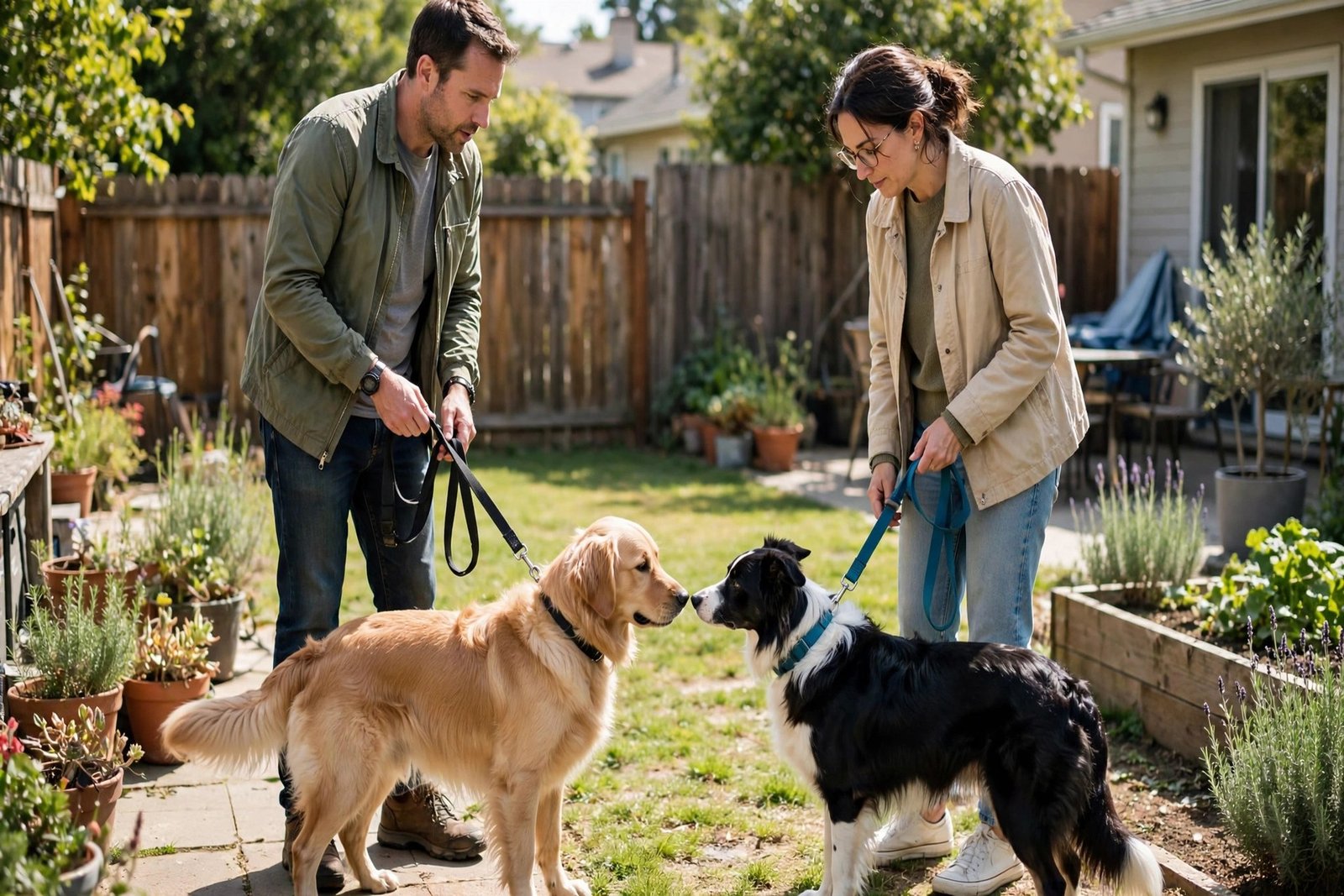
Your dog is lonely, you have the space, and that shelter photo is calling your name. Adding a second dog can be wonderful — built-in companionship, playmates, double the joy. It can also be a territorial disaster that strains your relationship with your first dog and turns your home into a referee station. The difference is almost entirely in the introduction: the first 48 hours set the tone for the entire relationship.
This guide covers how to introduce a second dog smoothly: choosing a compatible second dog (the factor most people get wrong), the neutral-territory first meeting protocol, the critical first two weeks of management, handling the common friction points (food, toys, attention), and the signs that things are going well versus going wrong.
Choosing the Right Second Dog (Compatibility First)
The smoothest introductions start before you meet — with the right match. Energy and play style matter more than breed. A calm 8-year-old Lab will not enjoy a manic adolescent Border Collie, regardless of how sweet both are individually. Shelters that do “meet and greets” and foster-based rescues (where the dog’s home behavior is known) give you far better compatibility data than a kennel observation.
The opposite-sex rule: male-female pairings have the lowest conflict rates statistically; same-sex pairs — especially two females — have the highest. It’s not absolute, but it’s the strongest single predictor. Age gap: 2+ years apart works best — similar-aged dogs compete more, while a stable adult mentors a younger dog naturally. Size: large size differences need supervision (accidental injury during play), but many Great Dane–Chihuahua friendships thrive. Temperament: pair a confident-but-tolerant resident dog with a socially appropriate newcomer; two anxious dogs amplify each other, and a resource-guarder plus another resource-guarder is a known conflict recipe. Be honest about your resident dog: is she truly dog-social, or merely dog-tolerant? Tolerant dogs can accept a calm companion but will hate a rude one. And consider whether your home setup suits two dogs — space, yard access, and your own bandwidth matter as much as canine chemistry.
The First Meeting: Neutral Territory Protocol
Never introduce inside your home or yard. Your resident dog’s territory is where territorial behavior lives; a first meeting there starts the relationship with a guarding incident. The protocol:
Step 1: Parallel walk. Have a helper handle one dog. Start 20–30 feet apart on a quiet street or park, walking the same direction. No face-to-face greeting — just coexisting while moving. Let the distance shrink naturally over 10–15 minutes as both dogs relax. Treat calm behavior. Step 2: Brief sniff, then move on. If both dogs are loose and easy, allow a 3-second butt-sniff, then cheerfully walk on. Short positive exposures beat long intense ones. Repeat a few times. Step 3: Walk home together. Enter the house together — the newcomer isn’t “invading”; they’re arriving with the pack. Keep leashes on indoors initially (dragging leashes you can grab without reaching into a scuffle).
What to avoid: the off-leash “let them work it out” greeting (a rude rush can poison the relationship in seconds), introducing when either dog is already aroused or tired, and hovering anxiously — dogs read your tension. If either dog shows sustained hard staring, stiffening, or won’t disengage, increase distance and try another day. A postponed introduction beats a bad first impression. The AKC’s introduction protocol mirrors this approach — it’s the professional standard for a reason.
The First Two Weeks: Management Over Magic
The relationship isn’t built on introduction day — it’s built in the decompression fortnight that follows. Rules for weeks 1–2: separate resources completely. Feed in separate rooms or crates — food is the #1 conflict trigger, and “they’ll learn to share” is how fights start. Separate water bowls, separate resting spots, separate toy access (pick up high-value toys; leave only boring ones out communally).
Supervise all interactions. No unsupervised time together until you’re confident — use baby gates to create zones, crate-and-rotate if needed. Maintain the resident dog’s routine religiously. Same walk times, same training, same couch spot, same one-on-one attention. Jealousy isn’t the technical term (it’s resource competition), but the feeling is real: the resident dog must learn that the newcomer predicts more good things, not fewer. Give the resident dog treats when the newcomer appears — classical conditioning doing quiet work. Let the newcomer decompress. New dogs are stressed for 2–3 weeks (cortisol takes that long to normalize); a stressed dog is a reactive dog. Keep the world small, the routine predictable, and expectations low. This structured, predictable household rhythm is what lets both dogs relax enough to actually like each other.
Handling the Friction Points
Food and chews: permanent separate feeding — this isn’t a phase, it’s management for life in many multi-dog homes, and there’s no shame in it. Pick up food bowls between meals; don’t leave chews lying around communally. Toys: introduce shared toys gradually after week two, starting with low-value toys, supervised. Remove anything either dog guards — guarding is information, not disobedience. Attention: pet both, but avoid the trap of comforting the newcomer while ignoring the resident — greet the resident first when you come home (she was there first; hierarchy of courtesy matters to dogs).
Play: let them develop their own play style, but interrupt play that escalates — play should be bouncy and reciprocal, with role reversals. If one dog is always the pinned one or tries to disengage and can’t, step in cheerfully and redirect. The ASPCA’s multi-dog household guidance covers reading these dynamics in detail.
Good Signs vs. Warning Signs
Going well: parallel resting in the same room (not touching — just coexisting calmly), play bows and bouncy reciprocal play, sharing space without tension, the newcomer deferring to the resident (yielding toys, moving aside — polite, not fearful), and both dogs relaxing visibly over days 5–14. These are the green lights to gradually relax management.
Warning signs needing intervention: hard staring with stiff bodies, guarding that escalates (from freezing over food to growling to snapping — intervene at the freeze, not the snap), one dog constantly harassing the other without reciprocal play, any bite that breaks skin, or a resident dog whose behavior deteriorates (appetite loss, withdrawal, house-soiling). Do not “let them fight it out” — fights damage relationships and risk serious injury; each fight makes the next one more likely. If tension isn’t resolving by week 3–4, or there’s any bite, consult a certified professional trainer (CPDT-KA/IAABC) before it becomes entrenched. Some pairings genuinely don’t work — and recognizing that early, with a responsible rehoming plan through the rescue, is kinder than a year of conflict.
Conclusion
Smooth second-dog introductions are engineered, not lucky: choose for compatibility (opposite sex, age gap, matched energy), meet on neutral ground with a parallel walk, manage resources separately for the first two weeks, protect the resident dog’s routine, and supervise until trust is earned. Most well-matched pairs are coexisting peacefully within a month and genuinely bonded within three. The first 48 hours set the tone — invest in them, and you get the double-joy household you were picturing when you saw that shelter photo.
Frequently Asked Questions
Should I get a male or female dog as a second dog?
Opposite-sex pairings statistically have the lowest conflict rates. Two males can work well, especially with an age gap. Two females have the highest conflict risk — female-female aggression tends to be the most serious and hardest to resolve.
How long does it take for two dogs to get used to each other?
Peaceful coexistence typically emerges in 2–4 weeks with proper management; genuine bonding usually takes 2–3 months. The 3-3-3 rule applies to the newcomer too: 3 days to decompress, 3 weeks to learn the routine, 3 months to feel at home.
Where should the dogs first meet?
On neutral territory — a quiet street or park — never inside your home or yard. Start with a parallel walk 20–30 feet apart, allow brief sniff greetings, then walk home together. Neutral ground keeps the first impression social, not territorial.
Should the dogs share food bowls?
No — feed separately, at least for the first several weeks and ideally permanently. Food is the most common trigger for multi-dog conflict, and separate feeding eliminates the problem entirely. Feed in separate rooms, pick bowls up between meals.
What if my dogs fight? Should I let them work it out?
No — never let dogs “fight it out.” Interrupt safely (loud noise, blanket over them, wheelbarrow the aggressor by the hind legs — never reach for collars), separate, and assess. Repeated fights or bites breaking skin need a certified professional trainer immediately.