
 By admin
You want an animal in your life. You also work fifty hours a week, travel occasionally, and can barely keep a houseplant alive. The good news: “low-maintenance pet” isn’t an oxymoron — it just means choosing an animal whose needs fit your actual life instead of your aspirational one. The wrong pet for a busy schedule ends up rehomed or neglected; the right one thrives on benign neglect and fits seamlessly into a packed calendar.
This guide ranks genuinely low-maintenance pets for busy adults — with honest assessments of daily time, cost, lifespan, and the hidden work nobody mentions. Because “low-maintenance” never means “no-maintenance,” and the kindest thing you can do is match the animal to your real availability.
What “Low-Maintenance” Actually Means
Let’s define terms, because pet stores abuse them. A genuinely low-maintenance pet needs: under 20 minutes of daily care, no daily exercise requirement (no walks), tolerance for your occasional late night or weekend away (with preparation), and no complex social needs that demand hours of interaction. Every animal needs food, clean water, appropriate habitat, and veterinary care — the question is how much daily active labor that takes.
The spectrum, roughly: fish and invertebrates (5–10 min/day once established), small reptiles (10–15 min/day), cats (15–30 min/day — the lowest-maintenance common mammal), small mammals like hamsters (15–20 min/day but short lifespans and nocturnal schedules), and birds (30+ min/day minimum — parrots are emphatically not low-maintenance despite the reputation). Dogs, even “easy” breeds, start at 60–90 minutes daily and don’t belong on this list. Anyone telling you a puppy is low-maintenance is selling you something.
The Top Tier: Truly Minimal Daily Effort
Betta fish
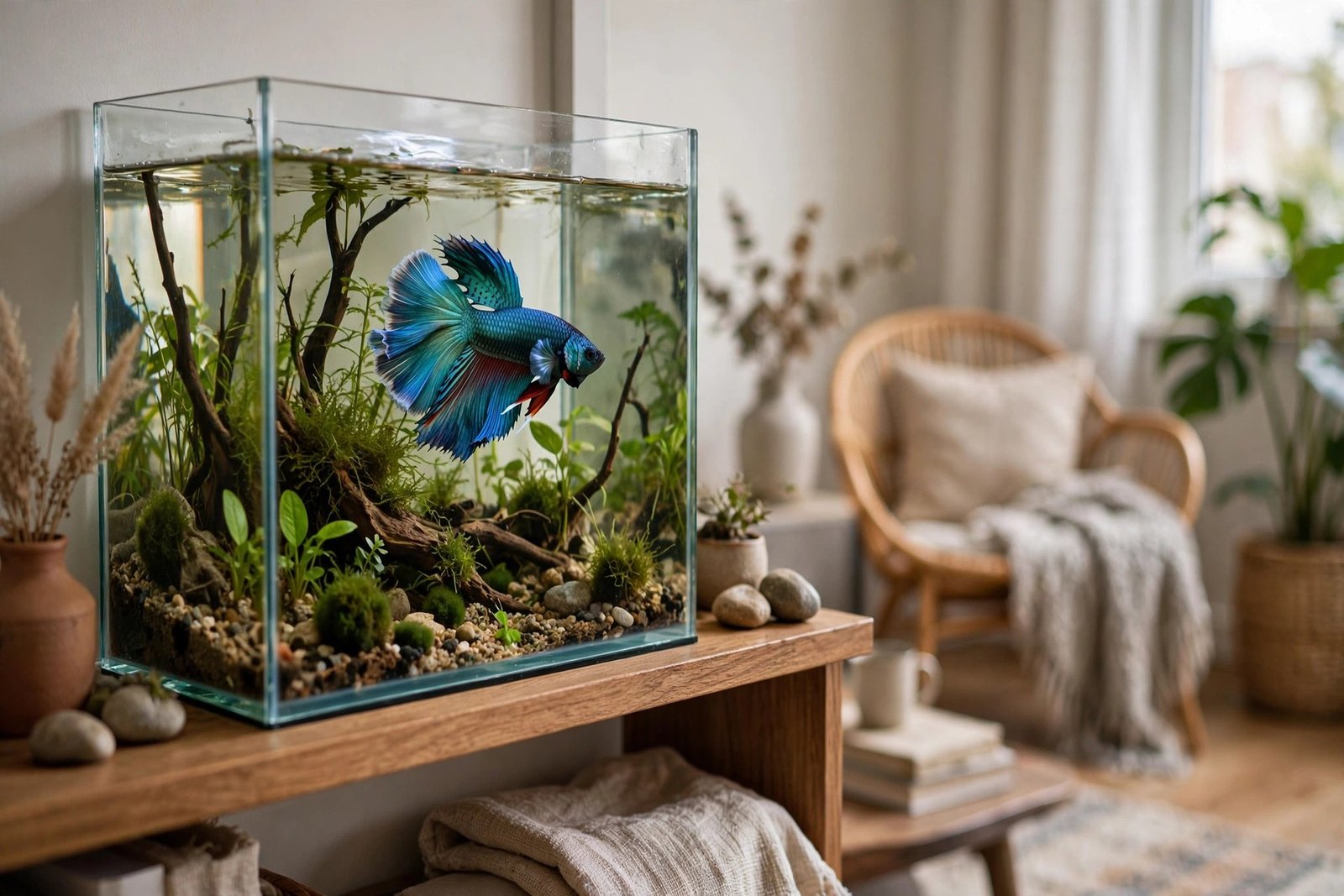
The classic starter pet for a reason — with one correction to the myth: bettas need a heated, filtered 5-gallon tank minimum, not a vase. Once cycled and established: feed once daily (30 seconds), weekly 25% water change (15 minutes), done. Cost: ~$100 setup, ~$10/month. Lifespan: 3–5 years with proper care. The hidden work: learning the nitrogen cycle before adding the fish — the #1 beginner killer is impatience, not neglect. A cycled tank is nearly self-sustaining; an uncycled one is a chemistry experiment.
Leopard geckos
Arguably the best reptile for busy adults: docile, doesn’t need UVB lighting (rare among reptiles), eats live insects 2–3 times weekly (not daily), and tolerates handling. Daily care: check water, spot-clean — under 10 minutes. Feedings take 15 minutes a few times a week. Cost: ~$150–$250 setup, ~$20/month for insects. Lifespan: 15–20 years — this is a two-decade commitment disguised as an easy pet, so be sure. The hidden work: maintaining a live insect supply (dubia roach colonies are the efficient answer) and proper heating gradients.
Cats (the honest assessment)
Cats are the lowest-maintenance pet that still greets you at the door. Daily reality: scoop litter (5 min), fresh food and water (5 min), brief play or affection on the cat’s terms (10–15 min). They’re fine alone for a workday, and a weekend away needs only an automatic feeder, extra water, and a clean litter box — no dog-walker required (and keeping the house clean with pets stays manageable with the right routine). Cost: ~$500–$1,000/year. Lifespan: 13–17 years.
The honest caveats: litter boxes are non-negotiable daily labor (skip a day and you’ll know), cats need some interactive play or behavior issues develop, and vet costs are real — budget for them. But for a busy adult who wants genuine companionship without the dog schedule, an adult cat (1+ years, past the kitten chaos) is the sweet spot — especially in a cozy, cat-friendly apartment setup where a lounge cat can truly thrive.
The Second Tier: Easy With an Asterisk
Hamsters and gerbils
Daily care is minimal (food, water check, spot-clean — 10 minutes), they’re entertaining to watch, and the setup is cheap (~$75). The asterisks: they’re nocturnal (the wheel spins at 2 a.m. — keep the cage out of the bedroom), lifespans are short (2–3 years — wonderful for commitment-phobes, heartbreaking on schedule), and they’re more “watch” pets than “cuddle” pets. Gerbils are diurnal-ish and slightly more interactive; dwarf hamsters are faster and nippier. Fine for busy adults who want low-effort life in the home, not a companion.
Corn snakes
Feed once every 7–10 days. That’s it — the lowest feeding frequency of any common pet. Daily care is essentially zero beyond water checks and spot-cleaning. Docile, hardy, beautiful, and inexpensive (~$100 setup, ~$10/month for frozen mice). Lifespan: 15–20 years. The asterisks: you must be comfortable feeding rodents (frozen-thawed — no live feeding needed or recommended), and escapes happen if the enclosure isn’t truly secure. For the right person, the easiest vertebrate pet in existence; for the mouse-averse, a non-starter.
Shrimp and snail nano-tanks
A 5-gallon planted tank of cherry shrimp and nerite snails is a living lava lamp: feed lightly 2–3 times weekly, top off evaporated water, trim plants occasionally. Nearly zero daily labor, mesmerizing to watch, and cheap (~$75 setup). The asterisk: they’re fragile to water-parameter swings — this is a pet for someone who enjoys the aquarium hobby’s chemistry side, not for someone who wants to ignore a tank entirely.
Pets Marketed as “Easy” That Aren’t
Parrots and parakeets: marketed as cage pets, actually flock animals needing hours of daily social interaction. A lonely parrot plucks its feathers and screams — they’re among the highest-maintenance pets that exist. Rabbits: the Easter myth. Rabbits need daily fresh greens, large exercise space (not a hutch), litter training, bunny-proofing (they chew everything, including wires), and exotic vet care that’s pricey and hard to find. Wonderful pets; not low-maintenance. Hermit crabs: sold as beach souvenirs, actually complex tropical animals needing precise humidity, deep substrate for molting, and social groups — most die within a year of purchase from improper care. Turtles: aquatic turtles need large filtered tanks, UVB lighting, and live 20–40 years — a decades-long infrastructure project, not a tabletop pet.
The pattern: pet stores profit from the “easy pet” label on animals with complex needs. Research from the ASPCA’s pet care resources before believing any “starter pet” marketing — the animal’s actual needs don’t care about the sales pitch.
Matching the Pet to Your Life: A Decision Framework
Ask yourself four questions: 1. Daily minutes available? Under 10: fish, shrimp tank, corn snake. 10–20: leopard gecko, hamster, cat (minimum). 20–30: cat done well. 2. Travel frequency? Frequent weekends away favor cats (auto-feeder works) and fish (auto-feeder + timer lights); reptiles need a sitter for insect feedings. 3. Allergies? Fish, reptiles, and amphibians are the hypoallergenic options — no dander, no fur. 4. Lifespan comfort? Want a shorter commitment? Hamsters (2–3 years), bettas (3–5). Ready for decades? Leopard geckos, corn snakes, cats (15–20 years).
And the meta-rule: adopt, don’t shop, where possible — shelters overflow with adult cats, and reptile rescues exist in most metro areas. An adult animal with a known personality is the ultimate low-maintenance move. The Humane Society’s pet care resources can help you evaluate what different species truly need before you commit.
Conclusion
The best low-maintenance pets for busy adults: betta fish or shrimp tanks for near-zero daily effort, leopard geckos or corn snakes for the reptile-inclined, and adult cats for genuine companionship at 20 minutes a day. Avoid the “easy” marketing traps (parrots, rabbits, hermit crabs, turtles), match the animal’s lifespan to your commitment horizon, and adopt an adult when you can. Low-maintenance done right isn’t about minimizing the animal — it’s about honestly maximizing the fit. Get the fit right, and the pet practically takes care of itself.
Frequently Asked Questions
What is the easiest pet to take care of?
For vertebrates: a corn snake (feed every 7–10 days, minimal daily care) or a betta fish in a properly cycled 5-gallon tank. For companionship with minimal effort: an adult cat (~20 minutes daily). “Easiest” depends on whether you want an animal to observe or a companion.
Are cats really low-maintenance?
Compared to dogs, absolutely — no walks, no yard, fine alone all day, weekend-away capable with an automatic feeder. But they’re not zero-maintenance: daily litter scooping, fresh food/water, some interactive play, and real vet costs are non-negotiable.
What pet can I leave alone for the weekend?
Cats (with automatic feeder, extra water, clean litter box), fish (auto-feeder, timer lights), and most reptiles (fine 2–3 days). Dogs cannot be left alone for a weekend — they need a sitter or boarding.
What is the cheapest low-maintenance pet?
Betta fish: ~$100 setup, ~$10/month. Cherry shrimp tanks are similarly cheap. Cats cost more (~$500–$1,000/year) but deliver far more companionship per dollar than any other low-maintenance option.
What pet lives the longest with least care?
Leopard geckos and corn snakes: 15–20 year lifespans with 10–15 minutes of daily care. Just be certain you’re ready for a two-decade commitment before choosing based on lifespan.