
 By admin
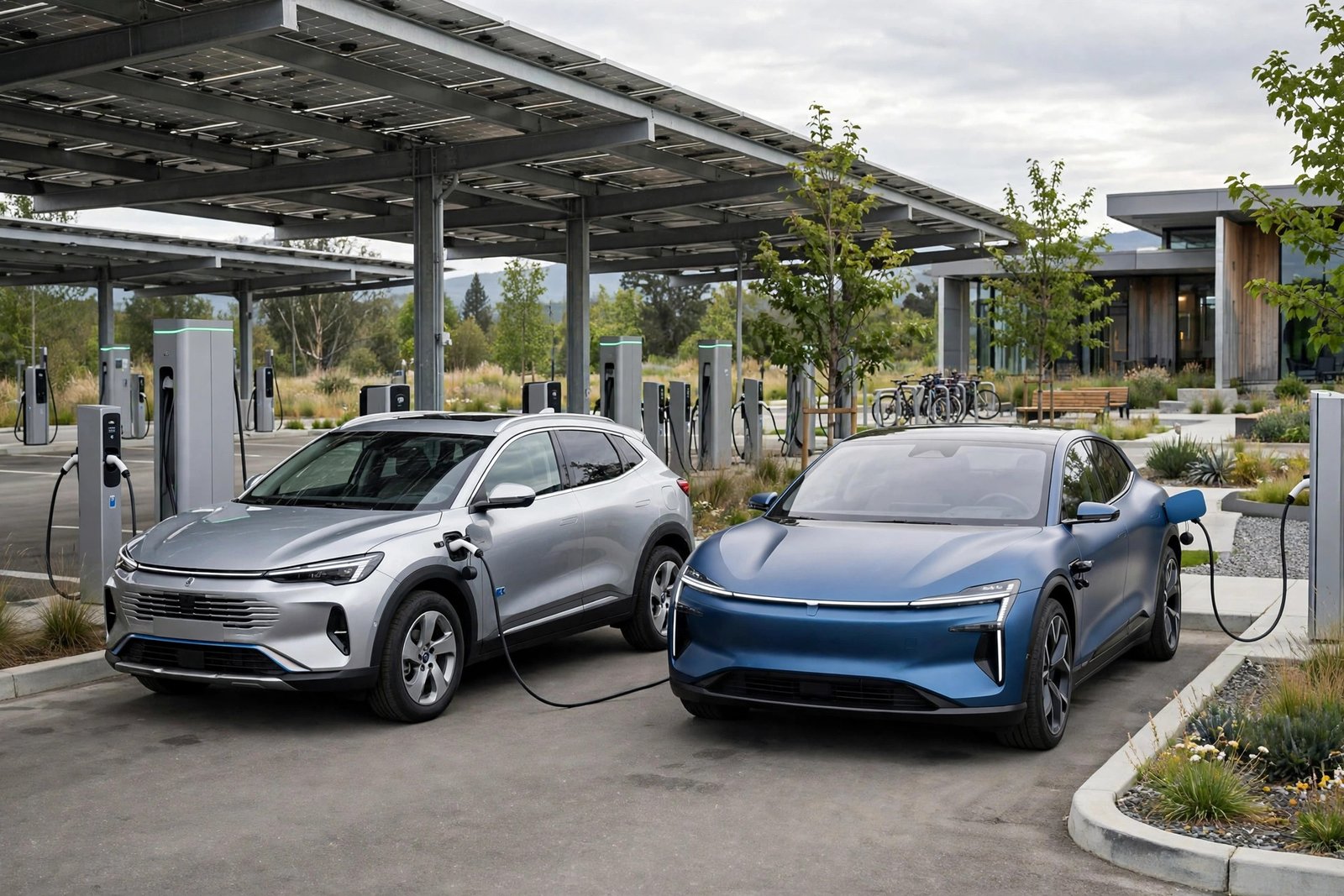
The dealership lot stretches before you: on the left, hybrids promising 50+ MPG with no lifestyle changes; on the right, full electrics promising zero gas stations forever, wrapped in questions about charging, range, and battery life. Both will save you thousands in fuel. Both claim the environmental high ground. But they solve different problems for different drivers — and choosing wrong means years of annoyance with the most expensive thing you own after your house.
Hybrid vs. full electric isn’t a question with a universal answer. It’s a matching problem: your driving patterns, housing situation, local electricity costs, and tolerance for new routines determine which technology fits. Here’s the honest comparison across every dimension that affects your daily life and long-term wallet.
How Each Technology Actually Works
Hybrids (HEV): the no-compromise bridge
Conventional hybrids pair a gasoline engine with an electric motor and a small battery that charges itself through regenerative braking and the engine — you never plug in. The electric motor assists at low speeds and recaptures braking energy, delivering 40–55 MPG in real-world driving. Toyota’s Prius pioneered the formula; today hybrids span from compact cars to three-row SUVs and trucks. No behavior change required: fuel up like always, just half as often.
Plug-in hybrids (PHEV): the middle path
PHEVs add a larger battery you charge from the wall, delivering 25–45 miles of pure electric range before the gas engine engages. For drivers whose daily commute fits the electric range, a PHEV runs as an EV 80%+ of the time with gas backup for road trips — the best of both worlds, at the cost of mechanical complexity (two full powertrains to maintain).
Full electrics (BEV): the complete leap
Battery electrics run solely on a large battery pack (60–100+ kWh), delivering 250–350+ miles of range in current models. No engine, no transmission, no oil changes, no gas stations. Charging happens at home overnight (the killer feature) or at public fast chargers on road trips (the compromise).
Total Cost of Ownership: The 8-Year Math
Purchase price: hybrids typically cost $2,000–$5,000 more than equivalent gas cars; EVs cost $5,000–$12,000 more upfront (though the gap is shrinking fast, and federal tax credits up to $7,500 plus state incentives can erase it entirely for qualifying models — check current fueleconomy.gov listings for your specific vehicle).
Fuel/energy: at $3.50/gallon, a 50-MPG hybrid costs ~$840/year for 12,000 miles versus ~$1,680 for a 25-MPG gas car — saving $840/year. An EV at the national average $0.17/kWh and 3.5 miles/kWh costs ~$580/year — saving $1,100/year versus gas. But local rates dominate: at California’s $0.35+/kWh, EV fuel savings shrink dramatically; with home solar, they approach zero.
Maintenance: EVs eliminate oil changes, transmission services, and most brake wear (regenerative braking handles most deceleration) — saving $300–$600/year versus gas cars. Hybrids save on brakes similarly but keep engine maintenance. The wildcard: out-of-warranty battery replacement ($10,000–$20,000) is the fear, but data shows modern EV batteries degrade slowly — typically retaining 85–90% capacity at 100,000+ miles — and most carry 8-year/100,000-mile warranties.
Insurance runs 10–25% higher for EVs (expensive battery repairs after accidents). Registration fees in many states include EV surcharges ($100–$250/year) replacing lost gas tax revenue. Total 8-year ownership usually favors: EV (with home charging) > hybrid > gas, but the margins depend entirely on your electricity rates, incentives, and driving patterns.
The Lifestyle Fit: Honest Self-Assessment
Choose the hybrid if:
You can’t install home charging (apartment/condo without charging access is the #1 EV disqualifier); you take frequent long road trips through areas with sparse charging infrastructure; you want maximum flexibility with zero planning; you keep cars 10+ years and worry about battery longevity beyond warranty; or your local electricity is expensive enough to erode EV fuel savings.
Choose the full electric if:
You have reliable home charging (this single factor determines 80% of EV satisfaction — owners with home charging love EVs; those without often regret them); your daily driving fits comfortably within range with margin (250-mile range covers 95%+ of American driving days); you value the driving experience (instant torque, silence, one-pedal driving convert most skeptics); you want minimum maintenance; or environmental impact is a primary motivator (EVs produce 50–70% fewer lifetime emissions than gas cars even on average US grid mixes, per DOE lifecycle analyses).
Consider the plug-in hybrid if:
Your commute is under 40 miles round-trip, you have home charging, but you regularly take 300+ mile trips and don’t want charging stops. The PHEV is the rational maximizer’s choice — electric daily driving, gas freedom on demand.
Charging Reality Check
Home charging (Level 2, 240V): adds 25–40 miles of range per hour — a full overnight charge every night. Installation costs $500–$2,000; many utilities offer rebates and time-of-use rates that make overnight charging dramatically cheaper. Public fast charging: 150–350 kW chargers add 100–200 miles in 15–25 minutes — fine for road trips, annoying as a primary fueling method, and priced at $0.40–$0.60/kWh (often costlier than gas per mile). Apartment dwellers should map their actual charging options before considering an EV — workplace charging, nearby public chargers, and realistic weekly routines. The charging network improves yearly, but in 2026 it’s still the EV’s binding constraint.
Reliability and Longevity Data
Hybrids are reliability champions — Toyota/Lexus hybrids dominate dependability rankings, with taxi fleets routinely exceeding 300,000 miles on original powertrains. The hybrid battery fear proved overblown: failure rates are low, replacements cost $2,000–$4,000 (far less than feared), and many last the car’s lifetime. EVs show a split picture: powertrains are extremely reliable (few moving parts), but early-model infotainment and build-quality issues drag down some brands’ scores. Battery degradation — the big fear — has proven gradual: Tesla’s published data shows ~12% capacity loss at 200,000 miles. The Consumer Reports reliability surveys provide model-specific data worth checking before buying either technology.
Conclusion
Buy the hybrid when home charging isn’t available, when maximum flexibility matters, or when you want proven 300,000-mile reliability with zero behavior change. Buy the full electric when you have home charging, when your driving fits the range envelope, and when you want the lowest running costs and maintenance. Consider the plug-in hybrid as the sophisticated compromise for short commutes plus long trips. And run your personal total-cost math — local electricity rates, available incentives, and your actual mileage determine the winner more than any national average. The wrong choice isn’t a technology; it’s a mismatch between the car and your life.
Charging at home pairs naturally with our analysis of whether solar panels are worth it for your home, and making your home more energy-efficient first means your EV runs on the cheapest electrons possible.
Frequently Asked Questions
How long do EV batteries last?
Modern EV batteries typically retain 85–90% capacity at 100,000+ miles, with gradual degradation thereafter. Most manufacturers warranty batteries for 8 years/100,000 miles. Real-world data suggests 15–20 year useful lives for most drivers — likely the life of the car.
Are hybrids worth it if I mostly drive highways?
Less so than for city drivers — hybrids’ advantage concentrates in stop-and-go driving where regenerative braking shines. Highway MPG gains are modest (typically 5–10 MPG over gas equivalents). Still positive, but the payback period lengthens.
Can I charge an EV with a regular outlet?
Yes (Level 1, 120V) — but it adds only 3–5 miles of range per hour, meaning 40+ hours for a full charge. It’s adequate for low-mileage drivers (under 30 miles/day) but most owners eventually install Level 2 (240V) charging.
Do EVs work in cold weather?
Yes, with range reduction of 20–40% in sub-freezing temperatures (battery chemistry + cabin heating). Preconditioning while plugged in, heated seats instead of cabin heat, and garage parking mitigate most of the impact. It’s a planning factor, not a disqualifier, for most cold-climate drivers.
Which holds resale value better, hybrid or EV?
Hybrids currently hold value better — strong demand meets constrained supply. EV resale has been volatile: rapid technology improvements and price cuts on new EVs depress used values, though this is stabilizing as the market matures. Tax credits on new EVs indirectly pressure used prices.