 By admin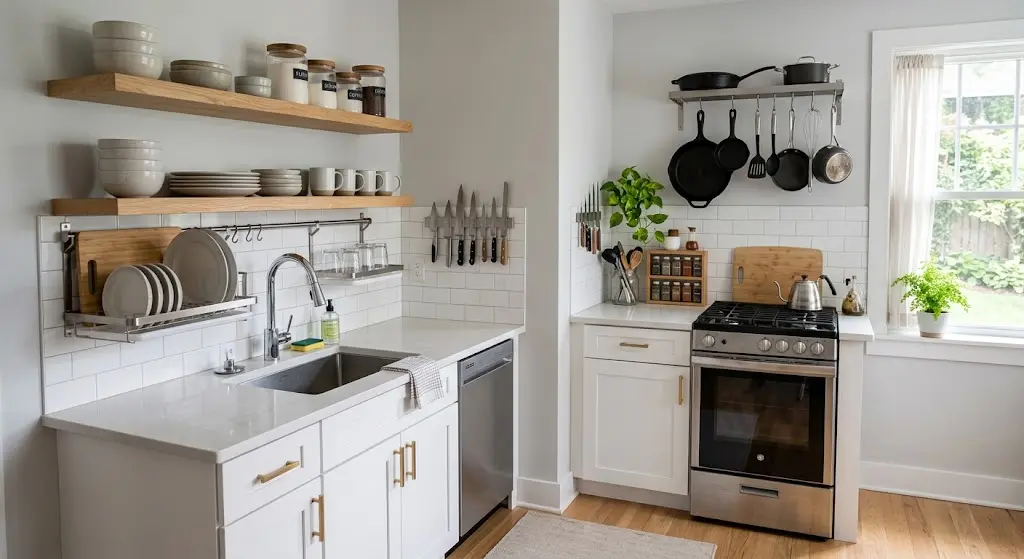
A small kitchen can become frustrating when you have more dishes, cookware, and food items than your cabinets can hold. The good news is that you do not need a large kitchen or an expensive remodeling project to create a more organized space. With a few practical changes, you can make better use of every cabinet, drawer, wall, and countertop.
If you are wondering how to organize a small kitchen with limited cabinets, the key is to stop thinking only about cabinet space. Vertical storage, unused corners, walls, doors, and smart containers can all give you extra room.
Here are some simple and affordable ways to make your small kitchen easier to use.
1. Start by Decluttering Your Kitchen
Before buying storage containers or organizers, take everything out and decide what you actually use.
Small kitchens often feel crowded because cabinets contain duplicate items, old food containers, unused appliances, or dishes that are rarely used.
Create three groups:
- Things you use regularly
- Things you use occasionally
- Things you no longer need
Donate or remove items you do not use. Keep your everyday dishes, cookware, and kitchen tools in the easiest-to-reach areas.
Decluttering is one of the simplest small kitchen organization ideas because it creates storage space without spending money.
2. Use Vertical Space
When cabinet space is limited, look upward.
Many small kitchens have unused wall space above countertops, near the refrigerator, or beside cabinets. You can use these areas for shelves, hooks, or hanging storage.
Consider installing:
- Floating shelves
- Wall-mounted spice racks
- Pegboards
- Hanging rails
- Hooks for mugs and utensils
Vertical storage can keep frequently used items within reach while freeing up valuable cabinet space.
3. Install Hooks Inside Cabinet Doors
The inside of a cabinet door is often completely unused.
Small adhesive hooks or door-mounted organizers can hold measuring spoons, pot lids, cleaning brushes, or small kitchen tools.
For example, you could attach hooks inside the door below your kitchen sink to organize cleaning gloves, brushes, and lightweight supplies.
This is an inexpensive way to maximize kitchen storage without adding another cabinet.
4. Add Shelf Risers Inside Cabinets
If your cabinets have a lot of vertical space, shelf risers can make a big difference.
Instead of stacking plates, bowls, or cans on top of each other, a shelf riser creates a second level. This makes it easier to see and reach everything.
Shelf risers work especially well for:
- Plates
- Bowls
- Mugs
- Canned foods
- Small serving dishes
The goal is to make the full height of each cabinet useful.
5. Use the Side of Your Refrigerator
The refrigerator can provide additional storage space, especially in a small kitchen.
A magnetic storage rack can hold spices, kitchen tools, paper towels, or small containers. If your refrigerator has a suitable side surface, this area can become useful kitchen storage for small spaces.
Just avoid placing anything that could interfere with refrigerator ventilation or become too heavy.
6. Organize Your Pantry by Category
If your kitchen has a small pantry or only one cabinet for food, organize items by category instead of placing everything wherever there is space.
For example, create separate areas for:
- Breakfast foods
- Snacks
- Baking ingredients
- Canned goods
- Pasta and rice
- Spices
- Cooking oils
Clear containers can also make food easier to identify. You do not necessarily need to transfer every food item into containers, but using them for frequently used dry ingredients can make a small pantry feel much more organized.
7. Store Items Where You Use Them
One of the best kitchen organization rules is simple: store things close to where you use them.
Keep cooking utensils near the stove. Store plates near the dishwasher or sink. Keep coffee mugs close to your coffee maker.
This approach saves space and makes everyday tasks faster.
It also prevents cabinets from becoming mixed storage areas where you have to search for everything.
8. Use a Wall-Mounted Pot Rack
Pots and pans can take up a large amount of cabinet space.
If you have an empty wall, consider using a compact wall-mounted rack or rail with hooks. You can hang frequently used pans and utensils instead of stacking them inside a cabinet.
This can free up an entire cabinet for other kitchen items.
If you prefer a cleaner appearance, choose a simple rack that matches your kitchen style.
9. Make Better Use of the Space Under the Sink
The cabinet under the sink is often difficult to organize because of plumbing pipes.
Instead of leaving cleaning products scattered around, use stackable bins or small pull-out organizers.
Group similar products together. For example, keep:
- Dishwashing supplies in one container
- Cleaning sprays in another
- Extra sponges and cloths in a small basket
Avoid storing heavy or unnecessary items under the sink. Keeping this area organized makes it much easier to find what you need.
10. Use Drawer Dividers
If you have only a few drawers, make every drawer count.
Drawer dividers can separate cooking utensils, cutlery, measuring tools, and other small items. Adjustable dividers are particularly useful because you can change the sections according to your needs.
Instead of having one messy drawer, you can create several small zones within the same space.
This is a simple solution for organizing a kitchen with limited storage.
11. Use the Space Above Cabinets
If your cabinets do not reach the ceiling, the space above them can provide additional storage.
You can place attractive baskets or boxes there for items you do not use every day, such as:
- Seasonal serving dishes
- Extra kitchen towels
- Party supplies
- Large baking items
However, avoid storing everyday items too high if reaching them is difficult.
Use this area mainly for things you only need occasionally.
12. Choose Multi-Purpose Kitchen Items
When storage is limited, every item should earn its space.
Instead of buying several tools that perform similar jobs, choose versatile kitchen products.
For example, a single large cutting board may work for several food-preparation tasks, while nesting bowls can take up much less space than separate bowls.
Collapsible kitchen tools can also be useful in small kitchens because they can be folded or stacked when not in use.
13. Use Stackable Containers
Stackable containers are excellent for making the most of limited cabinet space.
Look for containers that have similar shapes and can sit securely on top of one another. Square or rectangular containers often use cabinet and refrigerator space more efficiently than round containers.
Try to avoid buying too many different container sizes. A simple set with a few practical sizes is usually easier to organize.
14. Keep Your Countertops Clear
A small kitchen can look much smaller when the countertops are covered with appliances and containers.
Keep only the appliances you use frequently on the counter.
For example, if you use your coffee maker every morning, keeping it out may make sense. But an appliance that is used once every few months can usually be stored elsewhere.
Clear countertops create the feeling of more space and give you a better area for food preparation.
15. Create a Small “Everyday Zone”
Keep the things you use every day together in one easy-to-reach area.
This might include:
- Plates
- Bowls
- Drinking glasses
- Coffee mugs
- Everyday cooking utensils
Keeping everyday items accessible means you do not have to constantly move other things around to reach them.
It also makes maintaining your kitchen organization much easier.
16. Do Not Overfill Your Storage
One common mistake when organizing a small kitchen is trying to use every available inch by stuffing cabinets completely full.
Overfilled cabinets may technically hold more items, but they are difficult to use.
Leave a little breathing room whenever possible. You should be able to remove one item without taking everything else out.
Good organization is not just about fitting more things into a space. It is about making the space easier to use.
17. Rotate Seasonal Kitchen Items
You probably do not need every kitchen item available all year.
If you have holiday dishes, large serving platters, special baking equipment, or seasonal items, move them to higher storage or another suitable area when they are not needed.
Keep the items you use most often in the easiest locations.
This simple rotation system can make a small kitchen feel much less crowded.
18. Think About Storage Before Buying New Items
Before purchasing another kitchen gadget, ask yourself where you will store it.
If there is no suitable place, consider whether you really need it.
This habit can prevent your kitchen from slowly becoming overcrowded again.
A well-organized small kitchen is easier to maintain when you control what comes into the space.
Final Thoughts
Learning how to organize a small kitchen with limited cabinets is mostly about using your existing space more intelligently. You do not necessarily need more cabinets. You need better use of vertical space, cabinet doors, drawers, walls, corners, and countertops.
Start with decluttering, then organize your most-used items where they are easy to reach. Add shelf risers, hooks, baskets, and stackable containers where they solve a specific storage problem.
Even a few small changes can make a noticeable difference. The best kitchen organization system is one that fits your daily routine and is simple enough to maintain.
Frequently Asked Questions
How do I organize a small kitchen with very little cabinet space?
Start by removing items you rarely use. Then use vertical storage, wall shelves, hooks, cabinet-door organizers, shelf risers, and stackable containers to create additional storage without adding major furniture.
How can I create more storage in a small kitchen?
Use unused areas such as cabinet doors, walls, the sides of cabinets, the refrigerator, and the space above cabinets. You can also maximize existing cabinets with shelf risers and drawer organizers.
What should I keep on the kitchen counter?
Keep only appliances and items you use frequently. Store rarely used appliances inside cabinets or another suitable storage area to keep the countertop clear.
How do you organize a small kitchen without a pantry?
Use stackable containers, labeled baskets, wall shelves, narrow rolling carts, and cabinet organizers. Group similar foods together so you can quickly find what you need.
How do I organize pots and pans in a small kitchen?
Use nesting cookware when possible. You can also install a wall-mounted rack or hanging rail for frequently used pots and pans to free up cabinet space.
Are open shelves good for a small kitchen?
Yes. Open shelves can provide useful storage without making a small kitchen feel as enclosed as additional cabinets. They work especially well for frequently used dishes, mugs, and attractive kitchen items.
How can I keep my small kitchen organized?
Give every item a specific place and return it after use. Regularly remove items you no longer need and avoid buying kitchen products that do not have a designated storage space.