
 By admin
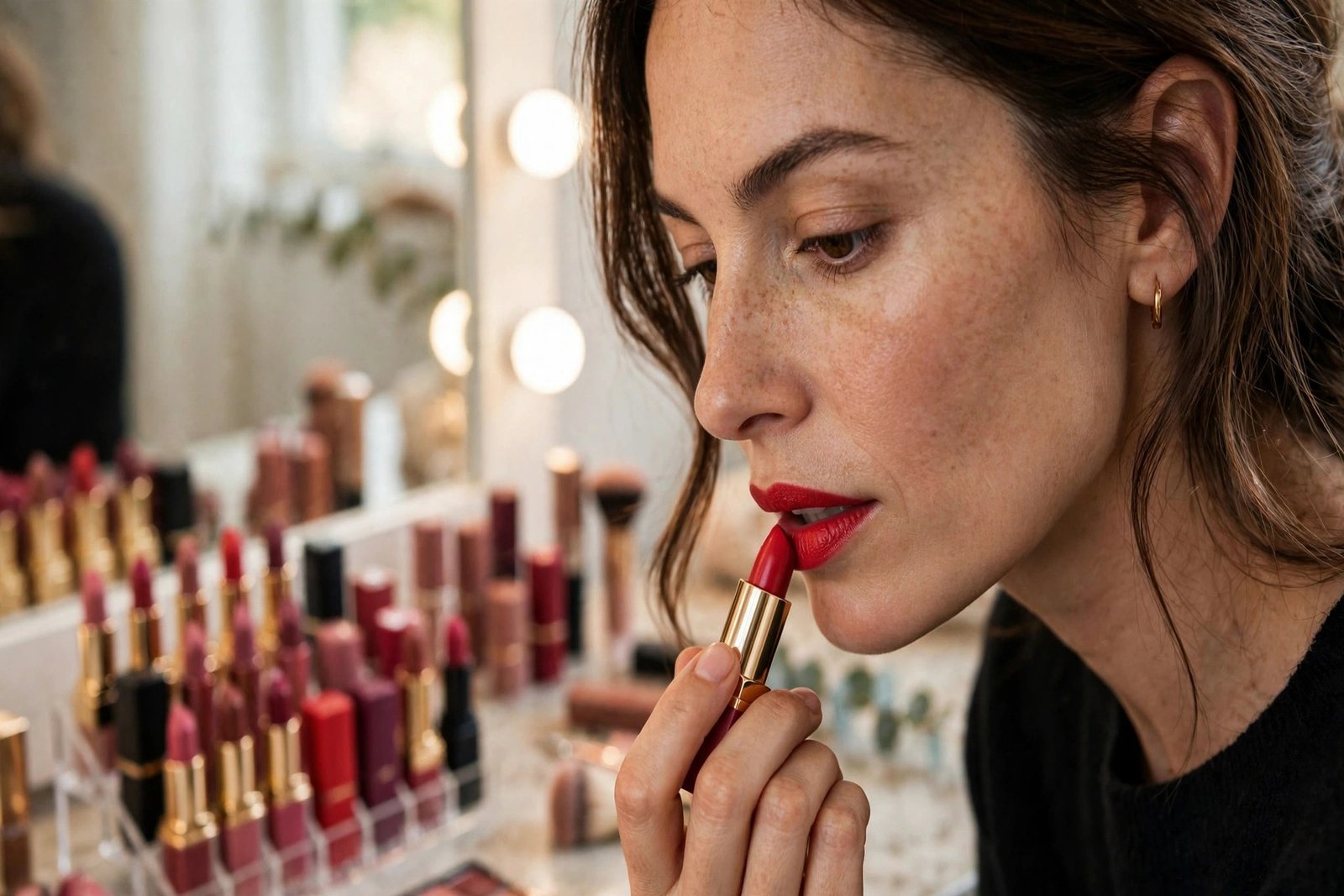
Red lipstick is the one makeup product that’s both timeless and terrifying. The right red makes you look polished, confident, and intentional with zero other makeup. The wrong red makes you look like you’re wearing someone else’s face — too orange, too blue, too dark, washing you out or clashing with your skin. And the wall of 200 red lipsticks at the drugstore, all named things like “Crimson Desire,” does not help.
Finding your perfect red isn’t luck — it’s undertone science plus a few practical tests. This guide explains how to determine your skin’s undertone, which red families flatter which undertones, the in-store testing method that actually works, formula and finish considerations, and how to wear red confidently once you’ve found it.
Step 1: Determine Your Undertone (The Foundation)
Your undertone — the subtle hue beneath your skin’s surface — determines which reds harmonize and which clash. The three categories: warm (golden, peachy, yellow hints), cool (pink, rosy, blue hints), and neutral (a balance — the lucky ones who suit most reds).
The vein test: look at the veins on your inner wrist in natural daylight. Green-looking veins suggest warm; blue/purple suggest cool; a mix suggests neutral. The jewelry test: gold jewelry flatters warm undertones; silver flatters cool; both flatter neutral. The white test: hold pure white fabric near your face — if your skin looks bright and clear, you’re likely cool; if it looks sallow or yellowish, likely warm; if it looks fine either way, neutral. The sun test: warm undertones tend to tan easily; cool undertones burn first. No single test is definitive — use two or three together. Getting this right matters beyond lipstick: the same undertone principles guide blush, bronzer, and the clothing colors you wear near your face — learn it once, use it everywhere.
The Red Families: Which Flatters Whom
Blue-based reds (cherry, crimson, classic “Hollywood” red): the universally flattering family — the blue undertone makes teeth look whiter and suits cool and neutral undertones beautifully. If you buy one red blind, make it a blue-red. Orange-based reds (tomato, poppy, coral-red): electric and modern, best on warm undertones — but they emphasize yellow in teeth, so consider your smile goals. True neutral reds: balanced, neither blue nor orange — the safest choice for neutral undertones and the “I just want a red that works” pick.
Deep reds (oxblood, burgundy, wine): dramatic and autumn-perfect, most flattering on medium to deep skin tones; on very fair skin they can look gothic-intentional (which is a look, if you want it). Brick and brown-reds: the wearable everyday red — warm, muted, office-friendly, especially flattering on warm undertones and deeper skin. Sheer reds (tinted balms, stains): the beginner’s red — all the polish with none of the commitment; the sheerness makes undertone-matching nearly foolproof. When in doubt, start with affordable options to experiment — there’s no need to commit $40 to a shade you’re unsure about.
The In-Store Testing Method That Actually Works
Arm swatches lie — wrist skin doesn’t match lip-adjacent skin, and store lighting is designed to flatter products, not faces. The real method: test on your lips (use the disposable applicators, or ask for a sample — any decent counter provides them). Apply, then walk to the window or outside — natural daylight is the only honest lighting. Check three things: does the shade brighten your face or drain it? Do your teeth look whiter or yellower? Does it harmonize with your blush/cheek color or fight it?
The 10-minute rule: wear it for 10 minutes before deciding — lipsticks oxidize and deepen slightly as they set, and your eye adjusts. What looks shocking in minute one often looks perfect in minute ten. Test against your actual life: the red that looks stunning under store fluorescents at noon should also work in your office lighting and evening settings — sheer formulas are more forgiving across lighting than opaque mattes. And test without full makeup first: your everyday red needs to work with your everyday face, not just the full-glam version.
Formula and Finish: Beyond the Color
The same shade in different formulas wears like different colors. Matte: bold, long-wearing, modern — but emphasizes lip texture (exfoliate first) and can feel drying; best for evenings and statement looks. Satin/cream: the versatile middle — comfortable, flattering on most lip textures, appropriate everywhere; the best “first red” finish. Sheer/balm: forgiving, hydrating, natural — ideal beginners’ red and daytime wear. Liquid matte: maximum longevity (survives meals) but least forgiving on dry lips and hardest to fix if the application goes wrong.
Application matters as much as formula: exfoliate lips (sugar scrub or soft toothbrush), apply balm 10 minutes before (blot excess), use lip liner in a matching shade to define edges and prevent feathering, apply lipstick from the tube center-outward or with a brush for precision, blot once on tissue, and reapply a light second layer for longevity. The American Academy of Dermatology’s lip care guidance covers keeping the lip canvas healthy — and the FDA’s cosmetics resources explain how lip products are regulated for safety — smooth, hydrated lips make every red look better.
Wearing Red Confidently
The biggest barrier to red lipstick isn’t finding the shade — it’s wearing it out of the house the first time. The tricks: keep everything else minimal — red lips plus bare skin, groomed brows, and mascara is the classic balanced look; full eyeshadow plus red lips competes with itself. Blot it down for daytime — a blotted red reads as polished, not dramatic. Own the first hour: you’ll feel like everyone is staring (they’re not — or if they are, it’s admiration). Confidence is the actual accessory; the lipstick is just pigment.
Maintenance reality: reds show wear fastest — check after meals and drinks, carry the tube, and embrace the touch-up as ritual rather than burden. Darker and matte reds stain (removing at night needs an oil-based remover — a proper but affordable skincare routine handles the rest). And build a small rotation: your perfect blue-red for evenings, a sheer red for days, maybe a brick for fall. Three reds cover a lifetime — chosen deliberately, they beat thirty chosen hopefully.
Conclusion
Your perfect red lipstick is an undertone match, not a lottery ticket: determine warm/cool/neutral with the vein, jewelry, and white-fabric tests; choose blue-reds for cool, orange-reds for warm, true reds for neutral; test on the lips in daylight with the 10-minute rule; start with satin or sheer formulas; and wear it with minimal everything-else. The right red doesn’t just flatter your face — it changes how you carry yourself. That’s not marketing. That’s what happens when the shade is finally right.
Frequently Asked Questions
How do I know if I have warm or cool undertones?
Use three tests together: wrist veins (green = warm, blue/purple = cool), jewelry (gold flatters warm, silver flatters cool), and white fabric near the face in daylight (bright/clear = cool, sallow = warm). If tests disagree or both metals suit you, you’re likely neutral — the most versatile undertone for red lipstick.
What red lipstick is best for beginners?
A sheer red balm or stain in a blue-red or true-red family. Sheerness makes undertone mismatches nearly invisible, application is foolproof (no liner needed), and it wears like a polished version of your natural lip color. Once you’re comfortable, graduate to a satin-finish classic red.
Does red lipstick make teeth look yellow?
Orange-based reds can emphasize yellow tones in teeth; blue-based reds do the opposite — the blue undertone creates contrast that makes teeth appear whiter. If tooth color is a concern, choose cherry, crimson, or classic Hollywood reds (all blue-based) and avoid tomato and coral-reds.
Can I wear red lipstick with minimal makeup?
Absolutely — it’s the classic pairing. Red lips with clean skin, groomed brows, and mascara is a complete, polished look that needs nothing else. In fact, red lipstick often looks best with minimal eye makeup; heavy eyes plus bold lips compete rather than complement. Blot the red down for daytime to keep it effortless.
How do I keep red lipstick from fading?
Layer for longevity: exfoliate and moisturize lips first, apply matching lip liner over the entire lip (not just the edges) as a base, apply lipstick, blot on tissue, dust translucent powder through the tissue, then apply a second light layer. This “lipstick sandwich” technique dramatically extends wear — and carry the tube for touch-ups after meals regardless.