
 By admin
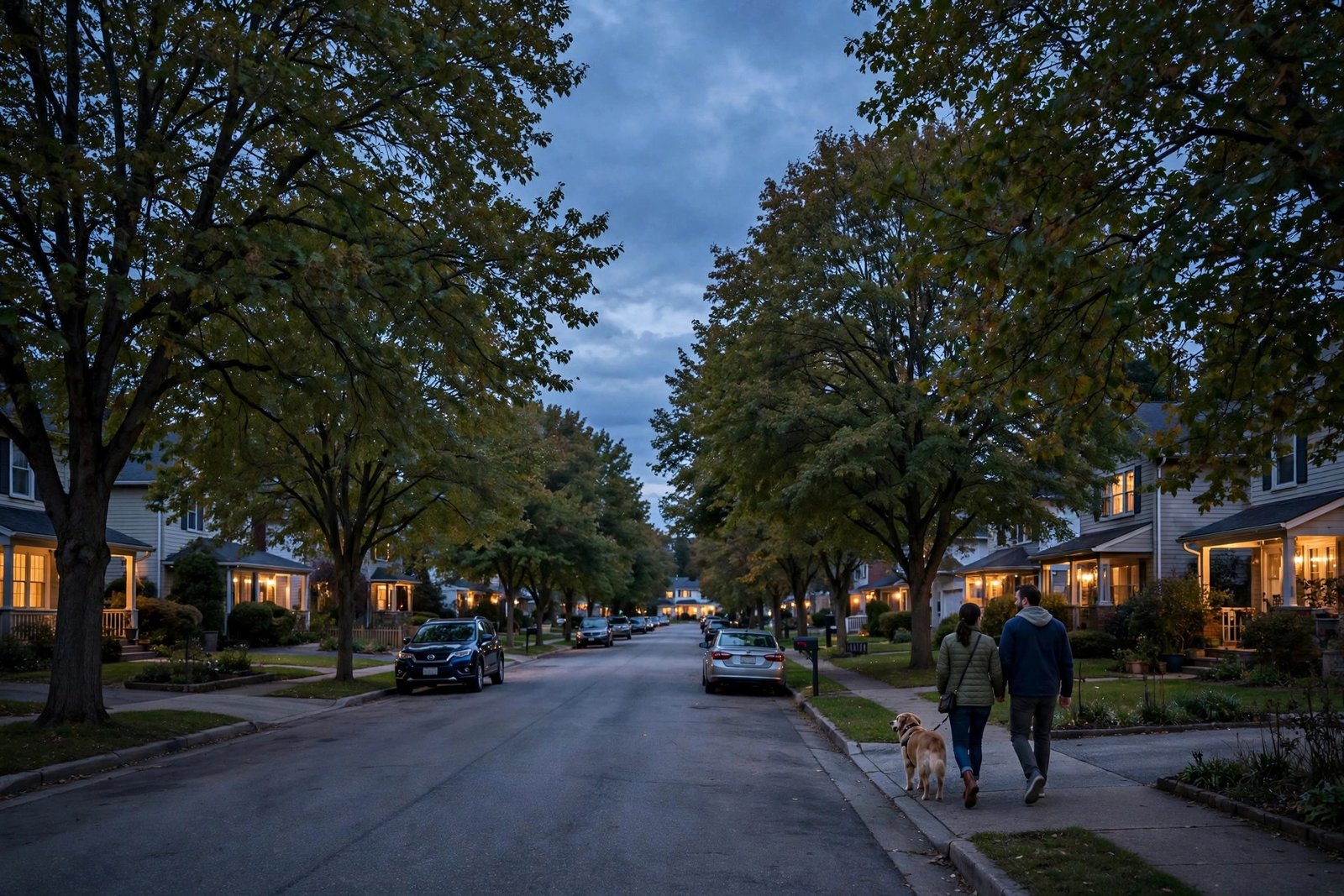
You can renovate a kitchen, replace a roof, and repaint every wall — but you cannot renovate a neighborhood. The street your home sits on determines your safety, your commute, your property value trajectory, and your daily quality of life for as long as you own the place. Yet most buyers spend 40 hours researching granite countertops and 40 minutes researching the area around the house.
Checking whether a neighborhood is safe before buying isn’t about paranoia; it’s about due diligence on the one part of your purchase you can never change. Crime statistics, street-level observation, future development plans, and conversations with actual residents each reveal something the others miss. Here’s how to investigate a neighborhood like a professional — before your earnest money is on the line.
Start With the Data: Crime Maps and Statistics
Begin with hard numbers. The FBI’s Crime Data Explorer publishes reported crime statistics down to the agency level, letting you compare violent and property crime rates across jurisdictions. Commercial platforms like NeighborhoodScout, AreaVibes, and CrimeMapping.com layer in block-level detail — but read them critically. A single apartment complex with frequent car break-ins can paint an entire zip code red, while a quiet residential pocket inside a statistically rough area won’t show its true character.
Key metrics to compare: violent crime rate per 1,000 residents, property crime rate, and — most importantly — trend direction. A neighborhood with moderate crime that’s fallen 30% over five years is a fundamentally different bet than one with identical current numbers trending upward. Also distinguish crime types: package theft and car break-ins (annoying, common everywhere) versus violent crime patterns that affect personal safety. The FBI Crime Data Explorer is the authoritative starting point, and your local police department’s published statistics add precinct-level granularity the federal data lacks.
Walk the Streets: What Data Can’t Tell You
Statistics describe reported crimes; your eyes describe lived reality. Visit the neighborhood at least three times: a weekday morning, a weekend afternoon, and — critically — a weeknight after dark. Each visit answers different questions. Daylight shows property maintenance, foot traffic, and commercial vitality. Nighttime shows lighting, activity levels, and whether the streets feel comfortable or deserted.
Look for specific signals. Positive: maintained homes and landscaping, people walking dogs and jogging, kids playing outside, busy local businesses, recent renovations and construction. Caution flags: multiple vacant or boarded properties, bars on ground-floor windows across many homes (one or two is normal in cities; a whole street is a statement), graffiti that stays up for weeks, litter that never gets collected, and commercial corridors with high vacancy. None of these individually condemns a neighborhood, but patterns matter. Pay attention to the transition zones too — the two blocks between the nice area and the showing can tell you where the neighborhood is heading.
Talk to People Who Actually Live There
No dataset replaces a ten-minute conversation with someone who walks those streets daily. Knock on a few doors near the property — most people love talking about their neighborhood, good and bad. Ask specific questions: “Do you feel safe walking after dark?” “Have you had any break-ins on this block?” “How long have you lived here, and what’s changed?” Longtime residents are goldmines for trajectory insight: who’s moving in, what’s being built, whether the area is improving or declining.
Expand your sources: chat with mail carriers, dog walkers, and local business owners — they observe the neighborhood across all hours. Check Nextdoor and local Facebook groups for the area, filtering for substance over hysteria (every neighborhood forum has a resident who reports every unfamiliar car). If the area has a neighborhood association, attend a meeting or read recent minutes; they discuss exactly the issues buyers care about.
Research the Future, Not Just the Present
A safe neighborhood today can change — in either direction — based on what’s coming. Check your city or county planning department’s website for approved developments, zoning changes, and infrastructure projects near the property. A new transit station, park, or mixed-use development often lifts an area; a planned highway expansion or industrial rezoning can do the opposite. School district boundaries and ratings affect both safety perception and resale value — even buyers without children should check them, because future buyers will.
Look up registered sex offender density through your state’s public registry, review flood maps and wildfire risk (safety isn’t only about crime), and check environmental records for nearby Superfund sites or industrial facilities. The Department of Housing and Urban Development’s resources can point you to local housing authority data on neighborhood investment trends.
Test Your Actual Life There
Simulate your daily routine before committing. Drive the commute at rush hour — a 25-minute map estimate can be 55 minutes at 8 a.m. Walk to the nearest grocery store, coffee shop, and park. Check cell reception inside the house. Visit on a rainy day to spot drainage problems on the street. If you work from home, test internet speeds — and if you’re setting up a home office, our guide on deducting your home office on taxes covers the financial upside of getting the workspace right.
Also evaluate the practical safety infrastructure: street lighting quality, sidewalk condition, proximity to fire stations and hospitals, and whether the area has an active community watch. These unglamorous details determine how safe a neighborhood feels at 11 p.m. far more than any statistic.
Putting It Together: The 48-Hour Neighborhood Audit
Here’s the compressed playbook: Day one, pull FBI and local crime stats, check trend direction, review planning department filings and school ratings. Day two, do your three drive-throughs/walk-throughs (morning, afternoon, night), knock on doors, and talk to local business owners. Throughout, run your commute and daily errands from the address. Total time investment: roughly six to eight hours. Total value: avoiding a 30-year mistake on the unchangeable part of your purchase.
One final note: every neighborhood has trade-offs, and “safe” is partly subjective. A downtown area with vibrant nightlife and occasional property crime might suit a young professional perfectly while worrying a family with toddlers. Define what safety means for your household, investigate against that standard, and don’t let either fear or falling in love with a kitchen override what the neighborhood is telling you.
Conclusion
Neighborhood safety research is a layered investigation: crime statistics establish the baseline, street-level visits reveal the lived reality, resident conversations expose the trajectory, and planning records show the future. No single source tells the whole story, but together they paint a picture reliable enough to bet hundreds of thousands of dollars on. Spend the weekend doing this work before you write the offer — it’s the highest-leverage due diligence in the entire homebuying process, because everything inside the house can be fixed, and the street outside never can.
Once you’ve chosen a neighborhood, budgeting for a home security camera system helps you price the ongoing safety layer for your specific property.
Frequently Asked Questions
What is considered a safe neighborhood statistically?
There’s no universal threshold, but compare the area’s violent crime rate per 1,000 residents against the national average (roughly 4 per 1,000) and, more importantly, against surrounding neighborhoods. Trend direction over 3–5 years matters more than any single year’s number.
Should I trust crime map websites?
Use them as a starting point, not a verdict. They aggregate reported crimes accurately but lack context — a busy commercial strip inflates numbers without reflecting residential safety. Always pair map data with in-person visits and resident conversations.
How do I check for future developments near a property?
Your city or county planning department’s website lists approved projects, zoning applications, and long-range plans. Search by address or parcel number. Attending a planning commission meeting (many stream online) reveals what’s actually controversial versus routine.
Does a neighborhood watch actually reduce crime?
Studies show active neighborhood watch programs correlate with modest crime reductions, mainly for property crime. Their bigger value is signaling community cohesion — neighbors who know each other notice strangers, which itself deters opportunistic crime.
Can I back out of a purchase if I discover safety issues?
During your contingency periods, generally yes — inspection or due diligence contingencies let you cancel for any concern you uncover. After contingencies expire, exiting gets expensive. This is why neighborhood research belongs before the offer, not during escrow.