
 By admin
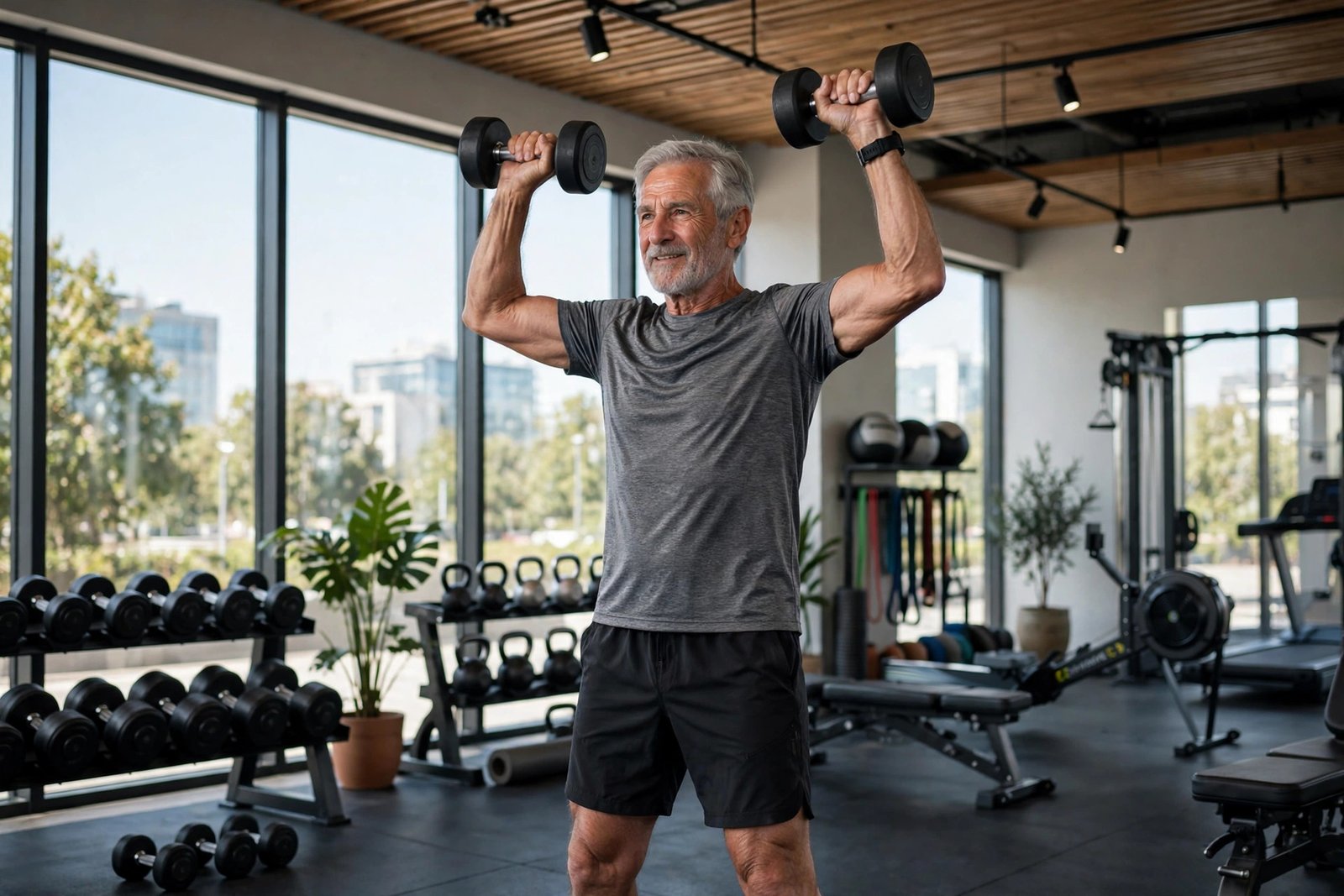
After 50, strength training stops being about aesthetics and becomes about independence. Muscle mass declines 3–8 percent per decade after 30, accelerating after 60 — a process called sarcopenia that quietly steals the ability to climb stairs, carry groceries, and catch yourself in a fall. The antidote is proven, safe, and simpler than the fitness industry suggests: progressive resistance training, started carefully, sustained consistently.
This guide covers how to start strength training safely after 50 — the medical groundwork, the right exercises, smart progression, and the recovery strategies that keep you training for decades.
Start With Medical Clearance (Not Optional)
Before lifting anything heavier than a grocery bag in earnest, get checked — particularly for cardiovascular issues, uncontrolled blood pressure, joint replacements, osteoporosis, and any condition affecting balance. This isn’t fear-mongering; it’s how you get a personalized green light and learn about any specific restrictions (some spinal conditions, for example, modify which exercises are appropriate).
Bring your training plan to the appointment. Doctors clear “strength training” far more readily when they see a sensible, supervised program rather than vague gym ambitions. The National Institute on Aging publishes excellent exercise guidance specifically for older adults — worth reading before your visit and sharing with your doctor.
The Right Exercises (Compound Movements, Done Well)
Forget complicated routines. The foundation is five movement patterns, all adaptable to any fitness level:
Push (wall push-ups → countertop → floor → weighted), pull (resistance band rows → assisted pull-ups), squat (chair-assisted → bodyweight → goblet squats), hinge (glute bridges → Romanian deadlifts with light dumbbells), and carry (farmer’s walks — simply the best functional exercise in existence for grip, posture, and real-world strength).
Machines are perfectly fine starting points — they guide the movement path and reduce balance demands. Free weights build more stabilizing strength as you progress. Neither is morally superior; use what your gym has and what your joints prefer. If you’ve been inactive for years, the return-to-exercise playbook covers the ramp-up phase in detail.
Progression: The Art of Patient Overload
Muscles strengthen through progressive overload — gradually increasing demand. After 50, “gradually” is doing more work in that sentence. The rules: master form first (two weeks of light weights learning movement patterns beats two months of heavy weights learning bad habits), increase slowly (add the smallest available increment, or an extra rep, when all sets feel solid — tendons adapt slower than muscles at this age), train 2–3x weekly with at least one rest day between sessions for the same muscle groups, and track everything (a simple log of exercises, weights, and reps — progression you can see is motivation you can feel).
A sample starter week: Monday — full-body A (goblet squat, push-up variation, band row, glute bridge, farmer’s carry), Thursday — full-body B (same patterns, slight variations). Two sessions, 40 minutes each, covering everything. For joint-sensitive trainees, low-impact options for bad knees show how to adapt the key patterns.
Recovery: The 50+ Difference
Recovery is where older trainees differ most from younger ones — and where most programs fail them. Prioritize: sleep (7–9 hours; growth hormone release during deep sleep drives the adaptations you’re training for), protein (1.2–1.6g per kg of bodyweight daily — higher than the standard RDA, and critical since older muscles are less responsive to protein signals), rest days (real ones — walking and mobility, not “light” lifting), and soreness management (some soreness is normal initially; sharp joint pain is not — learn the difference fast).
Warm up 5–10 minutes before every session (bike, marching in place, movement rehearsals with no weight) and cool down with gentle mobility after. These bookends prevent more injuries than any exercise selection. For post-session recovery specifics, faster workout recovery strategies apply at every age.
What to Expect (Realistic Timelines)
Weeks 1–4: neural adaptations — you’ll get stronger rapidly as your brain learns to recruit muscle efficiently. This isn’t muscle growth yet; it’s your nervous system waking up. Months 2–6: visible muscle gain and meaningful strength increases — clothes fit differently, daily tasks get easier, stairs stop being negotiations. Month 6+: the long game — bone density improvements (measurable on scans), better balance (fall risk drops significantly), improved insulin sensitivity, and the kind of functional independence that compounds for decades.
The research is unambiguous: adults who strength train after 50 reduce all-cause mortality, maintain independence longer, and report better quality of life. It’s the closest thing to a proven longevity intervention that exists. The CDC’s activity guidelines recommend muscle-strengthening activities twice weekly for all adults — a minimum, not a maximum.
Balance Training: The Missing Piece
Strength without balance is incomplete — and for adults over 50, balance is arguably the more important capacity. Falls are the leading cause of injury in older adults, and balance training directly reduces fall risk. The good news: it takes minutes and no equipment. Start with single-leg stands (30 seconds per leg, near a wall for safety), progress to tandem walking (heel-to-toe like a sobriety test), then add challenges: eyes closed, unstable surfaces, or catching a ball while standing on one leg.
Integrate balance into your strength sessions rather than treating it separately — single-leg Romanian deadlifts, split squats, and farmer’s carries all train balance under load, which transfers better to real life than isolated balance drills. Two minutes of dedicated balance work at the end of each strength session compounds remarkably over months. The goal isn’t circus-trick stability; it’s the quiet confidence of catching yourself on an icy sidewalk instead of falling. Strength keeps you capable; balance keeps you safe. Train both.
Conclusion
Starting strength training safely after 50 means: get medical clearance, master five basic movement patterns with light weights, progress patiently with 2–3 weekly sessions, prioritize sleep and protein for recovery, and track your progress. The goal isn’t a physique — it’s the strength to live life on your terms for decades. Sarcopenia is optional. Pick up something heavy (safely, progressively), put it down, repeat twice a week, and let the decades take care of themselves.
Key Takeaways
Sarcopenia is optional. Progressive resistance training reverses age-related muscle loss at any age — the research is unambiguous.
Frequently Asked Questions
Is it safe to lift weights after 50 with no experience?
Yes, with medical clearance and proper progression — research consistently shows strength training is safe and beneficial for older beginners. Start with machines or bodyweight, learn form thoroughly, and progress gradually. Supervision (even a few trainer sessions) is wise initially.
How heavy should I lift as a beginner over 50?
Light enough to complete 10–15 reps with good form and 2–3 reps “in reserve” (you could do more but stop). The exact weight doesn’t matter — the progression does. Increase only when current weights feel easy with perfect form.
Will strength training hurt my joints?
Properly performed strength training protects joints by strengthening surrounding muscles and improving bone density. Sharp joint pain during an exercise means stop and modify — but general training, done well, is joint medicine, not joint damage.
How long before I see results?
Strength gains in 2–4 weeks (neural), visible muscle changes in 8–12 weeks, meaningful functional improvements (stairs, carrying, balance) within 2–3 months. Bone density changes take 6–12 months. The functional wins arrive first and matter most.