
 By admin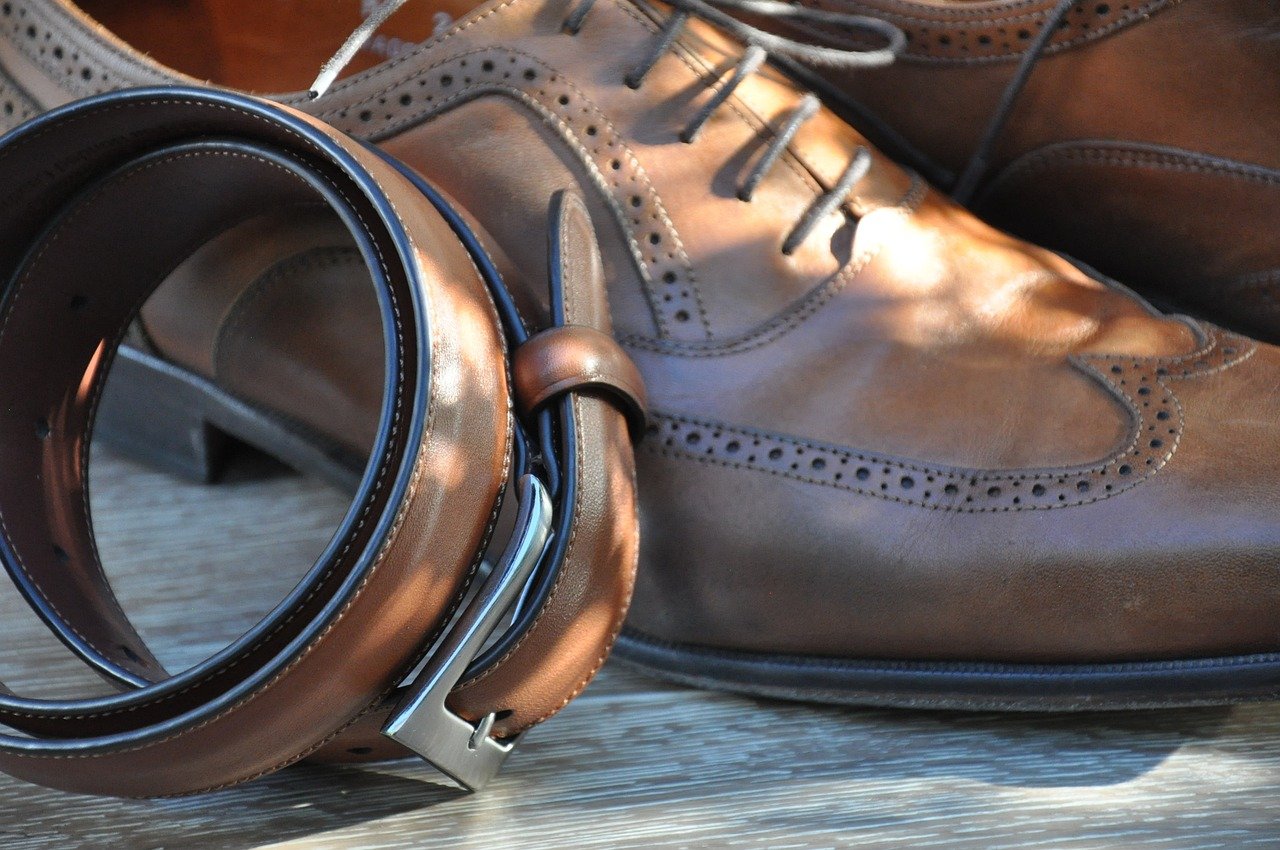
“Match your belt to your shoes” is one of menswear’s oldest rules — and like most old rules, it’s mostly right, slightly overstated, and worth understanding properly rather than following blindly. Here’s the real guidance, including when you can ignore it.
The Classic Rule
Match the leather color and finish: brown shoes → brown belt in a similar shade; black shoes → black belt. Match the formality too — a sleek dress belt with dress shoes, a rugged wider belt with boots or casual shoes. And match the metals: silver buckle with silver watch, gold with gold. That’s the whole traditional rule, and for formal and business settings, it still holds. It signals attention to detail in the situations where that matters.
Getting the shades right
“Brown” spans tan to espresso, and mismatched browns look worse than breaking the rule would. When in doubt, go darker — dark brown belt with medium-brown shoes reads as intentional; tan belt with dark brown shoes reads as a mistake. Black is binary: black belt, black shoes, done. For the truly uncertain, a dark brown belt is the most versatile single belt a man can own.
How Do I Match a Belt With My Shoes Properly? When to Break the Rule
- Casual settings: with jeans, chinos, or shorts, the rule relaxes enormously. A canvas or braided belt, or any belt that complements the outfit, is fine.
- Statement belts: a western belt, an interesting buckle, or a colored belt can be the focal point — that’s the point. Rules serve the outfit.
- When the belt doesn’t show: tucked sweater or untucked shirt covering the waistband? The rule is moot. (Though matching anyway is harmless.)
- Women’s fashion: the rule was always looser here — belts as contrast accessories, mixed metals, and intentional mismatching are all standard styling.
- Sneakers: there’s no leather to match; choose a belt that works with the outfit, not the shoes.
GQ’s style coverage regularly shows modern interpretations — the trend is toward coordination rather than exact matching.
The Details That Actually Matter More
Belt width: dress belts are thin (1–1.25″), casual belts wider (1.5″). A wide casual belt with a suit looks off regardless of color match. Buckle size: small and simple for formal, larger for casual. Condition: a cracked, worn belt ruins the effect even in the right color — belts wear out; replace them. Fit: the belt should fasten on the middle hole, with just a few inches of tail. Too long looks sloppy; buy the right size (generally 2″ larger than your pant waist size).
Investment-wise, two quality belts cover nearly everything: one black dress belt, one dark brown versatile belt. Buy full-grain leather — it ages beautifully instead of cracking like bonded leather. Resale listings show how well-made belts from good makers hold up for decades.
Belt Guide: Types and When to Wear Each
- Dress belt (1–1.25″ wide): sleek leather, small simple buckle — suits, dress trousers, formal occasions. Black and dark brown cover everything.
- Casual leather belt (1.5″ wide): jeans, chinos, casual trousers. More substantial buckle okay. Brown tones most versatile.
- Braided/stretch belt: the comfort option — infinitely adjustable, casual. Great with chinos and shorts.
- Canvas/webbing belt: casual and rugged — jeans, shorts, outdoor wear. Military-inspired styles are timeless.
- Western belts: statement pieces — big buckles, tooling. Wear as the focal point with simple outfits.
- No belt: side-adjuster trousers, suits with a clean waistband, or casual untucked looks — sometimes the answer is none.
Belt care and lifespan
Belts wear out — the holes stretch, the leather cracks at the buckle fold, the finish wears. Extend life: rotate belts (daily wear kills one belt fast; rotation doubles lifespan), hang or roll (don’t crumple in a drawer), condition leather occasionally (same conditioner as shoes), use the middle hole (if you’re on the last hole, the belt’s too big — size down), and replace when cracked — a cracked belt at the buckle looks worse than no belt. A quality full-grain leather belt lasts 5–10 years with rotation; a bonded-leather belt lasts 1–2. The $60 belt is cheaper per year than the $20 belt — the usual story. And when a beloved belt dies, keep the buckle if it’s nice — buckles outlive straps and can mount a replacement.
Belts as Accessories: Beyond Function
The belt’s real power is as a styling tool:
- Defining the waist: over dresses, blazers, and oversized shirts — a belt creates shape where there was none. The stylist’s oldest trick.
- Adding color: the belt as the outfit’s accent — a cognac belt with an all-navy outfit, a red belt with neutrals.
- Texture contrast: woven, braided, or suede belts add tactile interest to smooth outfits.
- The statement buckle: western, vintage, or designer — the buckle as jewelry. Keep everything else quiet when the buckle talks.
- Belt bags: the belt-adjacent trend — functional, hands-free, and currently fashionable.
Women’s belting guide
Belting rules differ for women’s fashion — more freedom, more options: width varies by purpose — wide belts define waists over dresses; skinny belts add detail to trousers. Placement matters — at the natural waist for definition, at the hips for casual. Over layers — belting a cardigan or blazer creates an entirely new silhouette. Mixing metals is fine — the old “match your metals” rule is relaxed here; intentional mixing reads as styling. The no-belt look is equally valid — clean, modern, minimal. And the through-line for all genders: the belt should look intentional — chosen, not defaulted to. A belt grabbed without thought adds nothing; a belt chosen deliberately can carry an entire outfit.
Belt sizing: getting it right
Belt sizes confuse everyone: a “34” belt is not for 34-inch pants — belt size is typically your pant size plus two inches, measured from the buckle to the middle hole. When between sizes, size up (you can add a hole; you cannot add leather). For the perfect fit, the belt should fasten on the middle hole with a few inches of tail — too much tail looks sloppy, too little looks strained. And try belts on with the actual trousers when possible; rise and waistband thickness change the effective size.
The Practical Takeaway
Formal settings: match leather color, finish, and metals. Casual settings: coordinate, don’t stress. Always: right width, good condition, middle-hole fit. For more on this topic, see How to Stop Shoes From Giving You Blisters and How to Clean Suede Shoes at Home.
[…] Fit properly, break in gradually, wear moisture-wicking socks, preempt hot spots with moleskin and anti-friction balm, and fix heel slip with grips or lacing. Blisters are optional. Related reading: How to Clean Suede Shoes at Home and How to Match Your Belt With Your Shoes. […]