
 By admin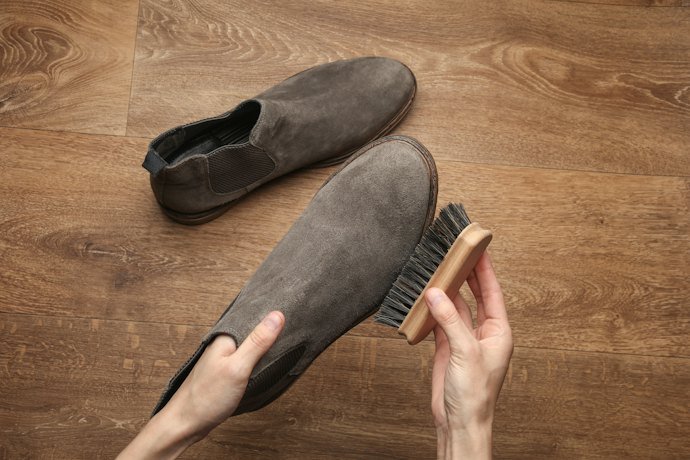
Suede looks luxurious and stains if you look at it wrong. But suede care is actually simple once you know the rules — and the most important rule is that suede is cleaned dry, not wet. Water is the enemy; the brush is the hero. Here’s the complete home care routine.
The Suede Toolkit ($20 Total)
- Suede brush (crepe or brass bristles) — the essential tool; restores nap and removes dry dirt
- Suede eraser — lifts scuffs and dry stains like a pencil eraser
- White vinegar or rubbing alcohol — for stubborn spots (used sparingly, dried properly)
- Suede protector spray — the preventive step everyone skips; spray new suede before first wear and reapply seasonally
- Cedar shoe trees — hold shape and absorb moisture between wears
How Do I Clean Suede Shoes at Home? The Method
1. Dry brush first, always. Brush in one direction to lift the nap and remove surface dirt. For matted areas, brush back and forth gently to revive the texture, then finish with one-direction strokes. 2. Eraser for scuffs. Rub the suede eraser over marks and dry stains — most disappear. Brush away the eraser dust. 3. Stubborn spots: dab (don’t soak) with white vinegar on a clean cloth, let air-dry completely away from heat, then brush to restore nap. 4. Salt lines: the vinegar method handles these too — winter’s worst suede enemy is beatable. 5. Never use water alone — it spots suede. Never use heat to dry — it stiffens and cracks the leather.
The cardinal rules
Protector spray before first wear — this single step prevents most stains. Don’t wear suede in rain — it’s not a rain material, period; check the forecast. Let wet suede dry naturally stuffed with newspaper, away from radiators. Brush after every few wears — 60 seconds maintains the nap and prevents dirt from settling in. The FTC’s care label guidance covers reading suede care instructions properly.
When to Call a Professional
Oil/grease stains (cornstarch overnight can draw out fresh ones, but set grease needs a cobbler), color restoration on faded suede, and any stain where home attempts made it worse — stop before you set it permanently. Professional suede cleaning runs $30–60, worth it for expensive boots. Resale markets show well-kept suede holds value remarkably well — care pays.
Suede vs. Nubuck vs. Suede Alternatives
“Suede” covers a family of napped leathers with different care needs:
- Suede: the underside of the hide, soft nap — the classic. Care as described above.
- Nubuck: the top side buffed to a nap — finer, more durable, slightly easier to care for. Same dry-clean principles apply.
- Roughout: rugged reversed leather — the work-boot version; handles abuse better, same basic care.
- Microsuede/synthetic suede: polyester-based — actually easier (often washable), but doesn’t age like real suede and can’t be restored the same way.
- Vegan “suede”: varies wildly — check care labels; some handle water fine, others fall apart. No universal rules.
Buying suede wisely
Not all suede is equal: thicker suede (boot-weight) outlasts thin fashion suede dramatically. Darker colors hide wear and stains better than light (tan suede shows everything; dark brown forgives). Quality construction matters as much as the leather — glued fashion boots die regardless of upper material. Consider the use case: suede dress boots for dry days, leather for rain — owning both beats ruining one. And thrifted suede can be excellent (it’s often barely worn, since people baby it) — inspect the nap (should be even, not bald in spots), check for water stains (dark blotches that brushing won’t fix), and smell for mildew. A $15 thrifted suede boot with good bones plus $20 of care supplies is one of fashion’s great value plays.
Suede in Rain: Emergency Protocols
Caught in rain in suede? Damage control:
- Do not panic, do not heat-dry. The worst response is the radiator — heat sets water damage permanently.
- Blot, do not rub. Absorb surface water with a clean towel, gently.
- Stuff with newspaper. Holds shape and absorbs interior moisture. Change the paper once if soaked.
- Air-dry naturally. Room temperature, away from direct heat and sun. Patience — 24 to 48 hours.
- Brush when fully dry. Restore the nap with the suede brush — brushing wet suede damages it.
- Assess and treat spots. Water spots get the vinegar treatment once dry. Protector spray after recovery.
Prevention beats all of this: check the forecast, keep beater shoes for rainy days, and protector-spray religiously. But accidents happen — and most rain exposure is survivable with the protocol above.
Suede color restoration
Faded suede looks tired — restoration options: suede renew sprays (color-matched sprays revive faded areas — test hidden spots first), professional re-dyeing (cobblers offer this — $40 to $80, transformative for beloved boots), embrace the patina (evenly faded suede has character — the distinction is even vs. blotchy), and know when it is done (bald spots where the nap is gone cannot be restored — that is structural, not cosmetic). If the boots are quality and the shape is good, professional restoration is worth it. If they were cheap to begin with, restoration costs more than replacement. Quality earns maintenance, and maintenance preserves quality.
Suede care calendar
Put suede maintenance on a schedule and it becomes effortless: before first wear: protector spray, two coats. After every few wears: 60-second brush to restore nap. Monthly in season: inspect for spots, eraser treatment as needed. Seasonally: reapply protector spray, deep condition if dry. Before storage: full clean, brush, trees in, breathable bag. Five minutes here and there beats a two-hour rescue operation — and the boots look better every single day in between. Set a phone reminder for the seasonal tasks until the rhythm becomes habit.
The Practical Takeaway
Protect before wearing, brush dry dirt regularly, eraser for scuffs, vinegar for stubborn spots, never water or heat. Suede isn’t delicate — it’s just dry-clean only in spirit. For more on this topic, see How to Stop Shoes From Giving You Blisters and How to Match Your Belt With Your Shoes.