
 By admin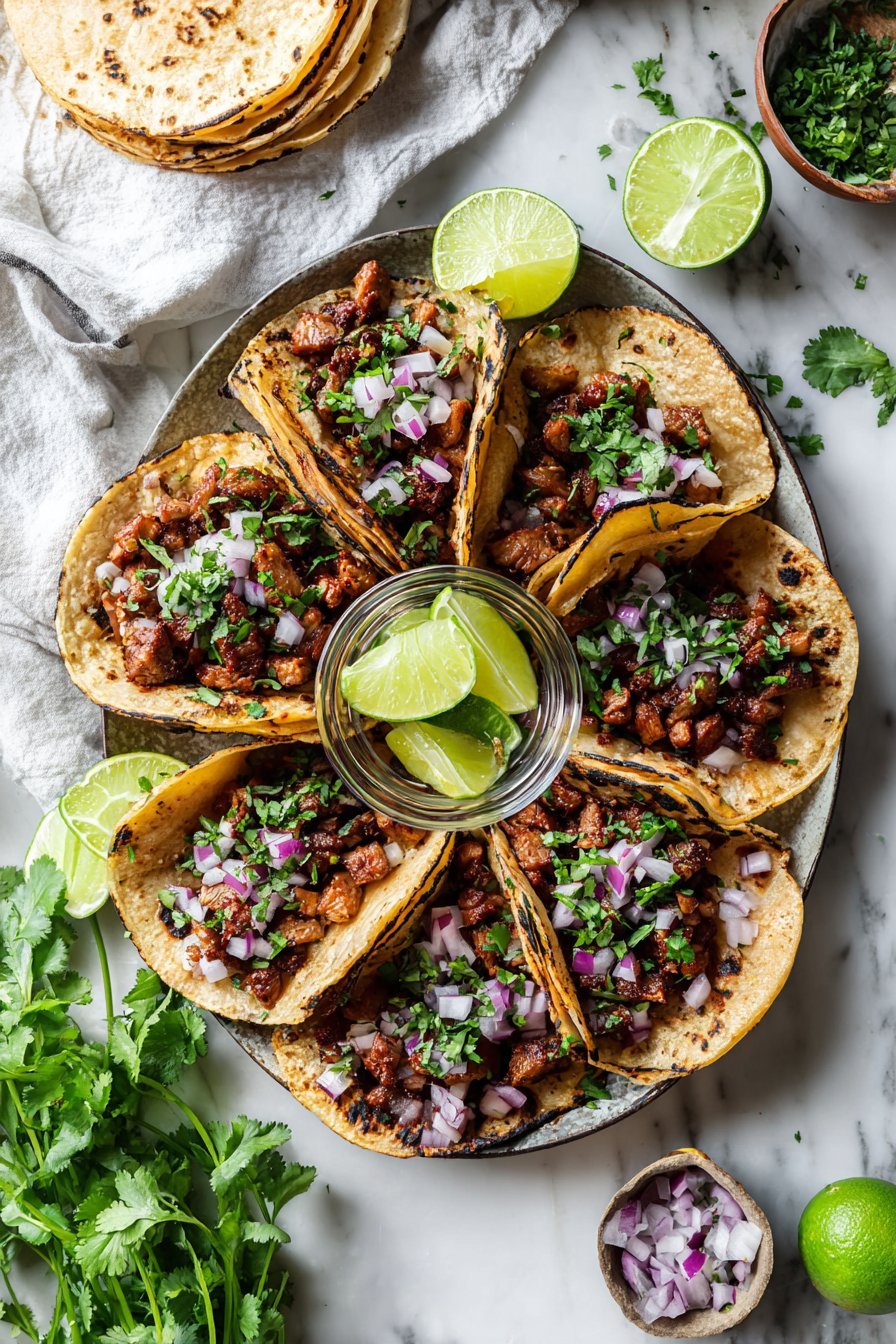
Restaurant tacos have a quality that’s hard to name but impossible to miss — the tortillas taste fresh, the meat is deeply seasoned, the toppings are bright and crunchy, and the whole thing comes together in a way your homemade tacos somehow don’t. I’ve spent years reverse-engineering this, and the secret isn’t one trick. It’s about five small upgrades that together close the gap completely.
Here’s how to make restaurant-style tacos at home — the real thing, not the hard-shell Tuesday-night version.
Upgrade 1: The Tortillas (Biggest Difference)
This is where restaurants win and home cooks lose. Those cold tortillas straight from the bag? They’re the problem.
- Warm them properly: heat a dry cast-iron skillet or comal over medium-high heat and warm each tortilla 30–60 seconds per side until pliable with lightly charred spots. This alone transforms them.
- Go corn for authenticity: most great taco shops use corn tortillas. Look for ones with minimal ingredients (corn, lime, salt) — they taste profoundly better than the shelf-stable kind with preservatives.
- Double them up: street-style tacos use two small tortillas per taco. It prevents breakage and gives the right tortilla-to-filling ratio.
- Keep them warm: wrap the stack in a clean kitchen towel inside a tortilla warmer or covered dish. Cold tortillas crack; warm ones fold.
- Level up: make your own with masa harina — it’s just masa, water, and salt, pressed and griddled. Fresh corn tortillas are a revelation and easier than you’d think.
Upgrade 2: The Protein (Season Like You Mean It)
Restaurant taco meat is seasoned aggressively. Home taco meat is usually under-seasoned — that’s the gap.
Carne asada style (flank or skirt steak)
Marinate 2–4 hours in: orange juice, lime juice, soy sauce, garlic, cumin, chili powder, and oil. Grill or sear screaming-hot for 3–4 minutes per side, rest 5 minutes, then chop (not slice) into small pieces. Chopped > sliced for tacos — better distribution in every bite.
Carnitas style (pork shoulder)
Slow-cook pork shoulder with orange, onion, garlic, bay, and oregano until shreddable (our slow cooker guide covers the method), then crisp the shredded meat under the broiler or in a hot skillet. That crispy-creamy contrast is the carnitas magic.
Chicken tinga style
Poach or meal-prep shredded chicken, then simmer in a sauce of blended tomatoes, chipotles in adobo, and onion. Smoky, saucy, perfect.
The seasoning principle
Whatever protein you use: salt generously, use fresh lime, and don’t fear the chili. Taco seasoning from a packet works in a pinch, but a homemade blend (chili powder, cumin, smoked paprika, garlic powder, oregano, salt) tastes better and has no fillers.
Upgrade 3: The Toppings (Fresh and Contrasting)
Restaurant tacos balance rich meat with bright, fresh toppings. The formula: something creamy + something acidic + something fresh + something crunchy.
- Acidic: diced white onion + cilantro + lime wedge (the classic street taco trio — non-negotiable)
- Creamy: Mexican crema, crumbled cotija, or sliced avocado
- Fresh: shredded cabbage (stays crunchy longer than lettuce), diced radish, fresh jalapeño
- Crunchy: toasted pepitas, crispy shallots, or crushed chicharrones
- Sauce: a real salsa — salsa verde, chipotle crema, or mango habanero — not the jarred stuff (or at least doctor the jarred stuff with fresh lime and cilantro)
Upgrade 4: Make One Great Salsa
Homemade salsa takes 10 minutes and outclasses anything jarred:
Quick salsa verde: char 6 tomatillos, 1 jalapeño, and ½ onion under the broiler until blackened in spots. Blend with a handful of cilantro, 1 clove garlic, salt, and a squeeze of lime. Done. This keeps a week in the fridge and improves everything it touches.
Upgrade 5: Assembly Order Matters
Warm double tortilla → protein (2–3 tablespoons, not a mountain) → toppings → salsa → lime squeeze over everything. Don’t overfill — restaurant tacos are modestly filled, which is why you can actually eat them. Serve immediately; tacos wait for no one.
Taco Night Game Plan (30 Minutes)
- 0:00 — Start protein (or reheat prepped meat)
- 0:10 — Make salsa verde, chop toppings
- 0:20 — Warm tortillas in batches, keep wrapped
- 0:25 — Assemble and serve
Taco Party: Feeding a Crowd Without the Stress
Tacos are the ideal party food — interactive, customizable, and scalable. Here’s how to do a taco bar for 10–15 people:
- Two proteins, not five. One meat (carnitas or carne asada) + one vegetarian option (roasted sweet potato + black bean, or mushroom al pastor). Two well-executed options beat a spread of mediocre ones.
- Cook proteins ahead. Carnitas and tinga reheat perfectly — make them the day before and warm in the slow cooker during the party. Carne asada should be grilled fresh, but you can marinate ahead.
- The topping bar formula: diced onion + cilantro, shredded cabbage, lime wedges, two salsas (one mild, one hot), crema, cotija, sliced radishes, pickled red onions. Set out in bowls with spoons — it looks abundant and costs little.
- Tortilla math: plan 3–4 tacos per person for a meal (6–8 small tortillas each, doubled up). For 12 people: ~80 tortillas. Warm in batches and keep wrapped in towels in a low oven.
- Drinks that match: a big-batch margarita (or agua fresca for non-drinkers — hibiscus or cucumber-lime), Mexican beer with lime, and plenty of ice.
- Don’t forget: extra napkins (tacos are gloriously messy), small plates (not dinner plates — they encourage reasonable portions and return trips), and a trash bowl on the table for lime wedges and napkins.
Total cost for 12: roughly $60–$90, or $5–$8 per person — less than pizza delivery, infinitely more impressive. And the host actually gets to enjoy the party instead of being chained to the stove.
The Tortilla Deep Dive
Since tortillas make or break tacos, here’s the full hierarchy: homemade from masa harina (unbeatable — 2 cups masa + 1½ cups warm water + 1 tsp salt, pressed and griddled 60 seconds per side); fresh from a tortilleria (check Latin grocery stores — often made daily, worlds better than bagged); quality store-bought corn (short ingredient list: corn, lime, salt — Mission’s “extra thin” or local brands); flour tortillas (better for quesadillas and burritos than tacos, but fine in a pinch). Whatever you use: warm them on a dry hot skillet until pliable with char spots. Cold tortillas are the #1 difference between homemade and restaurant tacos — and the easiest to fix.
When working with raw meats for tacos, follow FoodSafety.gov temperature and handling guidelines — especially for the carne asada and carnitas versions.
The Bottom Line
How to make restaurant-style tacos at home: warm your tortillas on a dry skillet (double them up), season protein aggressively and chop it small, balance with the creamy-acidic-fresh-crunchy topping formula, make one fresh salsa, and don’t overfill. Five upgrades, none difficult, and taco night will never be the same. Your local taco truck should be nervous.
[…] warm tortillas, cheese, lettuce, and rice — served separately. Everyone builds their own. Our restaurant-style taco guide has the flavor upgrades for the […]