
 By admin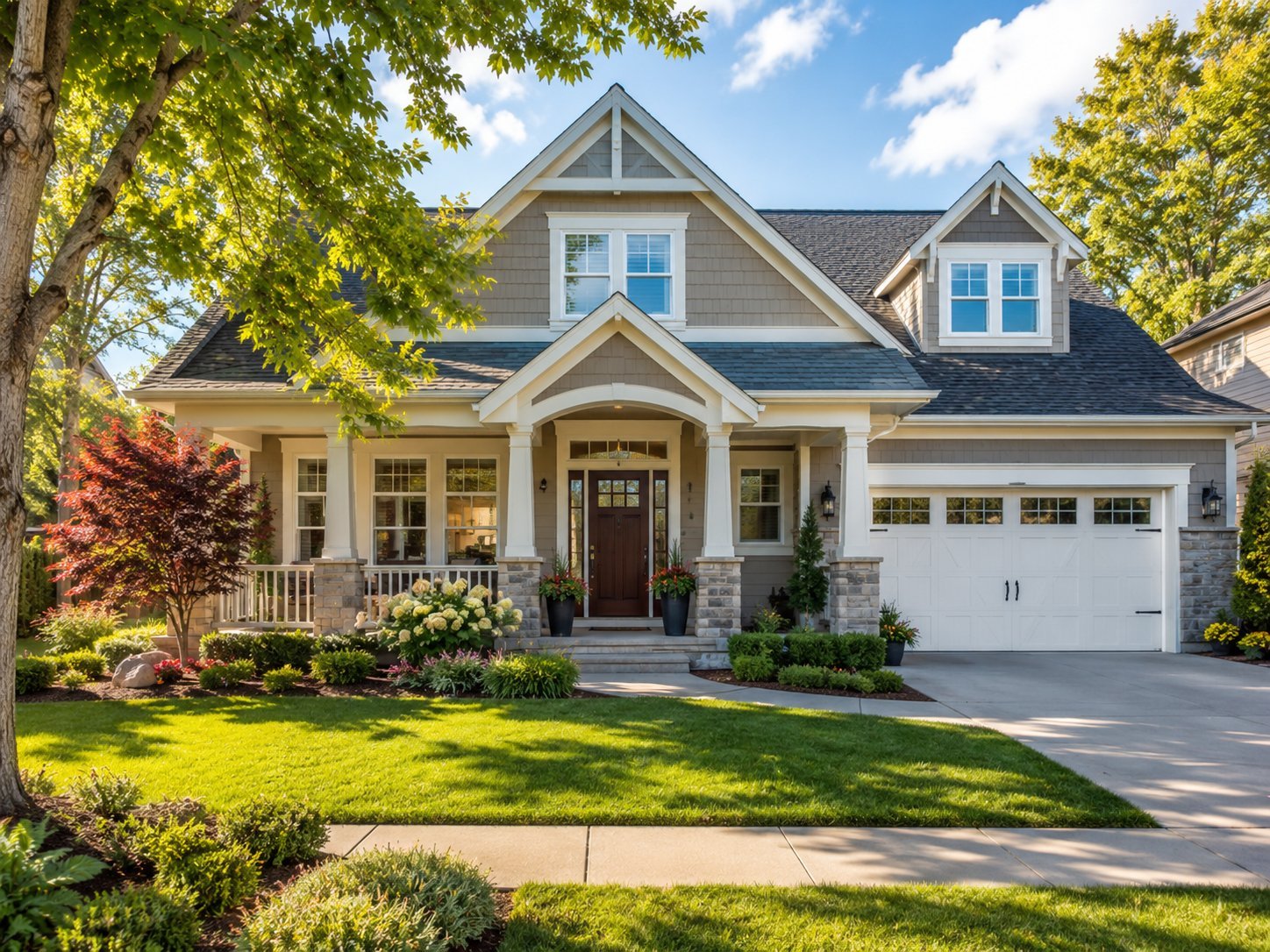
Curb appeal is the only home improvement project that pays you back every single time you pull into the driveway — and it matters enormously when you sell. Real estate agents consistently say buyers form an opinion within seconds of seeing a house. The great news: you can dramatically improve your home’s curb appeal on a budget. Most of these ideas cost under $100, and several are free.
Start With the Free Stuff: Clean Everything
Before spending a dollar, do the deep clean. A house that’s simply clean looks 30% better — I’m not exaggerating.
- Pressure wash the driveway, walkways, siding, and porch. Rent a washer for $40–$75/day, or borrow one. The before-and-after is shocking — years of grime vanish in an afternoon.
- Clean the windows inside and out. Dirty windows make the whole house look neglected.
- Clear the gutters and make sure downspouts direct water away from the house.
- Edge the lawn along walkways and the driveway. A crisp edge makes even an average lawn look manicured.
- Remove everything that doesn’t belong — the broken planter, the rusty bike, the pile of “I’ll deal with it later” by the garage.
The Front Door: Your Highest-ROI Project
The front door is the focal point of your home’s exterior. A fresh coat of paint here has an outsized impact:
- Paint the door ($30 for a quart of exterior paint). Classic choices: black (timeless, works with everything), deep red (welcoming, traditional), navy (modern classic), or a cheerful yellow on the right house.
- Update the hardware — a new handle set and kick plate ($40–$80) modernize the entry instantly.
- Add a new welcome mat and house numbers ($30–$50 total). Oversized, modern house numbers are a small detail with big visual impact.
For color advice, see our guide to what color to paint your front door.
Landscaping on a Budget
You don’t need a landscape designer. You need mulch, a few plants, and some discipline:
- Fresh mulch ($3–$5/bag, or bulk delivery for larger beds) is the single best cheap landscaping upgrade. It makes beds look intentional and new.
- Plant in odd-numbered groups (3, 5, 7) — it looks natural; even numbers look like soldiers.
- Choose native plants — they’re cheaper, need less water, and thrive without fuss. Your state’s cooperative extension service lists the best ones for free.
- Define bed edges with a half-moon edger ($15 tool) — crisp bed lines look professional.
- Add one statement planter by the door with seasonal color. Swap the plants twice a year.
Lighting: The Evening Transformation
Most people only think about curb appeal in daylight, but evening presence matters — especially for showings. Solar path lights ($20–$40 for a set) need no wiring and install in minutes. A well-lit entry feels safe and welcoming. Uplight one nice tree or architectural feature and the whole house looks expensive after dark.
For choosing the right bulbs and fixtures, our guide to choosing the right light bulbs covers the indoor side; outdoors, warm-white (2700–3000K) solar LEDs are the easy pick.
Small Fixes With Big Visual Payoff
- Paint or stain the shutters — or remove them if they’re the wrong size (a common eyesore: shutters too narrow for the windows).
- Touch up exterior trim — peeling paint on trim screams deferred maintenance to buyers.
- Replace the mailbox ($30–$60) — a leaning, rusty mailbox undermines everything else.
- Hide the trash cans — a simple lattice screen or storage box ($50–$100) removes a major eyesore.
- Fix the little things — the sagging gutter, the cracked walkway section, the missing shutter dog. Buyers notice.
The $500 Weekend Curb Appeal Plan
If you have one weekend and $500: pressure washer rental ($60), mulch and plants ($150), front door paint and hardware ($100), solar lights ($40), new house numbers and mat ($50), mailbox ($40), and miscellaneous touch-up paint ($60). That’s a transformation that looks like you spent five times that.
The Department of Energy’s landscaping guide even shows how strategic planting cuts energy bills — curb appeal that pays you back twice.
Curb Appeal Mistakes That Backfire
Good intentions, bad execution — avoid these common misfires:
- Over-planting. Cramming 20 plants into a small bed looks lush for one season, then overcrowded and weedy. Plants grow — space them for their mature size, not their nursery-pot size. Fewer, well-placed plants beat a jungle.
- The wrong shutter size. Decorative shutters should look like they could cover the window — each shutter roughly half the window’s width. Skinny shutters on wide windows look like an afterthought. When in doubt, remove bad shutters entirely; no shutters beats wrong shutters.
- Too many colors. Door + shutters + trim + house + landscaping should total 3–4 colors max. Every additional color makes the house look busy rather than charming.
- Neglecting the driveway. People obsess over the house and ignore the cracked, stained driveway that dominates the foreground. Pressure washing is often enough; resurfacing ($3–$5/sq ft) transforms genuinely damaged concrete.
- Outdoor clutter disguised as decor. There’s a line between charming (a bench, a planter, a wreath) and cluttered (six signs, four flags, wind chimes, and a gnome collection). Edit ruthlessly — every item should earn its place.
- Ignoring the roofline. Moss, missing shingles, and sagging gutters are visible from the street and signal neglect louder than any landscaping can compensate for. Address the top of the house, not just the bottom.
Curb Appeal for Selling vs. Staying
If you’re selling soon, prioritize what photographs well and what inspectors/buyers notice: clean everything, fresh mulch, painted door, trimmed landscaping, and fixed eyesores. Skip personal taste statements — neutral and tidy sells. If you’re staying, invest in what you enjoy: the garden beds you’ll tend, the lighting you’ll see every evening, the door color that makes you smile. Same projects, different priorities — and both are valid.
The Bottom Line
How to improve your home’s curb appeal on a budget: clean everything first (free), paint the front door, refresh mulch and landscaping, add solar lighting, and fix the small eyesores. None of these require a contractor or real money — just a weekend and some intention. Whether you’re selling or staying, it’s the rare project where every dollar shows.
[…] build a deck, check the North American Deck and Railing Association — and pair the project with improving your home’s curb appeal on a budget for the full exterior […]
[…] freshly painted door pairs perfectly with the other high-impact updates in our guide to improving curb appeal on a budget — door, hardware, house numbers, and lighting together transform an entry for under […]