
 By admin
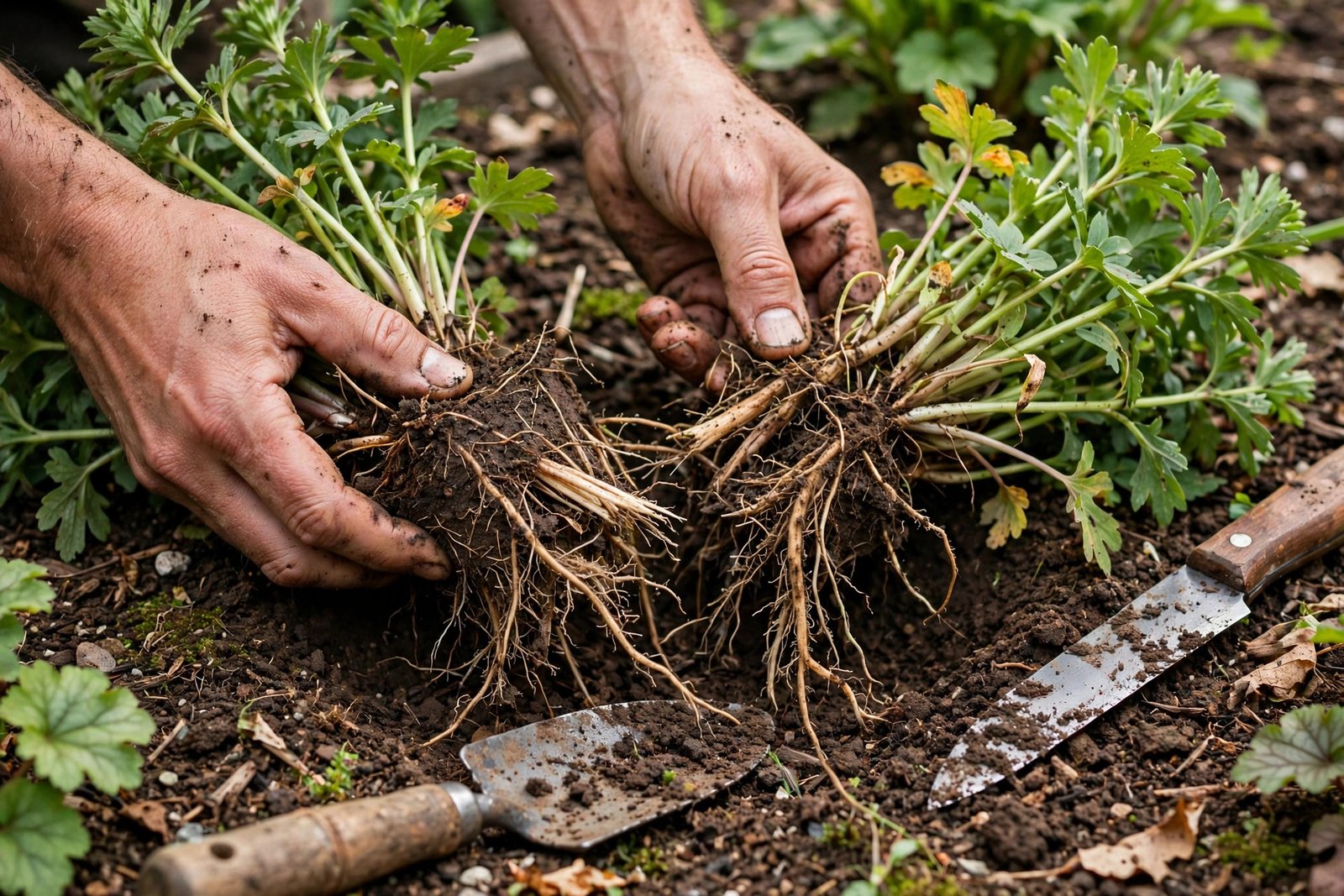
That gorgeous clump of daylilies or hostas has tripled in size and stopped blooming well — it’s telling you it’s time to divide. Dividing perennials (splitting one plant into several) rejuvenates crowded plants, gives you free plants for other beds, and prevents the hollow-center decline that afflicts undivided clumps. But hack at the roots carelessly and you’ll set the plant back a full season. Done right, division is one of gardening’s highest-reward skills.
This guide covers when to divide, the tools and technique for clean divisions, how to handle different root types, aftercare that ensures quick recovery, and the mistakes that kill divisions.
When to Divide: Timing Is Half the Battle
The golden rule: divide spring bloomers in fall, fall bloomers in spring. This gives divisions a full growing season to establish before their next bloom cycle. Practically: most perennials divide best in early spring as new growth emerges (2–4 inches tall) or in early fall (4–6 weeks before hard frost). Avoid dividing in summer heat or when plants are in full bloom — the stress compounds.
Signs it’s time: flowering has declined, the clump’s center is dead or hollow while the edges thrive, the plant flops open, or it’s simply outgrown its space. Most perennials need division every 3–5 years; aggressive spreaders (mint, bee balm) every 2–3. Never divide: plants currently in bloom, during drought or heat waves, or tap-rooted plants that resent disturbance (more on those below). Water the plant deeply the day before dividing — hydrated roots handle the trauma far better. The Old Farmer’s Almanac offers region-specific timing guidance for common perennials.
Tools and the Basic Technique
You need: a sharp spade or garden fork (forks damage fewer roots than spades), a hori-hori knife or sharp hand saw for tough crowns, a tarp to work on, and water. The method: 1) Cut back foliage to 4–6 inches (reduces water loss and lets you see the crown). 2) Dig around the entire clump, 6–8 inches out from the crown, going deep — then lever the whole root ball out. 3) Shake or wash off soil so you can see the root structure. 4) Divide: pull apart fibrous-rooted plants by hand where possible; cut dense crowns with the spade or knife, ensuring each division has 3–5 healthy shoots (“fans”) and a solid root mass.
The key principle: bigger divisions recover faster. A division with abundant roots and several shoots establishes in weeks; a tiny scrap with one shoot struggles for a season. When in doubt, make fewer, larger divisions. Work quickly — exposed roots dry out fast. Keep divisions shaded and moist while you work; a bucket of water for waiting divisions prevents the #1 division killer: desiccation. New to this whole world? Getting into gardening as a relaxing hobby covers the joyful basics.
Different Roots, Different Methods
Fibrous roots (daylilies, ornamental grasses, asters): the easiest — dig, shake off soil, and pull or cut apart. Grasses may need a saw for dense centers; discard the dead middle, replant the vigorous outer ring. Fleshy roots/rhizomes (irises, hostas, cannas): cut rhizomes with a sharp knife, ensuring each piece has roots and at least one “eye” or shoot. Let cut surfaces callus for a few hours before replanting to prevent rot. Woody crowns (lavender, Russian sage, butterfly bush): these resent division — propagate by cuttings instead when possible; if you must divide, do it in spring and take large sections.
Tap roots (poppies, baby’s breath, butterfly weed, dill): do not divide — tap-rooted plants almost always die when their central root is disturbed. Propagate these from seed instead. Knowing your plant’s root type before you dig is the difference between multiplication and murder. When in doubt, check a reference — the National Gardening Association maintains plant-specific propagation guidance. And if you’re building beds for your new divisions, starting a garden as a beginner covers bed prep fundamentals.
Aftercare: The First Two Weeks Decide Everything
Replant divisions immediately at the same depth they grew before (burying the crown causes rot; planting too shallow exposes roots). Water deeply right after planting — then keep soil consistently moist (not soggy) for the first two weeks. Mulch lightly around (not over) the crown to retain moisture. Provide temporary shade in hot weather — a cardboard tent or shade cloth for 3–5 days dramatically reduces transplant shock.
Don’t fertilize for 3–4 weeks — divisions need to grow roots first, and fertilizer pushes top growth the rootless plant can’t support. Trim any wilted foliage by half to reduce water demand. Expect some sulking: divisions often look sad for 1–2 weeks, then perk up as roots establish. If a division collapses completely, it’s usually desiccation (roots dried during the process) — speed and moisture are everything. Most spring divisions bloom the same year; fall divisions sleep, then explode the following spring.
Mistakes That Kill Divisions
Dividing too small: tiny divisions with minimal roots can’t support themselves — go bigger. Letting roots dry: even 15 minutes of sun/wind on exposed roots causes damage; keep them covered and moist throughout. Wrong season: midsummer division in heat is a death sentence for most perennials. Planting too deep: the #1 replanting error — match the original soil line exactly.
Overwatering after: “consistently moist” doesn’t mean swampy — soggy soil rots wounded roots. Dividing plants that hate it: lavender, Russian sage, and tap-rooted plants punish division; use cuttings or seed instead. Skipping the cutback: leaving full foliage on a root-damaged division guarantees wilting — the reduced root system can’t support full top growth. Cut back, always.
Conclusion
Dividing perennials without damaging roots comes down to: right timing (spring for fall bloomers, fall for spring bloomers), sharp tools and quick work, divisions large enough to thrive, roots kept moist throughout, and two weeks of attentive aftercare. Master this one skill and your garden multiplies itself — free plants, rejuvenated bloomers, and the deep satisfaction of propagating life with your own hands.
Frequently Asked Questions
Can I divide perennials in summer if I have to?
It’s risky but survivable: do it on a cool, overcast day (or evening), take extra-large divisions, provide shade for a week, and water religiously. Expect significant wilting and no blooms that season. Spring or fall is always better — summer division is triage, not technique.
How many divisions can I get from one plant?
A mature 3–5-year-old clump typically yields 3–6 good divisions. Don’t get greedy — each division needs 3–5 shoots and substantial roots. Fewer, stronger divisions outperform many weak ones every time. You can always divide again in 2–3 years.
Why did my divisions die even though I did everything right?
The usual suspects: roots dried during the process (even briefly), planted at the wrong depth, or divided a plant that resents division (tap-rooted or woody types). Also check drainage — divisions in waterlogged soil rot quickly. Review each step honestly; the failure point is usually identifiable.
Should I divide newly purchased perennials?
Generally no — let new plants establish for a full growing season first. Dividing an already-stressed transplant compounds the shock. The exception: a pot-bound nursery plant with roots circling densely can be gently teased apart at planting time, which is more “root correction” than division.