
 By admin
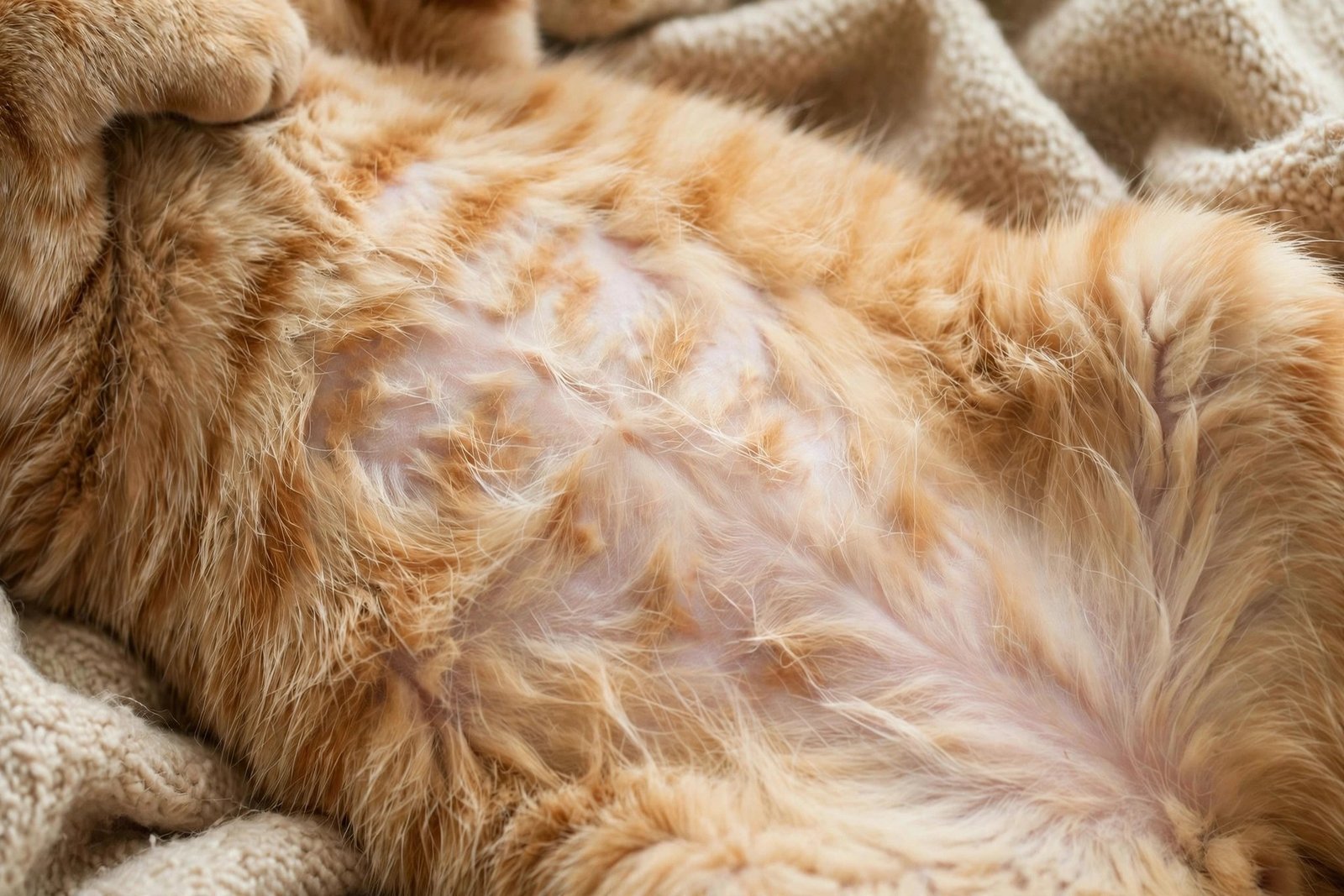
You notice it during a belly rub: a patch on your cat’s tummy where the fur is thin or gone entirely, pink skin showing through. Maybe it’s symmetrical on both sides, maybe it’s one ragged spot. Your cat seems unbothered — or maybe she’s been grooming there a lot and you only just looked closely. Belly hair loss in cats is surprisingly common, and the causes split into two very different categories: medical skin/hormonal disease, and the cat doing it to herself.
This guide explains every major cause of feline belly hair loss — from overgrooming and allergies to hormonal disorders — how to tell them apart at home, what the vet will check, and the treatment for each. The pattern of the hair loss tells most of the story, so we’ll start there.
Reading the Pattern: What the Baldness Tells You
Symmetrical, smooth, non-itchy thinning on the belly and inner thighs: the classic presentation of psychogenic alopecia (stress overgrooming) or hormonal/endocrine causes. The skin underneath looks normal — not red, not scabby — because the hair is being removed (by tongue or by follicle shutdown), not destroyed by inflammation. Patchy, red, scabby, or itchy-looking loss: points to skin disease — allergies, infection, or parasites. One ragged patch, possibly with broken hairs: suggests focused overgrooming of a painful or irritated spot underneath.
The single most useful home test: are the hairs broken or gone from the root? Overgroomed hair looks stubbly — broken shafts, like a bad haircut. Hormonally lost hair leaves smooth skin with no stubble. You may need a magnifying glass and good light, but this distinction directs the entire diagnostic path. Also note: is the cat actually grooming there excessively (catch her in the act), or is the hair just… gone? Many owners never witness the grooming — cats do it privately, often at night.
Overgrooming: The #1 Cause (Psychogenic Alopecia)
Feline psychogenic alopecia — compulsive overgrooming from stress, anxiety, or boredom — is the most common cause of belly hair loss in otherwise healthy cats. The belly and inner legs are the classic sites because they’re easily reached during a grooming session that starts normal and doesn’t stop. The cat isn’t “pulling hair out” in clumps; she’s licking the same area hundreds of times daily until the hair breaks off.
Triggers: household changes (new pet, new baby, moving, schedule changes), inter-cat conflict (the #1 hidden trigger — a cat bullied by a housemate overgrooms from chronic stress), boredom in under-stimulated indoor cats, and separation anxiety. The detective work: what changed in the 1–3 months before the hair loss appeared? Cats are stress historians — the cause often predates the symptom by weeks.
Treatment addresses the stress, not the skin: resolve inter-cat conflict (separate resources — litter boxes, food, water, resting spots — one per cat plus one extra), add environmental enrichment (window perches, puzzle feeders, vertical space, daily interactive play), establish predictable routines, and consider Feliway diffusers. For entrenched cases, vets may prescribe anti-anxiety medication (amitriptyline, fluoxetine) — not as a first resort, but as a legitimate tool when behavior modification alone isn’t enough. An e-collar or recovery suit temporarily breaks the cycle while the underlying stress is addressed — but used alone, the grooming resumes the day it comes off. The ASPCA’s cat behavior resources cover the enrichment side thoroughly, and stress-reduction principles translate across species better than you’d expect.
Allergies and Skin Disease
When the bald skin looks irritated — redness, scabs, darkened skin, or the cat is visibly itchy — think dermatologic. Flea allergy dermatitis is the top suspect even in indoor cats (one flea bite triggers massive itching in allergic cats, and you’ll rarely see the flea). The pattern often includes the belly plus the lower back and tail base. Year-round flea prevention for all pets in the household is both treatment and diagnosis.
Food allergies (usually to beef, dairy, fish, or chicken proteins) and environmental allergies (dust mites, pollens, molds) cause generalized itching that cats address by overgrooming the belly among other areas. Unlike dogs, cats rarely get the classic “red paws” — they get barbered bellies and scabby necks (miliary dermatitis). Diagnosis follows the same path as dogs: flea control first, then elimination diet trials (8–12 weeks, prescription hydrolyzed or novel protein — not just a new grocery-store bag), then environmental allergy workup. Ringworm (a fungal infection, not a worm) causes circular patchy loss, often with scaly skin — it’s contagious to humans, so scaly circular patches warrant a prompt vet visit and a fungal culture.
Hormonal and Medical Causes
Hyperthyroidism (common in cats 10+) can cause patchy hair loss with weight loss despite good appetite and restlessness. The Cornell Feline Health Center provides detailed owner guidance on feline endocrine disorders. Post-injection alopecia: a small bald patch at a past injection site — usually cosmetic and self-resolving.
Pain-related overgrooming deserves special attention: cats lick the skin over painful internal structures. A cat barbering one side of the belly may be soothing bladder pain (feline lower urinary tract disease), intestinal discomfort, or even arthritis in the nearby joints. This is why the vet palpates the abdomen and may suggest urinalysis or imaging for one-sided patterns — the skin is fine; something underneath hurts. Older cats with new belly licking should always get a pain assessment, because cats hide discomfort as a survival strategy — by the time you see the bald patch, the pain may be well established.
What the Vet Visit Involves
Expect: history (when it started, which areas, itch level, household changes, flea prevention status, diet), skin examination with magnification, and usually skin cytology or tape prep (checking for yeast/bacteria), skin scraping (mites), and possibly a fungal culture for ringworm. Bloodwork (thyroid, general panel) for older cats or symmetrical non-itchy patterns. The vet may also do a trichogram — examining plucked hairs under the microscope to distinguish broken (overgroomed) from naturally shed hairs.
Costs are usually modest for the initial workup ($100–$250); the expensive part is the allergy workup if it goes that far. Bring photos documenting the progression if you have them, and be honest about household stressors — the vet isn’t judging your home, they’re diagnosing your cat.
What You Can Do at Home (and What to Avoid)
Do: ensure rigorous flea prevention for all pets (the cheapest rule-out), add enrichment and play sessions, provide vertical territory and hiding spots, keep routines predictable, use Feliway diffusers during stressful periods, and monitor with weekly photos to track improvement or spread. Don’t: apply human creams, essential oils, or coconut oil to the bald skin (cats ingest whatever you apply through grooming — many topicals are toxic); don’t punish grooming behavior (it’s stress or itch, not disobedience); and don’t assume it’s “just stress” without the vet ruling out medical causes first — that assumption delays treatment for the cats who actually have disease.
Conclusion
Belly hair loss in cats is a symptom with a story: stubbly broken hairs point to overgrooming (stress, allergy, or pain underneath), smooth symmetrical thinning points to hormonal or stress causes, and red/scabby patches point to skin disease. Work the diagnostic path in order — fleas, then vet exam with skin testing, then stress/environmental detective work — and treat the cause rather than the bald spot. The fur almost always grows back once the underlying issue resolves. Your job is finding the issue, and now you know where to look.
Frequently Asked Questions
Why is my cat losing hair on her belly but not itchy?
Non-itchy symmetrical belly hair loss is typically psychogenic overgrooming (stress-related licking — the cat may groom when you’re not watching) or a hormonal cause like hyperthyroidism. Look for stubble (broken hairs = grooming) versus smooth skin (follicle-level loss = hormonal). A vet visit with bloodwork distinguishes them.
Can stress really make a cat lose hair?
Yes — psychogenic alopecia is one of the most common feline diagnoses. Chronic stress (inter-cat conflict, household changes, boredom) triggers compulsive grooming; the belly and inner thighs are the classic sites. It responds to stress reduction, enrichment, and sometimes anti-anxiety medication — not punishment.
Will my cat’s belly fur grow back?
Almost always, once the underlying cause resolves — typically within 2–3 months. Hair regrowth is a useful treatment monitor: fine regrowth within weeks means the treatment is working. If hair isn’t regrowing after 3 months, revisit the diagnosis.
Is belly hair loss in cats contagious to humans?
Only if the cause is ringworm — a fungal infection causing circular, scaly, patchy hair loss. Ringworm is zoonotic and needs prompt veterinary diagnosis and treatment. The far more common causes — overgrooming, allergies, hormonal issues — are not contagious.
Should I put a cone on my cat to stop overgrooming?
As a short-term circuit-breaker while addressing the underlying cause, yes. As the entire treatment, no — the grooming resumes when the cone comes off because the driving cause is still there. Always pair barriers with diagnosis and treatment of the cause.