
 By admin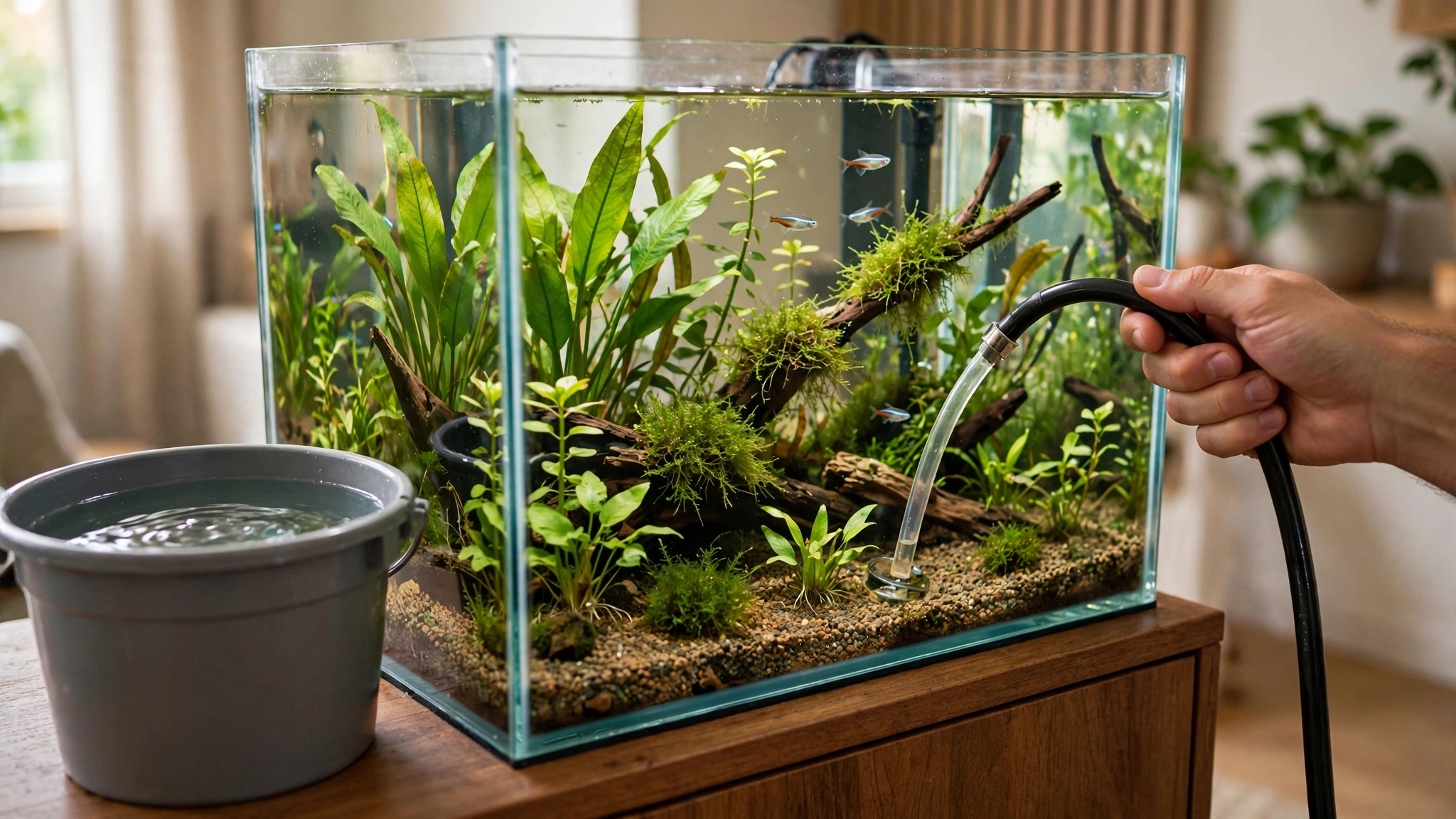
Quick Answer: The fastest way to remove nitrates from an aquarium is a 25–50% water change with dechlorinated water, which can cut nitrate levels in half immediately. For long-term control, combine regular water changes with live plants, reduced feeding, proper stocking, and good filtration. Aim to keep nitrates below 40 ppm for freshwater fish and below 10 ppm for reef tanks.
Nitrates are the silent end-product of every aquarium’s nitrogen cycle — invisible, odorless, and constantly accumulating. Unlike ammonia and nitrite, which spike and then vanish as your filter matures, nitrate just keeps building until you remove it. Left unchecked, high nitrates stress fish, stunt growth, fuel algae blooms, and shorten lifespans.
The good news: removing nitrates is straightforward once you understand where they come from. This guide covers emergency reduction, long-term prevention, and the methods that actually work (plus a few popular ones that do not).
What Are Nitrates and Where Do They Come From?
Every aquarium runs a nitrogen cycle: fish waste and uneaten food produce ammonia (toxic), beneficial bacteria convert it to nitrite (toxic), and other bacteria convert that to nitrate (much less toxic, but harmful at high levels). Nitrate is the end of the line — nothing in a basic filter removes it, so it accumulates until you intervene.
Common nitrate sources include:
- Fish waste: more fish = more nitrate, faster
- Overfeeding: uneaten food rots into ammonia, then nitrate
- Decaying plants or dead livestock: hidden corpses are nitrate factories
- Tap water: some US municipal water contains 10–40 ppm nitrate already — test your tap
- Overstocked or undersized filtration: waste processing cannot keep up
Safe Nitrate Levels
- Freshwater community tanks: under 40 ppm (under 20 ppm is better)
- Planted tanks: 5–20 ppm is actually desirable — plants consume it
- African cichlids / goldfish: under 40 ppm; these messy fish need diligent changes
- Saltwater fish-only: under 40 ppm
- Reef tanks with corals: under 10 ppm (under 5 ppm for sensitive SPS corals)
Test weekly with a liquid test kit (API Freshwater Master Kit is the standard; strip tests are less accurate). If you cannot remember your last reading, test today — most nitrate problems are discovered, not predicted.
Method 1: Water Changes (Fastest and Most Reliable)
A partial water change is the single most effective nitrate removal tool. It physically removes nitrate-laden water and replaces it with clean water. The math is simple: a 50% change cuts nitrates roughly in half; a 25% change cuts them by a quarter.
How to do it right:
- Use a gravel vacuum to siphon water from the substrate, removing trapped waste at the same time
- Treat replacement water with a dechlorinator (Seachem Prime or similar) before adding it
- Match temperature within 2–3°F to avoid shocking fish
- For emergencies (nitrates over 80 ppm), do 30–40% changes daily until levels fall below 40 ppm — avoid massive single changes over 50%, which can swing parameters too fast
Maintenance schedule: 25% weekly for most tanks; 30–50% weekly for heavy bioloads (goldfish, cichlids, oscars). Consistency beats intensity — a regular 25% change prevents problems that a monthly 75% change cannot fix.
Method 2: Live Plants (Best Long-Term Solution)
Live plants are nature’s nitrate filters — they absorb nitrate as fertilizer. A well-planted tank can run for weeks with barely rising nitrates. Fast-growing stem plants are the hungriest nitrate consumers:
- Anacharis (Elodea): grows fast, undemanding, excellent nitrate sponge
- Hornwort: floating or planted, aggressive grower
- Water sprite: fast-growing, great for beginners
- Pothos (roots in water, leaves above): legendary nitrate consumer for HOB filters and sumps — just keep leaves out of the water
- Duckweed / frogbit: floating plants with unlimited CO2 access grow explosively and strip nitrates
Even a few bunches of anacharis in a basic tank make a measurable difference. Plants also oxygenate water and provide cover that reduces fish stress.
Method 3: Reduce the Nitrate Input
Removing nitrate is half the battle; producing less of it is the other half:
- Feed less: most fish are overfed. Offer only what they eat in 2–3 minutes, once or twice daily. A hungry fish is healthier than an overfed one.
- Do not overstock: follow the 1-inch-per-gallon guideline loosely for small community fish, and research actual adult sizes — that cute 2-inch oscar becomes a 12-inch waste machine
- Remove dead material promptly: check for dead fish, remove melting plant leaves, and vacuum detritus
- Rinse filter media in tank water: clogged filters become nitrate factories as trapped waste rots; never rinse in tap water (chlorine kills beneficial bacteria)
Method 4: Specialized Filtration
For stubborn nitrate problems, dedicated media and equipment help:
- Nitrate-absorbing resins (Seachem Purigen, nitrate-selective resins): placed in the filter, they adsorb organics and nitrates; rechargeable versions last for months
- Deep sand beds / denitrators: anaerobic bacteria in oxygen-free zones convert nitrate to nitrogen gas. Sulfur-based denitrators work but need careful tuning
- Algae scrubbers / refugiums (saltwater): grow algae in a separate lit chamber, then harvest it — each harvest physically exports the nitrate the algae consumed
- Protein skimmers (saltwater): remove organic waste before it becomes nitrate
These are supplements, not replacements, for water changes. No gadget eliminates the need for basic maintenance.
Methods That Do NOT Work Well
- “Nitrate remover” chemicals: most only bind nitrate temporarily or do nothing measurable; some harm plants and invertebrates
- Just adding more filter media: standard biomedia converts ammonia to nitrate — it does not remove nitrate
- UV sterilizers: great for green water and parasites, zero effect on dissolved nitrate
- Waiting it out: nitrates do not evaporate or break down on their own in a typical aquarium
Emergency Plan: Nitrates Over 80 ppm
- Test your tap water — if tap has high nitrates, water changes alone will not fix it; consider RO/DI water
- Do a 30–40% water change immediately (dechlorinated, temperature-matched)
- Vacuum the substrate thoroughly during the change
- Cut feeding in half for the next week
- Repeat 30% changes daily until nitrates are under 40 ppm
- Add fast-growing plants (anacharis, hornwort, or pothos roots) for ongoing control
- Check stocking and filtration — chronic high nitrates mean the system’s balance is off
Preventing Nitrate Buildup: The Weekly Routine
The aquarists with the cleanest tanks are not the ones with the fanciest equipment — they are the ones with a routine:
- Test nitrates weekly; log the numbers so you spot trends
- 25% water change with gravel vacuuming, every week, no excuses
- Feed sparingly; skip one day per week (healthy fish handle fasting fine)
- Trim and replant fast growers; remove dead leaves
- Rinse mechanical filter media monthly in old tank water
Further Reading
- How to Stop a Kitten from Biting: Step-by-Step Guide (2026)
- How to Keep Chicken Water From Freezing: Step-by-Step Guide (2026)
- How to Tell How Old a Kitten Is: Step-by-Step Guide (2026)
- Humane Society of the United States
- ASPCA’s pet care resources
Frequently Asked Questions
How do I remove nitrates without a water change?
Heavy planting (especially pothos roots or floating plants) and nitrate-absorbing resins can meaningfully reduce nitrates, but nothing replaces water changes entirely for most tanks. Think of plants as nitrate reducers and water changes as nitrate removers.
Will a bigger filter remove nitrates?
Not by itself. Standard biological filtration converts ammonia into nitrate — it manufactures nitrate, it does not remove it. You need plants, resins, denitrators, or water changes for actual removal.
Are nitrates harmful to fish?
At low levels (under 40 ppm freshwater), most fish tolerate nitrates fine. Chronic levels above 80 ppm cause stress, suppressed immunity, poor growth, and algae explosions. Sensitive species and fry need lower levels.
Why are my nitrates high right after a water change?
Test your tap water — many US water supplies contain 10–40 ppm nitrate. If your tap reads high, switch to RO/DI water remineralized for your livestock, or blend tap with RO water.
Do water conditioners remove nitrate?
Most do not. Seachem Prime detoxifies ammonia, nitrite, and nitrate for about 24–48 hours (converting them to less toxic forms), but the nitrate is still present and will show on tests. It is a safety net, not a removal method.
Conclusion
Removing nitrates from an aquarium comes down to a simple formula: regular water changes + live plants + sensible feeding + appropriate stocking. Start with a big water change to knock levels down, then build the weekly routine that keeps them down. Test your water, trust the numbers, and your fish will show the difference in color, activity, and health.