
 By admin
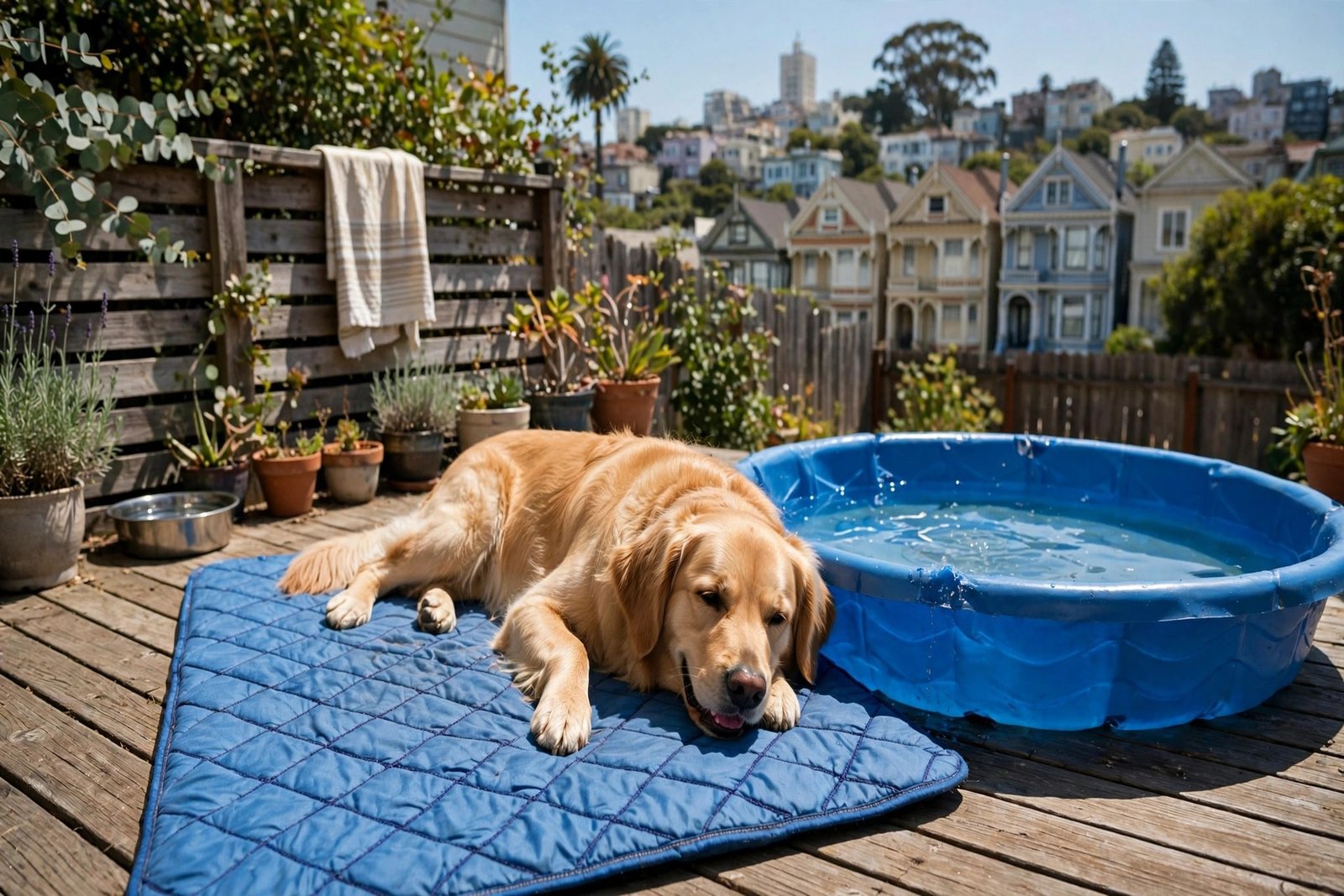
San Francisco summers are famously weird — Mark Twain’s “coldest winter I ever spent was a summer in San Francisco” still gets quoted because it’s still true. But the Bay Area’s microclimates mean your dog’s summer reality depends entirely on where you are: 65°F and foggy in the Richmond, 95°F and baking in Walnut Creek, and a single afternoon walk can cross both. Add in heat waves that increasingly push even the fog belt into the 80s and 90s, and Bay Area dog owners need a real heat plan — not just “it’s usually mild here.”
This guide covers keeping your dog cool through Bay Area summers: understanding your dog’s personal heat risk, the cooling strategies that actually work, the pavement test and walk-timing rules, water safety, and the heatstroke warning signs every owner must recognize — because heatstroke kills dogs every summer, including in “mild” San Francisco.
Know Your Dog’s Personal Heat Risk
Not all dogs handle heat equally, and the differences are dramatic. Highest risk: brachycephalic (flat-faced) breeds — Bulldogs, Pugs, French Bulldogs, Boston Terriers, Shih Tzus — whose compromised airways make panting inefficient; these dogs can overheat at temperatures other dogs find pleasant. High risk: seniors, puppies under 6 months, obese dogs, dogs with heart disease or respiratory conditions, and dark-coated dogs (dark fur absorbs significantly more solar heat).
Moderate risk: thick-coated northern breeds (Huskies, Malamutes) — their coats actually insulate against heat reasonably well, but they still need management. Lower risk doesn’t mean no risk: any dog can get heatstroke given enough heat plus exertion plus time. The Bay Area trap is complacency — owners of heat-tolerant breeds skip precautions because “it’s San Francisco,” then drive to a 100°F inland hike. Assess the dog and the destination. The ASPCA’s hot weather safety guide is the baseline every owner should know, microclimate or not.
The Strategies That Actually Work
Water, everywhere: fresh cool water available at all times; carry a collapsible bowl and water bottle on every walk; add ice cubes to the bowl on hot days. Some dogs drink more from running water — a pet fountain encourages hydration. Cool surfaces: tile floors beat carpet; cooling mats (pressure-activated gel, no electricity needed) genuinely help — place one in the dog’s favorite resting spot. A damp towel on the belly and inner thighs cools efficiently; skip the ice-water dousing (extreme cold constricts blood vessels and slows cooling — cool, not ice-cold).
Shade and airflow: outdoor time means access to real shade, not just “partly cloudy.” A kiddie pool in the shade is the Bay Area summer classic — most dogs learn to love it within days. Indoors, fans help (dogs cool partly through convection), and closing blinds on sun-facing windows cuts indoor temperatures dramatically. Evaporative cooling vests work well in the Bay Area’s low-humidity inland heat (they’re less effective in foggy humidity — physics). Frozen treats: frozen Kongs, ice cubes with treats inside, frozen watermelon chunks (seedless) — hydration plus enrichment plus cooling in one. And cool flooring choices make the house itself part of the cooling strategy.
Walk Timing and the Pavement Rule
The 5-second pavement test: press the back of your hand to the pavement for 5 seconds. If it’s too hot for you, it’s too hot for paws — this is non-negotiable. Asphalt in direct sun can reach 140°F+ when air temperature is 95°F, causing burns in under a minute. In the Bay Area, this matters most inland and during heat waves; the fog belt’s cool pavement lulls owners into skipping the test on the days it matters.
Walk early or late: before 9 a.m. or after 7 p.m. during warm spells — and in the fog belt, take advantage of the natural AC by walking during the foggy morning hours. Shorten and slow down: cut distance by a third to half on hot days, keep it to a walk (no fetch, no running), and watch for the early signs (below). Choose surfaces: grass and dirt paths over asphalt; shaded trails over exposed sidewalks. Bring water on every walk — not just long ones. And for flat-faced breeds during any Bay Area heat wave: skip the midday walk entirely. A missed walk never killed a dog; heatstroke does.
Heatstroke: Signs, Response, Prevention
Early signs: heavy, rapid panting that doesn’t resolve with rest; drooling thicker than usual; bright red gums and tongue; the dog slowing down, seeking shade, or lying down on walks. Act immediately — move to shade, offer cool (not ice) water, apply cool damp towels to belly, armpits, and paw pads, and watch for dehydration warning signs while you get to a vet. Advanced signs (emergency): glazed eyes, vomiting or diarrhea, staggering, collapse, gums turning purple or gray, body temperature above 104°F. This is a race-the-clock emergency — cool aggressively during transport (AC blasting, wet towels) and go to the nearest emergency vet. Heatstroke causes organ damage by the minute; dogs can die within 15–30 minutes of advanced symptoms.
Never leave a dog in a parked car. Not for five minutes, not with windows cracked, not “it’s only 75° out.” Interior temperatures rise ~20°F in 10 minutes and ~30°F in 20 minutes — a 75°F fog-belt afternoon becomes a 105°F death trap while you grab coffee. California law allows good Samaritans to break into vehicles to rescue animals in distress, and it happens every summer. Plan errands so the dog isn’t in the car, period. The RedRover’s heatstroke resources document the cases — including, every year, in San Francisco.
Bay Area Summer Specifics
Microclimate awareness: check the temperature at your destination, not just home. The Richmond-to-Walnut Creek swing can be 30°F. Hiking with the dog? Check inland trail temps specifically, and know that exposed ridgelines run hotter than shaded canyons. Heat waves: when the Bay Area hits 90°F+, it’s news because the infrastructure isn’t built for it — many homes lack AC, and dogs accustomed to 65°F have zero heat acclimation. Treat the first heat wave of the year as high alert: shorten everything, watch brachycephalic breeds like hawks.
Beach caution: Ocean Beach and Fort Funston feel cool, but sand reflects heat and salt water causes vomiting/diarrhea if drunk in quantity — bring fresh water, always. Rinse salt and sand off after.
Conclusion
Keeping your Bay Area dog cool is about respecting microclimates, not assuming the fog will save you: know your dog’s risk level, keep water and cool surfaces constant, walk early and test the pavement, never leave the dog in a parked car, and memorize the heatstroke signs so you act in minutes, not hours. The fog is a gift — but a heat plan is what keeps your dog safe when the gift runs out. September will come. Be ready.
Frequently Asked Questions
How do I keep my dog cool in summer without AC?
Cooling mats, tile floors, fans, frozen treats, kiddie pools in the shade, damp towels on belly and paws, and closed blinds on sunny windows — combined, these handle most Bay Area heat effectively. The highest-impact single move: shift all exercise to early morning or late evening and keep midday strictly indoors and restful.
What temperature is too hot for dogs?
It depends on the dog, but general thresholds: above 80°F, exercise caution with all dogs (shorten activity, ensure water and shade); above 90°F, high-risk dogs (flat-faced breeds, seniors, obese) should stay indoors except for brief potty breaks; above 100°F, dangerous for all dogs. Humidity makes everything worse — panting cools less effectively in humid air.
Can dogs get heatstroke in San Francisco?
Yes — every summer. The fog belt’s mild reputation creates complacency, but heat waves push even the avenues into the 80s and 90s, inland areas bake, and parked cars become lethal at any Bay Area temperature above ~70°F. Flat-faced breeds are at risk on any warm day. “It’s San Francisco” is not a heat plan.
How do I know if my dog has heatstroke?
Early: frantic panting that doesn’t ease with rest, thick drool, bright red gums, reluctance to move. Emergency: glazed eyes, vomiting/diarrhea, staggering, collapse, purple/gray gums. At early signs: shade, cool water, damp towels on belly/paws, vet call. At emergency signs: aggressive cooling during immediate transport to emergency vet — minutes matter.
Is it okay to shave my dog for summer?
Usually no — for double-coated breeds (Huskies, Goldens, Shepherds), the undercoat insulates against heat as well as cold, and shaving destroys that regulation while exposing skin to sunburn. Never shave a double coat. Single-coated breeds can get a shorter summer trim, but even then, shade, water, and timing matter far more than hair length. When in doubt, ask your groomer — not the internet.