
 By admin
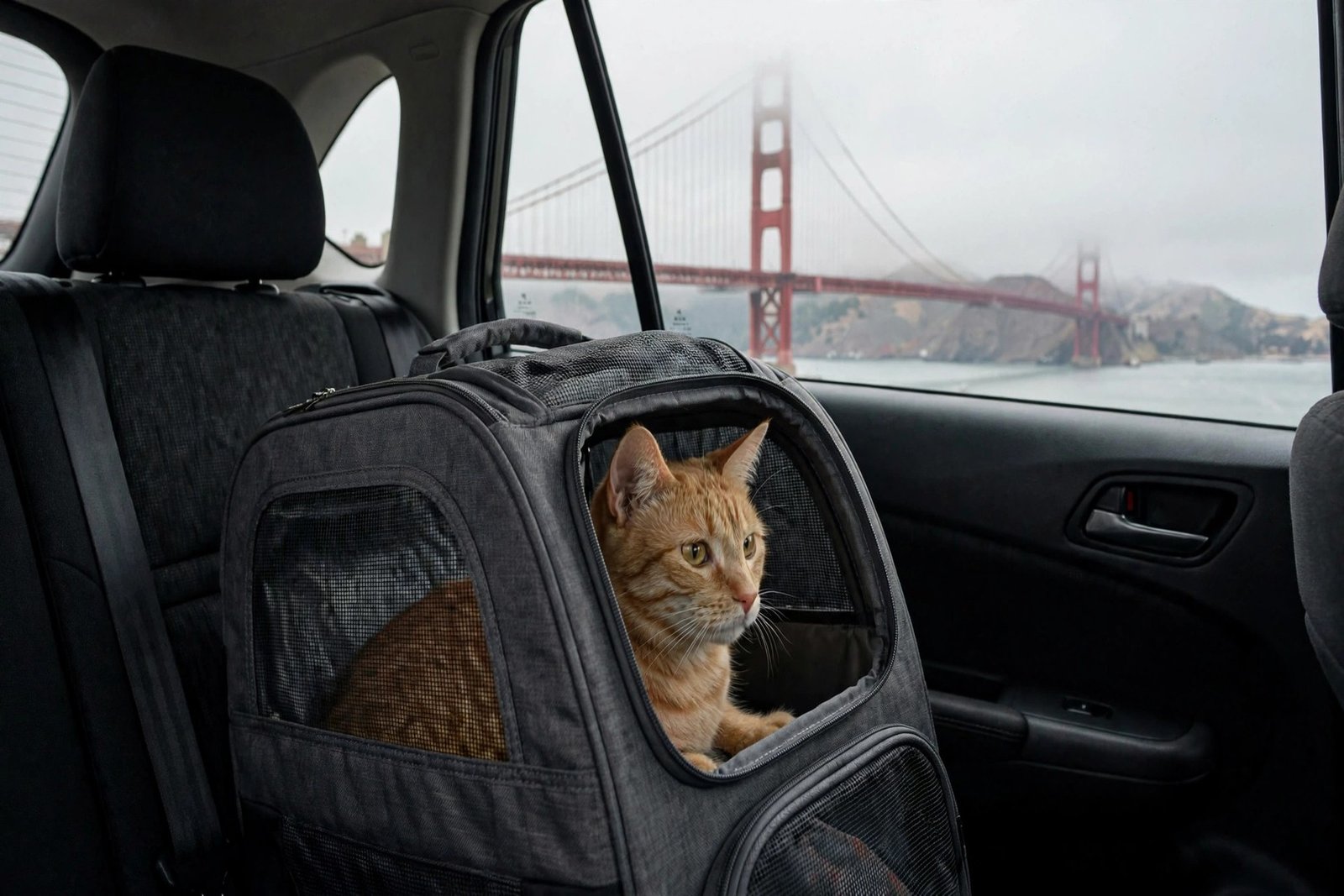
Moving across the Bay Area, road-tripping down the coast, or relocating entirely — sooner or later, many San Francisco cat owners face the same dreaded prospect: hours in the car with a cat who considers the carrier a personal insult. Cats are famously terrible travelers, but long car rides are survivable with the right preparation. The difference between a nightmare drive and an uneventful one is almost entirely what you do in the week before you leave.
This guide covers the complete protocol for long car rides with your cat: carrier training that actually works, what to pack, feeding and litter logistics on the road, keeping your cat safe and calm during the drive, San Francisco-specific considerations (traffic, hills, fog-belt temperature swings), and what to do when things go sideways mid-trip.
Carrier Training: Start a Week Before, Minimum
The #1 predictor of travel misery is a cat meeting its carrier for the first time on travel day. A week before the trip, bring the carrier out and make it furniture: door removed or propped open, cozy blanket inside, treats and meals served in and around it. Most cats will start napping in it within days — the carrier becomes a safe den rather than a trap.
Carrier choice matters. Hard-sided carriers with top-loading doors are the gold standard: secure, easy to clean, and top-loading means no dragging a terrified cat through a front door. Size: the cat should stand, turn, and lie comfortably — airline-under-seat size works for most cats. Line it with a familiar blanket and a puppy pad underneath. For very long drives, consider a “carrier plus” setup: a medium dog crate in the back seat holding the carrier (door open), a small litter tray, and water. Practice short drives around the block in the days before: 10 minutes, treats after, building the association that car = boring and safe. The ASPCA’s cat travel guidance stresses this same desensitization sequence — familiarity is the whole game.
What to Pack: The Cat Road-Trip Kit
Essentials: the carrier (secured with a seatbelt through the handle — an unsecured carrier becomes a projectile in a sudden stop), a harness and leash (never open the car door without the cat harnessed — a spooked cat bolts), a portable litter box with a few days of the usual litter (familiar scent matters), litter scoop and waste bags, your cat’s regular food plus a day extra, water and a no-spill bowl, any medications with dosing instructions, and a copy of vaccination records.
Comfort items: the unwashed blanket from home (your smell is calming), a favorite toy, Feliway wipes (spray the carrier 15 minutes before loading — the synthetic pheromone genuinely reduces stress for many cats), and puppy pads as backup bedding. Emergency additions: your vet’s number and the number of an emergency vet at your destination saved in your phone, a recent photo of your cat (if the worst happens and she escapes, you need a photo immediately), and a paper copy of records in case your phone dies. Pack the cat’s bag like you’d pack a toddler’s — because functionally, that’s what you’re doing.
Feeding, Water, and Litter on the Road
Feed lightly before departure — a small meal 3–4 hours before leaving, then nothing until you’re underway. A full stomach plus motion is a vomit recipe. Once driving, offer small amounts of the regular food at normal meal times; most cats eat less while traveling, which is fine for a day or two. Water: offer at every stop via a no-spill bowl — many cats won’t drink in a moving car, so stops are the hydration windows.
Litter logistics: offer the portable litter box at every stop (every 2–3 hours). Many cats refuse an unfamiliar box in a strange place — fine for a day; a healthy cat can hold it longer than you’d think. Keep it low-pressure: box in the footwell on a pee pad, give privacy, don’t hover. Scoop immediately and bag waste. At overnight stops, set up the full litter station in the bathroom first thing — pet-friendly hotels around the Bay Area are plentiful, but confirm the pet policy and any fees when booking, not at check-in.
During the Drive: Safety and Calm
The cat stays in the carrier while the car moves. Full stop. A loose cat under the brake pedal is how accidents happen, and a cat on your lap is a deployed airbag away from tragedy. Secure the carrier in the back seat with the seatbelt, positioned so the cat can see you — hearing your voice helps.
Temperature control is critical — and San Francisco’s microclimates make this tricky. The fog belt can be 60°F while the East Bay bakes at 95°F, and a parked car’s interior can hit lethal temperatures in minutes. Never leave the cat in a parked car — not for five minutes, not with windows cracked. Plan stops where one person stays with the car, or bring the carrier inside. Noise and vibration: keep music moderate, avoid slamming doors near the carrier, and drive smoothly — cats feel every jolt. Never open a door or window without confirming the cat is secured in the closed carrier. More cats are lost at rest stops than anywhere else on road trips.
Calming Strategies That Actually Work
Feliway: the pheromone spray/wipes have decent evidence for reducing travel stress — spray the carrier 15 minutes before loading (the alcohol carrier needs to evaporate). Familiar scent: the unwashed blanket, a worn t-shirt — your smell is a proven anxiolytic for bonded cats. Cover the carrier partially: a light blanket over the carrier (leaving airflow) reduces visual stimulation; many cats settle dramatically once they can’t see the world rushing past.
Medication: for genuinely panicked travelers, talk to your vet a week+ before the trip about gabapentin — it’s become the standard pre-travel anxiolytic for cats, given 2–3 hours before departure, and it works remarkably well with minimal side effects. What to skip: over-the-counter “calming treats” (minimal evidence), essential oils (many are toxic to cats — tea tree, lavender oil, and eucalyptus are dangerous), and Benadryl without vet dosing. And the same calm-consistency principles that soothe anxious humans apply: your calm voice, predictable routine, and unhurried handling do more than any product.
San Francisco-Specific Considerations
Traffic timing: the Bay Bridge, 101, and I-80 can turn a 2-hour drive into 5 — and a cat’s stress compounds with trip length. Dodge rush hour (leave by 6 a.m. or after 10 a.m.). Microclimates: plan for the warmest part of the route — you can add a blanket in fog, but you can’t undo overheating. Parking: load and unload directly at the door with the cat harnessed, never across a busy street. If moving, set up one “cat room” at the new place first — litter, food, water, hiding spots — and let the cat decompress there away from moving-day chaos.
Conclusion
Long car rides with cats come down to preparation, not luck: a week of carrier desensitization, a properly packed kit, the cat secured in the back seat for the entire drive, litter and water at every stop, and never — ever — leaving the cat in a parked car. Add Feliway, familiar scents, and a vet conversation about gabapentin for anxious travelers, and the drive becomes boring in the best way. Your cat won’t love the trip. But she’ll survive it calmly, and so will you.
Frequently Asked Questions
How long can a cat stay in a carrier on a road trip?
For a full travel day (8–10 hours), a cat can stay in a carrier with breaks every 2–3 hours for water, litter, and stretching. Multi-day trips deserve a larger crate setup with litter and water available.
Should I sedate my cat for a long car ride?
True sedation is outdated and risky — modern practice favors anxiolytics like gabapentin, which reduce anxiety without knocking the cat out. Trial dose at home first, at least a week before travel. Never use human sleep aids.
Can I let my cat roam free in the car?
No — a loose cat can wedge under the brake pedal, launch in a sudden stop, or bolt from an opened door. The seatbelt-secured carrier in the back seat is non-negotiable while moving. The ASPCA’s pet travel safety tips cover carrier setup and rest-stop routines in more detail.
What if my cat won’t use the litter box during the trip?
Common and usually fine for a day — offer the box at every stop without forcing. No urination in 12+ hours, straining, or pain is a vet concern — especially for male cats (urinary blockage is an emergency).
How do I keep my cat cool in the car in summer?
Run the AC continuously and never leave the cat in a parked car — interiors can rise 20°F in 10 minutes. A cooling mat helps; frozen water bottles wrapped in towels provide backup.