
 By admin
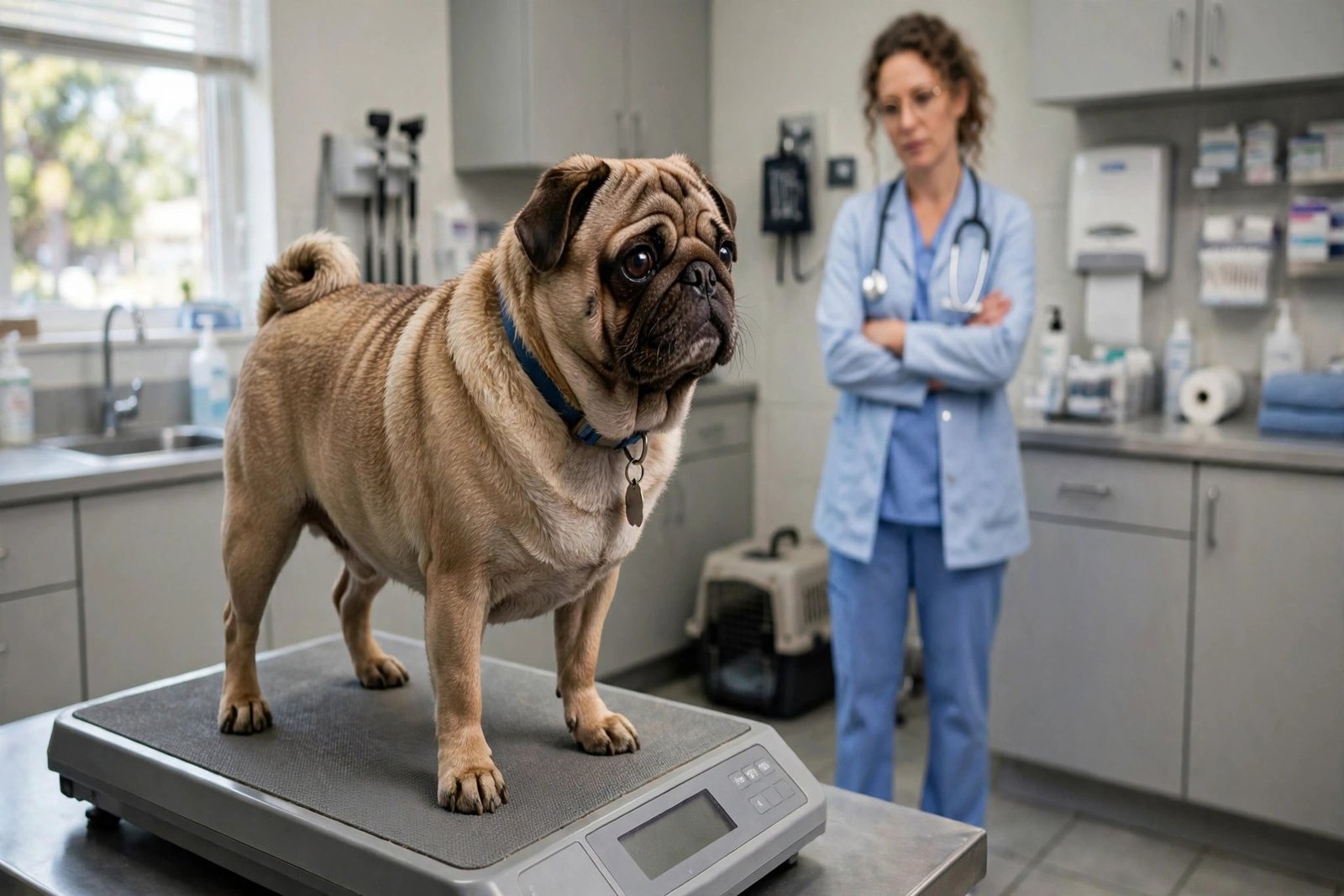
Here’s an uncomfortable statistic: more than half of American dogs and cats are overweight or obese, according to veterinary surveys — and most of their owners don’t realize it. We’ve normalized chunky pets to the point where a healthy-weight animal looks “skinny” to many people. But those extra pounds aren’t cosmetic. Obesity is the single most common preventable health problem in companion animals, linked to diabetes, arthritis, heart disease, and a measurably shorter life.
This guide shows you how to honestly assess whether your pet is overweight (the hands-on tests vets use), why the weight crept on, and the safe, vet-approved plan for slimming down — without crash diets, guilt, or starving your best friend.
The Hands-On Tests: Is Your Pet Actually Overweight?
Forget the scale for a moment — vets assess weight with the Body Condition Score (BCS), a 9-point scale where 4–5 is ideal, 6–7 is overweight, and 8–9 is obese. You can do a simplified version at home right now with two tests:
The rib test: Run your hands along your pet’s ribcage with light pressure. In an ideal-weight animal, you can easily feel the ribs under a thin layer of fat — like feeling knuckles through a thin cloth. If you have to press firmly to find them, that’s overweight. If you can’t feel them at all, that’s obese. The profile test: Look at your pet from the side — there should be a visible abdominal tuck (the belly slopes up behind the ribs). Look from above — there should be a visible waist indentation behind the ribs. A straight tube from shoulders to hips, or worse, a bulging middle, means excess weight.
Breed context matters: sighthounds (Greyhounds, Whippets) are supposed to look ribby; Bulldogs and Pugs are never going to have a Greyhound’s waist. But the rib test works across breeds — it’s about feel, not fashion. If you’re unsure, ask your vet for a BCS assessment at the next visit; it takes thirty seconds and gives you an objective baseline. Many owners are genuinely surprised — studies show owners of overweight pets underestimate their pet’s condition about two-thirds of the time.
Why the Weight Crept On (It’s Not Just Food)
Overfeeding is the obvious cause — and the most common specific errors are measurable: free-feeding (bowl always full), eyeballing portions instead of measuring, and treat creep. That last one is insidious: a medium Milk-Bone is ~40 calories, and for a 20-pound dog needing ~400 calories daily, three treats is 30% of the day’s food. Table scraps compound it — a single ounce of cheddar is ~110 calories, a quarter of that small dog’s daily needs.
But it’s not only food. Neutering/spaying lowers metabolic rate by roughly 20–30% — the same portions that maintained weight before the surgery now add pounds, and most owners never adjust. Age slows metabolism too; a 9-year-old dog needs meaningfully fewer calories than its 3-year-old self. Certain breeds (Labradors, Beagles, Cocker Spaniels, and most brachycephalic breeds) are genetically prone to weight gain — Labradors even carry a documented POMC gene mutation affecting appetite regulation. Medical causes matter: hypothyroidism (dogs) and Cushing’s disease cause weight gain despite normal feeding, and some medications (steroids especially) increase appetite dramatically. If weight appeared despite controlled feeding, that’s a vet conversation, not a diet tweak. And just as with humans, the modern indoor lifestyle — less movement, more snacks — is the background condition making it all worse.
The Safe Weight-Loss Plan
Step 1: Vet check first. Before any diet, rule out medical causes (thyroid panel for dogs, general senior screening) and get a target weight and daily calorie goal. The AVMA’s pet nutrition resources explain how vets calculate safe calorie targets. Safe weight loss is 1–2% of body weight per week for dogs, slower for cats.
Step 2: Measure everything. Buy a measuring cup or, better, a kitchen scale. Weigh the daily food portion; divide into two or three meals (multiple meals reduce begging). Cut treats to under 10% of daily calories — and count them. Replace calorie-dense treats with baby carrots, green beans, apple slices (no seeds), or blueberries — most dogs love them, and the crunch satisfies. Step 3: Feed for the target weight, not the current weight. Food packaging guidelines are calibrated for the weight on the bag — feed the amount for the weight your pet should be, as advised by your vet.
Step 4: Add exercise gradually. For dogs: build walks from 15 minutes to 30–45 minutes daily, add play sessions, try swimming (superb for arthritic overweight dogs — no joint impact). For cats: two 10-minute interactive play sessions daily with wand toys, food puzzles instead of bowls (a cat that “hunts” kibble from a puzzle feeder eats slower and moves more). Increase activity 10–15% weekly, not all at once — an obese pet pushed too hard risks injury. Weigh every 2–4 weeks and adjust; plateaus are normal and just mean recalculating.
Food Choices: What to Actually Feed
You don’t necessarily need expensive “diet” food. Many pets lose weight fine on their regular food, just measured correctly and reduced appropriately. But weight-management formulas have real advantages: higher protein and fiber keep pets feeling full on fewer calories, and L-carnitine (in many weight formulas) supports fat metabolism. For significantly obese pets, veterinary therapeutic weight-loss diets (like Hill’s Metabolic or Royal Canin Satiety) outperform regular food — clinical trials show meaningfully better results, and they’re worth the cost for the active weight-loss phase.
What to avoid: “light” grocery-store foods with no calorie reduction to speak of (check the kcal/cup — some “light” foods barely differ), raw or homemade diets during weight loss (nearly impossible to calorie-control accurately without formulation), and the all-too-common pattern of cutting food drastically while keeping treats flowing. The Ohio State University Veterinary Medical Center’s nutrition resources offer solid guidance on evaluating weight-loss foods. And remember the household factor: everyone who feeds the pet must follow the plan — the grandparent slipping table scraps can single-handedly defeat a diet. Getting the whole family on board with one plan applies to pet diets as much as to budgets.
Why It Matters: The Health Stakes
This isn’t about aesthetics. The landmark Purina lifespan study found that dogs kept at ideal weight lived nearly two years longer than their overweight siblings — almost a 15% lifespan extension. Obesity in pets is linked to: diabetes (especially cats — obese cats are several times more likely to develop it), cruciate ligament tears and arthritis (every extra pound multiplies joint stress), respiratory compromise (critical in Bulldogs, Pugs, and other flat-faced breeds), heat intolerance, increased anesthetic and surgical risk, and certain cancers.
The encouraging flip side: weight loss reverses much of this. Arthritic dogs often show dramatic mobility improvement with even modest weight loss — vets routinely see “a new dog” after 10–15% body weight reduction. Diabetic cats sometimes achieve remission. The investment is modest (measuring food, walking more) and the return is years of active life. There is no health intervention with a better cost-benefit ratio in veterinary medicine.
Conclusion
Start today with the rib test and an honest look at the food bowl. Get a vet baseline (BCS score, target weight, calorie goal, medical rule-out), measure every meal, cap treats at 10%, and build exercise gradually. Expect 1–2% weekly loss in dogs, slower in cats, and don’t panic at plateaus — just recalculate. Your pet won’t thank you in words, but in two years of extra fetch, extra purrs, and extra life, the gratitude will be obvious.
Frequently Asked Questions
How can I tell if my dog is overweight?
Use the rib test: with light pressure, you should easily feel the ribs under a thin fat layer. From the side there should be an abdominal tuck; from above, a visible waist. Your vet can give an official Body Condition Score (1–9 scale, ideal is 4–5) in seconds.
How fast can a dog safely lose weight?
Target 1–2% of body weight per week for dogs. Cats must lose even more slowly — rapid weight loss in cats can cause hepatic lipidosis (fatty liver), which is life-threatening. All feline weight-loss plans should be vet-supervised.
Should I buy special weight-loss dog food?
It helps, especially for significantly obese pets. Weight-management formulas provide more protein and fiber per calorie and often include L-carnitine. But correct portioning of regular food works too — the measuring matters more than the brand.
Why is my pet gaining weight despite eating the same amount?
The usual suspects: spay/neuter (lowers metabolism ~20–30%), aging, reduced activity, treat creep, or a medical cause like hypothyroidism or Cushing’s disease. If intake is controlled and weight still climbs, see your vet for metabolic screening.
Are table scraps really that bad for pets?
Calorie-wise, yes — disproportionately. A single ounce of cheese (~110 calories) is over a quarter of a 20-pound dog’s daily needs. Beyond calories, many human foods are toxic (grapes, onions, xylitol). Routine scraps are a weight-loss plan killer.