
 By admin
Your car pulls slightly to the right on the highway. The steering wheel sits a few degrees off-center when driving straight. Your front tires are wearing bald on the inner edges while the outer tread looks new. These are your car’s way of telling you the wheels aren’t pointing where they should — and the fix, a wheel alignment, costs $100–$150. The cost of ignoring it: $600 in prematurely destroyed tires, worse fuel economy, compromised handling in emergencies, and accelerated suspension wear.
Knowing whether you need a wheel alignment — versus a tire balance, rotation, or just new tires — saves you from both neglect and upselling. Alignment is one of the most oversold services in the industry and simultaneously one of the most genuinely needed. Here’s how to tell the difference.
What Wheel Alignment Actually Is
Alignment adjusts three angles of your wheels relative to the car and road: camber (inward/outward tilt viewed from the front — excessive camber wears one tread edge), toe (whether the fronts of the tires point inward or outward — toe misalignment scrubs tires sideways and is the fastest tire-killer), and caster (forward/backward tilt of the steering axis — affects stability and steering return). “Alignment” doesn’t adjust the tires or wheels themselves — it adjusts the suspension components that position them. When any angle drifts out of spec (potholes, curb strikes, worn suspension parts, or just mileage), tires wear unevenly and handling degrades.
The Symptoms: When Alignment Is Likely Needed
Vehicle pulls to one side
On a straight, level road, briefly loosen your grip — if the car drifts consistently left or right, alignment is suspect. First rule out the mimics: uneven tire pressure (check this first — it’s free), road crown (roads slope right for drainage; slight rightward drift is normal), and uneven tire wear already in progress (worn tires pull regardless of current alignment).
Off-center steering wheel
Driving straight but the wheel sits crooked — the classic alignment signature. This specifically indicates toe misalignment and rarely has other causes.
Uneven tire wear patterns
Inner or outer edge wear (camber or toe issues), feathering (run your hand across the tread — sharp edges one way, smooth the other — classic toe wear), or one tire wearing faster than its axle-mate. By the time wear is visible, the misalignment has been present for thousands of miles — which is why annual alignment checks catch it before tires pay the price. A car that won’t track straight isn’t road-trip ready: our budget road-trip planning guide puts alignment on the pre-trip checklist, and our rent-vs-rideshare comparison covers your options when the car needs shop time. The NHTSA’s tire safety information explains how alignment affects stopping distances.
Loose or wandering steering
The car feels vague or requires constant correction at highway speed. This can be alignment, but also implicates worn tie rods, ball joints, or steering components — which must be fixed before alignment (aligning worn parts is pointless; they’ll drift immediately).
After specific events
Hard pothole strikes, curb hits, accidents (even minor), suspension component replacement, or installing new tires — all warrant alignment checks. Hitting a pothole hard enough to feel is hard enough to knock alignment out of spec.
When You Don’t Need an Alignment (The Upsell Defense)
Shops push alignments aggressively because they’re quick, high-margin services. You probably don’t need one when: the car tracks straight with a centered wheel and tires wear evenly (if it ain’t broke…); you’re getting new tires but the old ones wore perfectly evenly and no suspension work was done (new tires don’t require alignment by themselves — though a check is reasonable); the only symptom is vibration (that’s tire balance, not alignment — vibration at specific speeds = balance; pulling = alignment); or it’s been less than a year since a proper alignment with no impacts or symptoms. The honest interval: check alignment annually or every 12,000–15,000 miles, align when measurements show it’s out of spec — not on a calendar schedule a shop invented.
The AAA’s repair guidance notes that unnecessary alignments rank among the most common upsells — knowing the actual symptoms is your defense.
What a Proper Alignment Involves (And Costs)
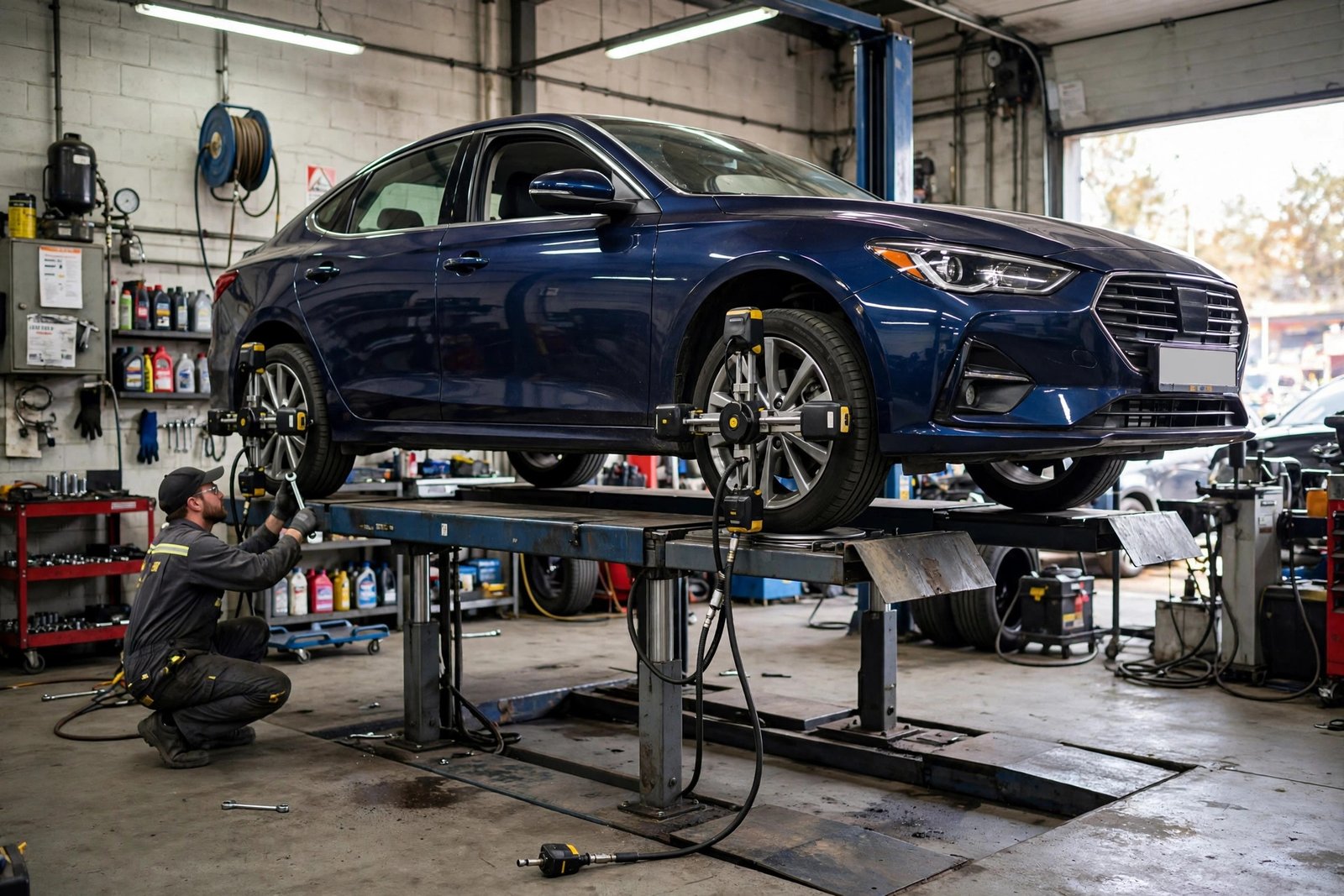
A real alignment: the car goes on a rack with wheel-mounted sensors, a computer measures all angles against manufacturer specs, and the technician adjusts camber, toe, and caster to spec (some vehicles have limited factory adjustability — rear camber on many cars isn’t adjustable without aftermarket kits, which honest shops disclose). You should receive a before/after printout showing measurements — this is your proof the service was needed and performed. No printout, no payment.
Costs: $100–$150 for a standard 4-wheel alignment; $150–$250 with aftermarket adjustment kits. “Lifetime alignment” packages ($180–$250) pay off if you keep the car 3+ years and actually use them — but read the fine print (some exclude vehicles needing parts replacement, which is when you need alignment most). Critical prerequisite: worn suspension components (tie rods, ball joints, bushings) must be replaced first — aligning a car with play in the joints is theater. A shop that aligns without checking components first is either incompetent or padding the bill.
Alignment vs. Balance vs. Rotation: Stop Confusing Them
Alignment adjusts wheel angles (fixes pulling, uneven wear). Balancing equalizes weight distribution around each wheel (fixes vibration at speed — needed when new tires are mounted and when vibration develops). Rotation moves tires to different positions (evens out wear patterns — every 5,000–8,000 miles). They solve different problems; shops that recommend all three for a single symptom are selling, not diagnosing. Vibration? Balance. Pulling? Alignment. Even wear maintenance? Rotation.
Conclusion
You need a wheel alignment when the car pulls (after ruling out tire pressure), the steering wheel sits off-center, tires show uneven wear patterns, steering feels vague, or after pothole strikes, curb hits, or suspension work. You don’t need one on a schedule invented by the shop, merely because you’re buying tires, or to fix vibration (that’s balance). Demand the before/after printout, fix worn components first, and treat alignment as the precision maintenance it is — $100–$150 that protects $600+ in tires and the handling you’ll need in the emergency you can’t schedule.
Frequently Asked Questions
How often should I get a wheel alignment?
Check annually or every 12,000–15,000 miles; align when measurements show angles out of spec. Also check after pothole strikes, curb hits, accidents, suspension work, or when symptoms (pulling, uneven wear) appear.
How much does a wheel alignment cost?
$100–$150 for a standard 4-wheel alignment at most shops. Lifetime packages ($180–$250) can pay off over years of ownership. Always get the before/after measurement printout.
Can bad alignment cause vibration?
Rarely — vibration at specific speeds is almost always tire balance, not alignment. Alignment causes pulling, off-center steering, and uneven wear. If a shop recommends alignment for vibration alone, get a second opinion.
Do I need an alignment after new tires?
Not automatically — but it’s the ideal time to check, since you’ll see the before/after printout and protect your investment. If the old tires wore evenly and there’s been no suspension work or impacts, the alignment is probably fine.
What happens if I never get an alignment?
Progressive uneven tire wear (replacing tires thousands of miles early), degraded handling and emergency maneuver capability, reduced fuel economy from tire scrub, and accelerated suspension component wear. It’s deferred maintenance with compounding costs.