
 By admin
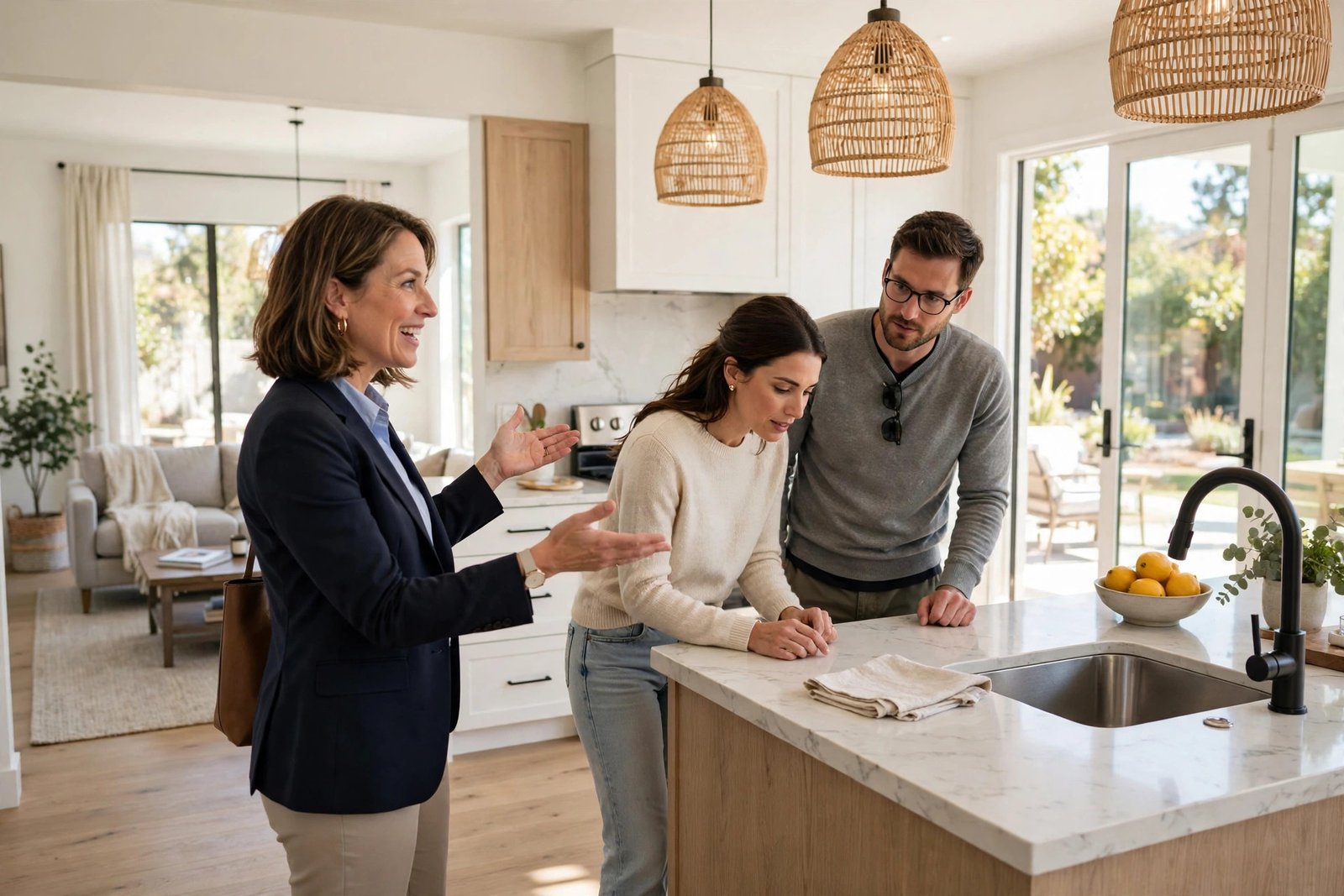
The listing photos were flawless — sun-drenched rooms, gleaming counters, that “just listed” glow. Then you walk in and the sunlight reveals cracked window seals, the gleaming counters distract from sloping floors, and the “cozy” bedroom barely fits a queen bed. Open houses are performances, and like all performances, they’re designed to make you feel something. Your job as a buyer is to feel the feelings while systematically checking the facts.
What you look for during an open house visit determines whether you waste months chasing pretty listings with fatal flaws or zero in efficiently on homes worth your offer. Here’s the professional’s checklist: what to examine in 30 focused minutes, the questions that reveal what sellers hide, and the red flags that should end your interest on the spot.
Before You Go: 10 Minutes of Homework
Never walk in cold. Pull the property’s history: prior sale prices and dates (a 2021 purchase at $400,000 listed at $620,000 in a flat market invites questions), days on market and price reductions, tax records (assessed value, tax history — big jumps signal reassessment surprises for you), and permit history (that “new bathroom” without a permit is a liability, not an asset). Check flood maps, and scan the disclosures if available. Arrive with a printed checklist — open houses are deliberately distracting, and even disciplined buyers forget to check the water pressure when they’re picturing Thanksgiving dinner.
The Exterior: Start Before You Enter
Begin outside, where sellers invest least in deception. Roof: missing, curled, or mismatched shingles; moss; sagging lines. Gutters: detachment, overflow staining on siding. Foundation: visible cracks (hairline is normal; stair-step cracks in brick or horizontal cracks are structural warnings), grading that slopes toward the house (water intrusion’s best friend). Driveway and walkways: major cracking or heaving suggests soil issues. Then the neighborhood audit at ground level: neighboring property conditions, street parking availability (visit a weeknight if street parking looks tight), noise levels (stand quietly for two minutes — highway hum, barking dogs, industrial sounds), and smells (nearby restaurants are charming; rendering plants are not).
Inside: The Room-by-Room Inspection
Every room, every time
Look up (ceiling stains = roof or plumbing leaks above; fresh paint patches on ceilings deserve pointed questions), look down (sloping or bouncy floors suggest foundation or joist issues — bring a marble; if it rolls, note it), open windows (do they operate? seals intact? single-pane in a cold climate means future replacement costs), and check outlets with your phone charger (dead outlets hint at electrical issues).
Kitchen and bathrooms: the expensive rooms
Run every faucet — water pressure, hot water speed, drainage rate. Flush every toilet. Open every cabinet and look underneath for water stains or mold. Test appliances briefly. In bathrooms, check caulking condition, tile grout integrity, and ventilation fans (no fan in a bathroom = future mold). These rooms cost $10,000–$40,000 to renovate; their condition drives your offer math.
Basement, attic, garage: the truth-tellers
Basements reveal water history: efflorescence on walls, sump pumps, dehumidifiers running (why?), musty smells. Attics show insulation depth, roof leaks (daylight through boards, stained decking), and ventilation. Garages expose structural shortcuts and storage reality. Sellers stage living rooms; they rarely stage attics — which is exactly why you look there.
Systems Check: The 5-Minute Version
You can’t do a full inspection in an open house, but you can triage. Electrical panel: brand (Federal Pacific or Zinsco = replacement needed, ~$2,500–$4,000), capacity (100-amp minimum for modern life; 60-amp means upgrade), signs of DIY wiring. Water heater: age (check the serial number — over 12 years means budget $1,200–$3,500 soon). HVAC: age of furnace/AC, filter condition (a filthy filter suggests neglected maintenance generally), odd noises. These observations won’t replace a professional inspection — our guide to finding a reliable contractor for home repairs explains what to do when your triage finds red flags — but they’ll tell you whether a property deserves your inspection dollars at all. The HUD homebuying resources offer a solid checklist of what buyers should verify before making an offer.
Questions That Reveal What Listings Hide
The listing agent works for the seller, but direct questions still yield intelligence — watch for evasiveness as much as answers. Ask: Why is the seller moving? (Job relocation and upsizing are neutral; “just because” after 8 months of ownership is interesting.) How long has it been listed, and have there been price reductions? What’s the seller’s disclosure reveal? (Get the actual document — verbal summaries are unreliable.) How old are the roof, HVAC, and water heater? Any insurance claims filed on the property? What’s the average utility cost? Any HOA litigation or special assessments pending? Are there known issues with the neighborhood — flooding, noise, development plans?
Also ask what conveys: appliances, fixtures, window treatments. Assumptions cause closing-table fights; get it in writing. And observe the agent’s behavior — pressure tactics (“we have three offers coming Monday”) may be real or theater; either way, never let urgency override your checklist.
Red Flags That Should Stop You Cold
Walk away (or discount brutally) when you find: strong air freshener or fresh paint concentrated in one area (masking mold, smoke, or water damage); multiple fresh patches on ceilings or walls; sloping floors combined with sticking doors and cracked drywall (foundation movement); DIY electrical or plumbing visible anywhere (if you can see the shortcuts, imagine the hidden ones); signs of pest infestation (droppings, tunneling in wood, mud tubes); a listing that forbids or discourages inspections; or a price wildly above comps with no justification. Any one of these doesn’t automatically kill a deal — but each demands professional investigation before you proceed, and several together mean the “deal” is someone else’s problem being marketed to you.
If the home passes your screening and you’re thinking about an offer, the next step is understanding true market value — and how the professionals themselves are changing. Our analysis of whether AI will replace real estate agents looks at how pricing and comp tools are evolving, while the CFPB’s Owning a Home toolkit helps you build your own numbers before you commit.
After the Visit: The 24-Hour Debrief
Within a day, while impressions are fresh: write down your top 3 likes and top 3 concerns; compare your notes against the listing’s claims (discrepancies are informative); check commute times at rush hour from the address; drive the neighborhood after dark; and decide whether the property merits a second, longer visit or a professional inspection. The best buyers maintain a simple spreadsheet: address, asking price, your estimated value, pros, cons, deal-breakers present. After ten open houses, the spreadsheet — not your memory — makes the decision clear.
Conclusion
An effective open house visit is a 30-minute professional assessment disguised as a casual walkthrough: homework before you arrive, exterior and systems triage, room-by-room evidence gathering, pointed questions for the listing agent, and a written debrief within 24 hours. The buyers who overpay or buy problems aren’t less intelligent — they’re less systematic. They let staging do the thinking. Bring the checklist, trust the evidence over the ambiance, and let the spreadsheet — not the sunlight through the kitchen window — decide which homes deserve your offer.
Frequently Asked Questions
How long should I spend at an open house?
Plan 30–45 minutes for a serious contender — enough for the full exterior-to-attic circuit without rushing. Five-minute walkthroughs are entertainment, not due diligence. Revisit top candidates for a second, longer look before offering.
Should I bring anything to an open house?
A phone charger (outlet testing), a marble (floor slope check), a checklist, and a measuring tape. Serious buyers also bring a camera — photos of concerning details beat memory when comparing properties later.
Can I make an offer at an open house?
You can express interest, but never offer on the spot. Go home, run comps, sleep on it, and let your agent structure the offer strategically. Same-day offers surrender every negotiating advantage to excitement.
What should I wear to an open house?
Whatever’s comfortable — but wear slip-on shoes if you’ll tour multiple homes (you’ll remove them often) and avoid strong fragrances that compete with the home’s condition for your nose’s attention.
Is it rude to open closets and cabinets?
Not at all — it’s expected. Buyers routinely open closets, cabinets, and appliances. Stay out of clearly personal items (desks, dressers), but storage spaces, pantries, and utility areas are fair game and informative.