
 By admin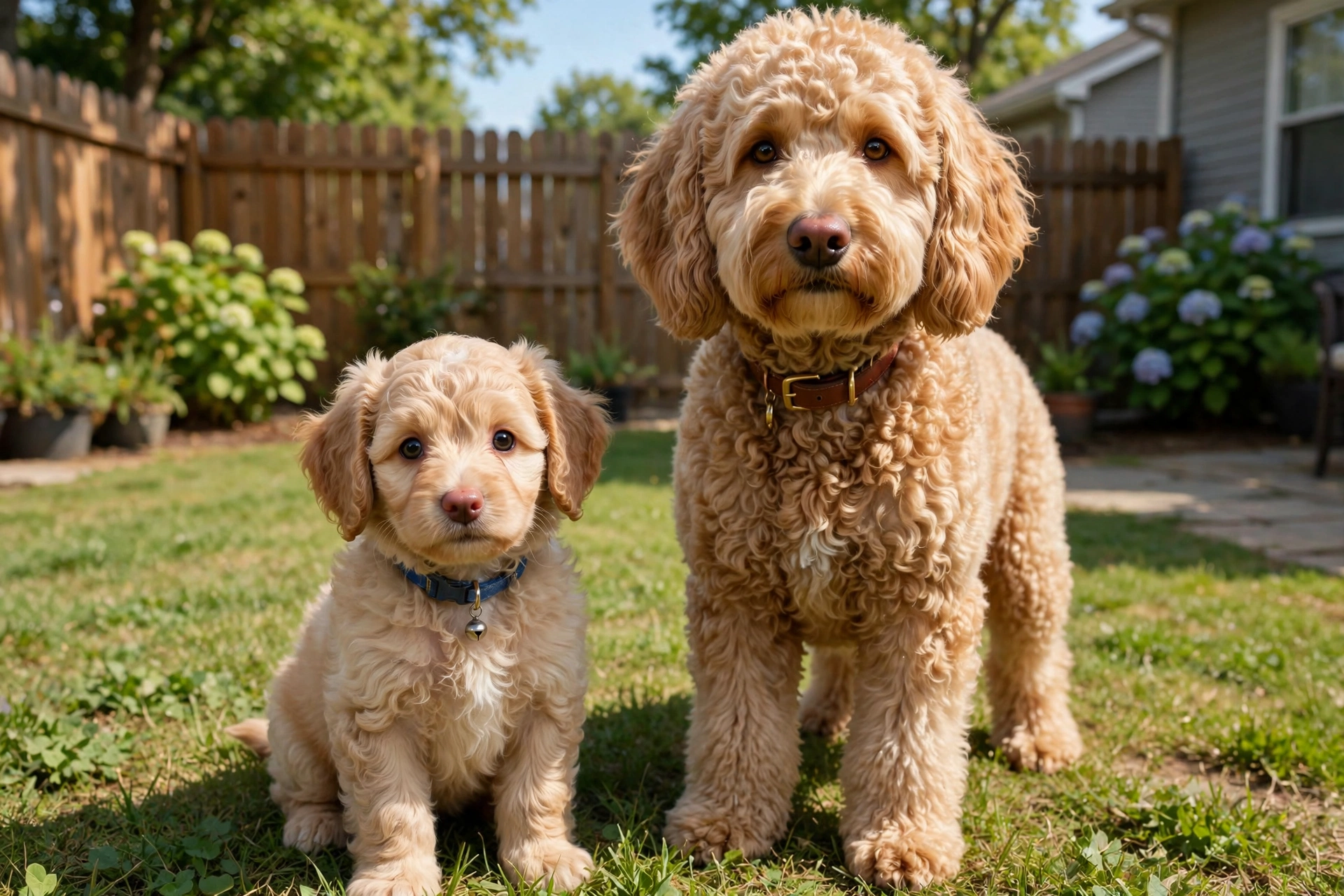
The short answer: Most mini goldendoodles reach 25 to 35 pounds and stand 14 to 20 inches tall at the shoulder as adults. That said, there is no official breed standard, so individual dogs can land anywhere from a petite 15 pounds to nearly 40 pounds depending on their parents, generation, and gender.
Mini goldendoodles are one of the most popular doodle mixes in the United States, prized for their family-friendly temperament and the promise of a medium-sized dog that fits comfortably in an apartment or suburban home. But if you are considering one, you need to know that the word “mini” in this context does not mean tiny. A mini goldendoodle is noticeably bigger than a small breed like a Cavalier King Charles Spaniel, and buyers who expected a lap-sized dog are sometimes surprised at the 9-month-old “puppy” hogging half the couch.
This guide breaks down the real numbers: typical adult weight and height, how mini goldendoodles compare to toy, petite, medium, and standard sizes, what each generation (F1, F1b, F2, and beyond) means for size, a month-by-month growth chart, the factors that push a puppy toward the small or large end of the range, and what reputable breeders charge in 2026.
Typical Adult Size of a Mini Goldendoodle
A true mini goldendoodle is produced by breeding a golden retriever with a miniature poodle. Because the miniature poodle parent usually weighs 10 to 15 pounds and the golden retriever parent weighs 55 to 75 pounds, the offspring tend to land squarely in the middle, with males typically heavier than females.
- Weight: 25 to 35 pounds is the most commonly quoted adult range for mini goldendoodles.
- Height: 14 to 20 inches at the shoulder, with many minis measuring 16 to 18 inches.
- Build: Sturdy and athletic rather than delicate, with a shaggy, wavy, or curly low-shedding coat.
Expect your mini goldendoodle to reach most of its adult height by 10 to 12 months, though it will continue to fill out and gain muscle and coat volume until around 18 months. Females often finish growing a little earlier than males, and males usually weigh 3 to 8 pounds more than their female littermates.
It is worth noting that the goldendoodle is not recognized by the American Kennel Club, so there is no official breed standard enforcing a size ceiling. One breeder’s “mini” may be another breeder’s “medium,” which is why asking about the actual size of the parent dogs is far more important than any label.
Mini vs. Toy vs. Petite vs. Medium Goldendoodles
Breeders use several size labels, and the terminology is inconsistent across the industry. Here is the breakdown most buyers in the US encounter:
- Petite or micro mini: Typically 10 to 25 pounds, usually produced by breeding a small mini goldendoodle with a toy poodle. True petite doodles under 15 pounds are relatively uncommon and often more expensive.
- Mini goldendoodle: 25 to 35 pounds, the classic size and the subject of this guide.
- Medium goldendoodle: 30 to 45 pounds, often the result of a miniature poodle and golden retriever pairing where the retriever side is on the large end, or a first-generation mini bred back to a standard poodle.
- Standard goldendoodle: 50 to 90 pounds, produced with a standard poodle, and a genuinely large dog despite the friendly reputation.
Some breeders also use the term “toy goldendoodle” to mean roughly the same thing as petite mini, generally under 25 pounds. If a breeder’s size categories confuse you, ask directly for the adult weights of previous litters from the same pairing and the weights of both parent dogs. Those numbers tell you more than any marketing label.
How Generation Affects Size: F1, F1b, F2, and Multigenerational
The “F” labels describe how many generations a doodle is removed from its purebred parents, and they matter because size can drift noticeably from one generation to the next.
- F1 (first generation): A golden retriever bred directly to a miniature poodle. These puppies show the widest size variation within a litter, because each pup inherits a random mix of traits. An F1 litter can produce pups ranging from 20 to 40 pounds.
- F1b: An F1 goldendoodle bred back to a purebred miniature poodle. Because 75 percent of the genetics come from the poodle side, F1b litters tend to be more consistent and often land at the smaller end of the mini range, around 20 to 30 pounds. F1b dogs also tend to have curlier, more allergy-friendly coats.
- F2: Two F1 goldendoodles bred together. The size range widens again, similar to F1 litters, because recessive traits from both parent breeds can recombine unpredictably.
- Multigenerational (F2b, F3, and beyond): Doodle-to-doodle breedings selected over multiple generations for consistency. Established multigenerational programs usually produce the most predictable sizes, since breeders select smaller parent dogs generation after generation.
If a compact adult size is your priority, ask breeders for F1b or multigenerational puppies from small parent dogs, and request the weights of puppies from earlier litters at 12 months. A reputable breeder will have this data.
Mini Goldendoodle Growth Chart by Month
Every puppy grows at its own pace, but the following chart gives you a reasonable expectation for a mini goldendoodle expected to mature at about 30 pounds. Percentages of adult weight are approximate.
- 2 months (8 weeks, typical go-home age): 7 to 10 pounds, roughly 25 to 30 percent of adult weight.
- 3 months: 10 to 14 pounds, about 40 percent of adult weight.
- 4 months: 13 to 17 pounds, about half of adult weight. This is when many owners can first estimate adult size by doubling the 4-month weight.
- 5 months: 16 to 21 pounds, roughly 60 to 65 percent of adult weight.
- 6 months: 18 to 24 pounds, about 70 to 75 percent of adult weight. The awkward teenage phase begins.
- 8 months: 21 to 28 pounds, around 85 percent of adult weight. Height growth is nearly finished.
- 10 months: 23 to 30 pounds, about 90 to 95 percent of adult weight.
- 12 months: 24 to 32 pounds, essentially adult size. Expect continued filling out for another 4 to 6 months.
- 18 months: Full adult weight and muscle development, 25 to 35 pounds for most minis.
A useful rule of thumb: doubling your puppy’s weight at 4 months gives a decent estimate of adult weight, though it tends to overestimate slightly for puppies on the larger side of the litter. For a more careful prediction, your veterinarian can use growth-curve charts during the vaccination series at 8, 12, and 16 weeks.
Factors That Affect How Big Your Mini Goldendoodle Gets
Genetics set the range, but several factors decide where within that range your individual dog lands.
- Parent size: The single biggest predictor. A mini puppy from a 12-pound poodle and a 55-pound golden retriever will usually mature smaller than one from a 20-pound poodle and a 70-pound retriever.
- Gender: Males are typically 10 to 20 percent heavier than females from the same litter.
- Litter position: The largest puppies at birth often, though not always, become the largest adults. Runts sometimes catch up completely by 12 months.
- Nutrition: A large-breed puppy formula fed in appropriate amounts supports steady growth. Overfeeding a puppy does not produce a bigger, healthier adult dog; it produces an overweight puppy with a higher risk of orthopedic problems such as hip dysplasia and elbow dysplasia. Follow your veterinarian’s feeding guidance and keep treats to 10 percent of daily calories.
- Spay and neuter timing: Early spay/neuter before growth plates close can result in slightly taller, lankier dogs because sex hormones signal the growth plates to close. Discuss timing with your veterinarian, especially for a breed mix prone to joint issues.
- Exercise: Appropriate exercise builds healthy muscle and bone. Avoid forced, repetitive exercise like long runs on pavement for puppies under 12 months, since growth plates are still open.
Choosing a Reputable Mini Goldendoodle Breeder
Because there is no breed standard, the breeder you choose effectively determines the size, health, and temperament of your puppy. In 2026, expect to pay $2,000 to $5,000 for a well-bred mini goldendoodle puppy from a reputable US breeder. Prices vary by region, with metropolitan areas on the coasts at the higher end. Puppies marketed as petite, micro mini, or rare colors can exceed $5,000, so treat unusually low prices under $1,500 as a warning sign.
A reputable breeder will do the following without hesitation:
- Show you both parent dogs, or at minimum provide verified weights, heights, and photos of both parents.
- Share health testing results: OFA or PennHIP hip and elbow scores, cardiac and eye clearances, and genetic screening for progressive retinal atrophy and von Willebrand disease, which affect poodles and retrievers.
- Give you the adult weights of puppies from previous litters of the same pairing.
- Offer a written health guarantee of at least one to two years and a lifetime take-back policy.
- Raise puppies in the home with early socialization, not in kennels or barns.
Be cautious of breeders who cannot tell you the parents’ sizes, who guarantee a specific adult weight, or who advertise “teacup” goldendoodles. No ethical breeder can promise an exact adult weight, and extreme miniaturization raises the risk of health problems including fragile bones and liver shunts.
Further Reading
- How Big Do Mini Bernedoodles Get? Complete Answer (2026)
- How Big Can Teacup Pigs Get? Complete Answer (2026)
- How Big Do Bearded Dragons Get? Complete Answer (2026)
- AKC’s dog breed guide
- American Society for the Prevention of Cruelty to Animals
Frequently Asked Questions
How big do mini goldendoodles get compared to a standard goldendoodle?
A mini goldendoodle typically weighs 25 to 35 pounds and stands 14 to 20 inches tall, while a standard goldendoodle weighs 50 to 90 pounds and stands 20 to 24 inches tall. The standard is roughly double the size of the mini, needs substantially more food and space, and produces considerably more grooming work because of the larger coat surface area.
At what age is a mini goldendoodle fully grown?
Mini goldendoodles reach most of their adult height by 10 to 12 months and their full adult weight by 14 to 18 months. Coat maturity can take a bit longer, with the full adult texture and volume developing around 18 to 24 months.
Can a mini goldendoodle weigh 40 pounds?
Yes. While 25 to 35 pounds is typical, it is not unusual for a mini goldendoodle from larger parents or an F1 litter to mature at 38 to 45 pounds, which many breeders would label a medium. This is the main reason to ask for the parents’ actual weights rather than relying on the “mini” label alone.
Do male or female mini goldendoodles get bigger?
Males get bigger. A male mini goldendoodle is typically 10 to 20 percent heavier than a female from the same litter, and stands an inch or two taller. If you want the smallest possible adult dog, a female from small parents is your best bet.
How much does a mini goldendoodle cost per year to keep?
Beyond the $2,000 to $5,000 purchase price, budget roughly $1,200 to $2,000 per year. Professional grooming every 6 to 8 weeks is the biggest recurring cost at $75 to $120 per session, plus quality food ($40 to $70 per month), pet insurance ($30 to $60 per month), and routine veterinary care.
Conclusion
So, how big do mini goldendoodles get? Plan for 25 to 35 pounds and 14 to 20 inches at the shoulder, with females and F1b puppies trending smaller and F1 puppies from large parents trending bigger. The “mini” label is a helpful starting point, but the parents’ actual size, the generation, and the breeder’s track record are what truly determine your dog’s adult size. Ask the right questions before you put down a deposit, and you will get the medium-sized companion you are picturing rather than a surprise 45-pounder.