
 By admin
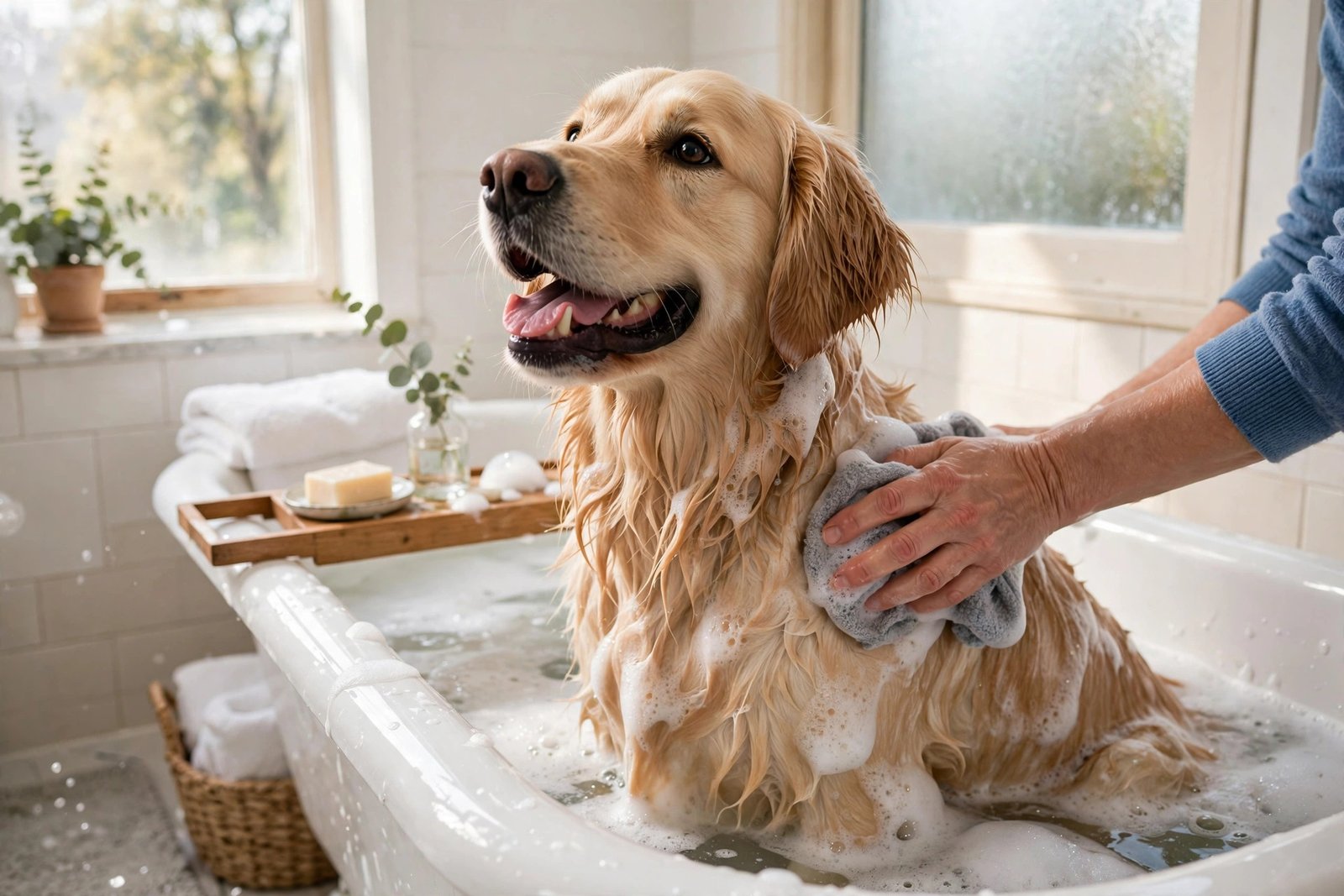
How often should you bathe your dog? Bathe too rarely and you get the unmistakable dog smell; bathe too often and you strip the natural oils that keep their skin healthy, triggering the exact dryness, flaking, and itching you were trying to prevent. Most owners err in one direction or the other, and the “right” answer genuinely depends on your dog’s breed, coat, lifestyle, and skin.
This guide gives you the real bathing frequency by dog type, how to bathe without drying the skin, the products that matter, and the warning signs you’re overdoing it.
The Short Answer (and Why It’s Complicated)
For most healthy adult dogs, every 4–8 weeks is the sweet spot — frequent enough for hygiene, infrequent enough to protect the skin barrier. But that’s a starting point, not a rule. Oily-coated breeds (Basset Hounds, Cocker Spaniels) may need baths every 2–4 weeks; double-coated breeds (Huskies, Golden Retrievers) often do best at 6–8 weeks; hairless breeds need weekly baths; and short-coated dogs with healthy skin can sometimes go 8–12 weeks.
Lifestyle matters as much as breed. A farm dog that swims in ponds needs more baths than an apartment Chihuahua. Dogs with allergies or skin conditions follow their vet’s protocol — often medicated baths weekly or more. And puppies shouldn’t be bathed before 8 weeks old except when truly filthy. The American Kennel Club publishes breed-specific grooming guidance that’s worth checking for your particular dog.
How Over-Bathing Damages Skin
Dog skin has a delicate lipid barrier and a pH around 7.0–7.5 (more alkaline than human skin at ~5.5). Harsh or frequent bathing strips these protective oils, disrupting the barrier and causing dryness, flaking, itching, and increased vulnerability to bacterial and yeast infections. Ironically, over-bathed dogs often smell worse — the irritated skin overproduces oil to compensate, creating a cycle of more baths and more odor.
Human shampoo is a common culprit: formulated for acidic human skin, it disrupts canine skin pH and dries aggressively. Even “gentle” baby shampoo isn’t ideal. The fix is simple — use a proper dog shampoo (pH-balanced for dogs), bathe no more often than needed, and watch your dog’s skin, not the calendar. If you notice flaking, dull coat, or scratching that started after you increased bath frequency, you’re overdoing it. A healthy routine supports a healthy home — keeping your house clean with pets is easier when baths are strategic, not constant.
The Skin-Safe Bathing Method
Before: Brush thoroughly — bathing a matted or tangled coat locks in mats and irritates skin. Place a non-slip mat in the tub. Use lukewarm water (hot water dries skin faster). During: Wet the coat fully, then apply a modest amount of dog-specific moisturizing shampoo (oatmeal-based formulas are excellent for dry-prone skin). Lather gently with your fingertips, not nails, working from neck to tail. Avoid getting water and soap in ears and eyes — a cotton ball loosely placed in each ear helps.
Rinse twice. Residue is the #1 cause of post-bath itching — shampoo left in the coat irritates skin for days. Rinse until the water runs completely clear, then rinse once more. After: Towel dry, then blow-dry on low/cool if your dog tolerates it (damp undercoats breed hot spots). Finish with a light leave-in conditioner or coconut-oil-based moisturizing spray for dry-prone dogs. The whole process should be calm and quick — 15–20 minutes. The ASPCA’s dog grooming guide covers technique in detail.
Between-Bath Maintenance That Extends the Interval
The secret to bathing less often is maintaining more often. Brush 2–3 times per week (daily for long coats) — brushing distributes natural oils, removes dirt, and prevents mats. Use waterless foam shampoo or grooming wipes for spot-cleaning muddy paws and dirty bellies. A quick paw wash after walks handles most of the grime that drives owners to full baths.
Dry shampoo for dogs (not human dry shampoo — the ingredients differ) refreshes the coat between baths. And address odor at its sources: wash bedding weekly, clean ears regularly (smelly ears often mean infection, not dirt), and check dental health — a huge share of “dog smell” is actually dental disease, not coat odor. These habits can easily stretch a 4-week bather to 6–8 weeks with a better-smelling dog. Your floors will thank you too — pet-friendly flooring choices make the between-bath period much more livable.
When to Bathe More (or Call the Vet Instead)
Bathe sooner when your dog gets into something genuinely filthy or toxic (mud, garbage, skunk — for skunk, use the baking soda/peroxide/dish soap formula, not tomato juice), after swimming in chlorinated pools or salt water (rinse at minimum), or when the coat is visibly dirty or smelly despite maintenance. These are hygiene baths, not schedule baths.
But increased bathing need can signal medical issues: sudden oiliness, persistent odor despite baths, flaking, hot spots, or constant scratching warrant a vet visit before more shampoo. Skin is a window into overall health — thyroid issues, allergies, and infections all show up in the coat first. More baths won’t fix a medical problem; diagnosis will. Puppies, seniors, and dogs with chronic conditions should have bathing frequency set with their vet, not a blog post.
Conclusion
Most dogs thrive on baths every 4–8 weeks with proper technique: dog-specific moisturizing shampoo, lukewarm water, double rinsing, and thorough drying. Between baths, brushing and spot-cleaning do the heavy lifting. Watch your dog’s skin — not the calendar — and adjust. Get the frequency right, and you’ll have a clean dog with healthy, flake-free skin and a coat that practically glows. When in doubt, ask your groomer or vet at the next visit — a quick professional opinion on your specific dog’s coat beats any generic schedule.
One last practical note: keep a dedicated ‘dog towel’ by the door for muddy-paw emergencies between baths — it prevents half the surprise full baths owners resort to, and your dog will learn the routine within a week.
Frequently Asked Questions
Can I use human shampoo on my dog in a pinch?
Once in an emergency won’t cause disaster, but don’t make it a habit — human shampoo’s pH and detergents strip canine skin oils aggressively. If you’re out of dog shampoo, a tiny amount of gentle dish soap diluted heavily is actually less disruptive than human shampoo for a one-time bath.
How do I bathe a dog that hates water?
Desensitize gradually: treats for standing in the dry tub, then for wet paws, building up over days. Use a lick mat smeared with peanut butter stuck to the tub wall during baths. Keep sessions short, water lukewarm and low-pressure, and never force a panicking dog — for truly phobic dogs, professional groomers or vet-prescribed calming protocols help.
Is it bad to bathe my dog every week?
For most dogs, yes — weekly bathing with regular shampoo typically dries the skin over time. Exceptions: hairless breeds, dogs on vet-prescribed medicated bath protocols, and dogs that get genuinely filthy weekly. If you must bathe weekly, use an ultra-gentle moisturizing shampoo and consider a conditioner every time.
Should I blow-dry my dog after a bath?
If your dog tolerates it, yes — especially double-coated breeds, where damp undercoat invites hot spots and mildew smell. Use low heat or cool setting, keep the dryer moving, and never use high heat. For short-coated dogs in warm weather, thorough towel-drying is usually sufficient.