
 By admin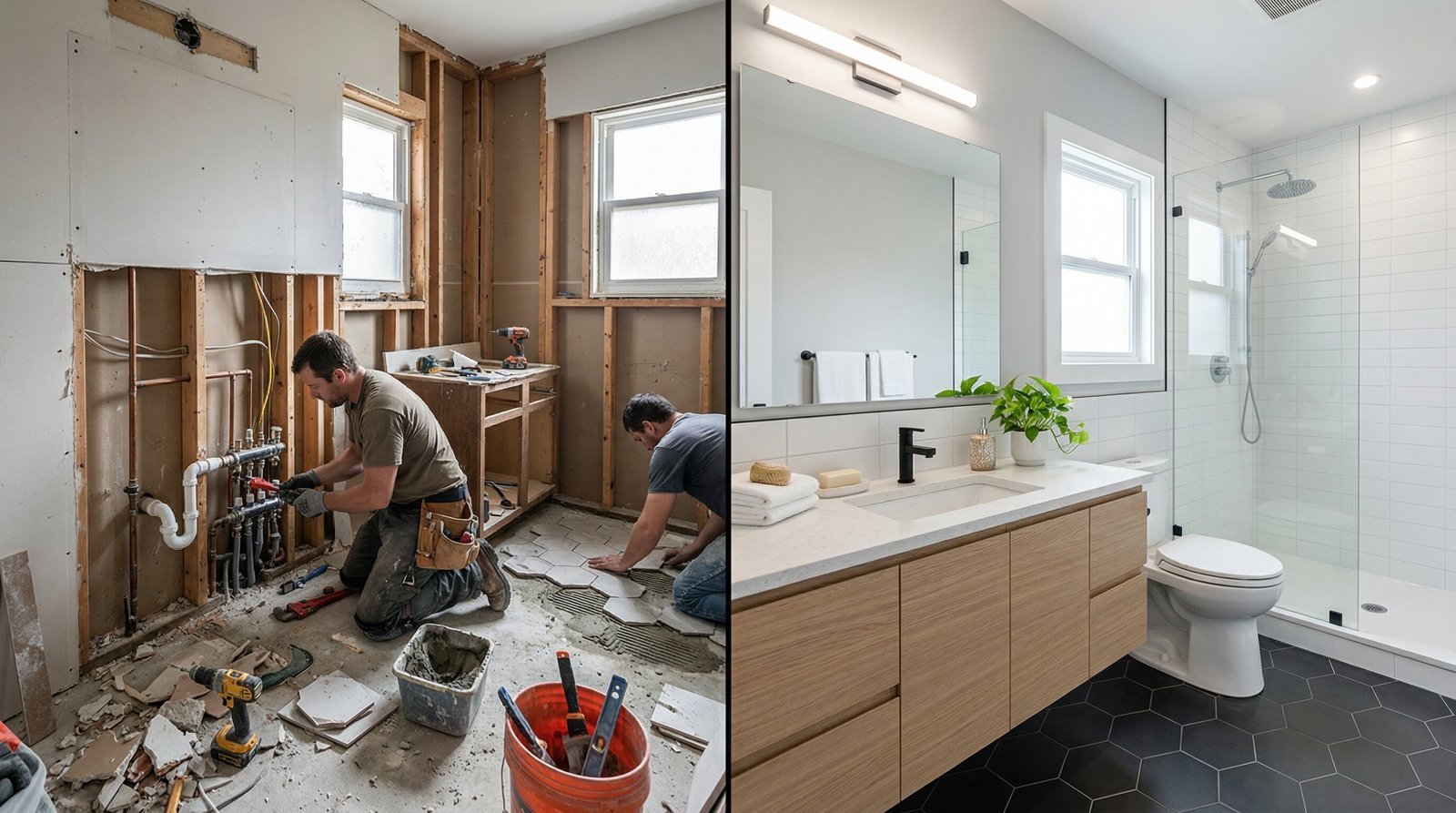
Bathroom remodels have the wildest price range in home improvement. One neighbor paid $8,000, another paid $35,000, and both say “bathroom remodel” like it’s the same project. It’s not. When homeowners ask how much a bathroom remodel costs on average, the honest answer is: it depends on the bathroom’s size, the project’s scope, and your zip code — but there are reliable averages to anchor your budget.
How Much Does a Bathroom Remodel Cost on Average?
The national average is $10,000–$15,000 for a full bathroom remodel, with most projects falling between $6,000 and $18,000. That covers a typical 5×8-foot hall bathroom with mid-range materials and professional labor.
But averages hide the real story. Here’s the breakdown by scope:
- Cosmetic refresh: $3,000–$8,000. New paint, fixtures, mirror, lighting, hardware — same layout, no plumbing or tile work. Huge visual impact per dollar.
- Mid-range remodel: $10,000–$20,000. New tile, vanity, toilet, tub/shower, flooring — the standard “gut the surfaces but keep the layout” project.
- High-end remodel: $20,000–$40,000+. Layout changes, moving plumbing, custom tile work, luxury fixtures, heated floors.
- Primary suite bathroom: $25,000–$50,000+. Larger space, double vanities, walk-in showers, premium everything.
Where the Money Goes
A typical mid-range budget breaks down roughly like this:
- Labor: 40–50% of the total. Tile work and plumbing are the expensive trades.
- Tile and shower/tub: 15–25%. Tile labor is slow, skilled work — that’s what you’re paying for.
- Vanity, toilet, fixtures: 15–20%.
- Flooring, paint, lighting, mirror: 10–15%.
- Plumbing/electrical changes: 5–15% — this is what separates cheap remodels from expensive ones.
The single biggest cost driver: moving plumbing. Keeping the toilet, shower, and sink where they are saves thousands. Every drain you relocate means opening floors, rerouting pipes, and more labor hours.
Regional Differences Are Real
Labor rates vary enormously. A $12,000 bathroom in the Midwest might cost $20,000+ in Boston, New York, or the Bay Area. Get local quotes — national averages are a starting point, not a quote. Always get at least three bids, and be suspicious of any bid dramatically lower than the others.
How to Save Money Without a Cheap-Looking Result
- Keep the layout. Worth repeating: this is the #1 savings lever.
- Retain the tub if it’s sound. Reglazing a tub ($300–$600) vs. replacing it ($1,500–$3,000+) is an easy win.
- Choose a prefabricated shower or tub surround over custom tile for the wet areas — or tile only the shower and use simpler materials elsewhere.
- Do the cosmetic work yourself: demolition (carefully), painting, installing mirrors, lighting, and hardware. Save the pros for tile, plumbing, and electrical.
- Shop the vanity smart: a quality prefabricated vanity ($500–$1,500) looks custom with the right mirror and lighting.
- Time it right: contractors are often cheaper in winter when demand dips.
What About Just Updating Without Remodeling?
Not every tired bathroom needs a remodel. If the layout works and the tile is sound, a refresh — paint, new fixtures, a bigger mirror, better lighting, new hardware — runs $1,000–$3,000 DIY and transforms the space. Our guide to updating a bathroom without a full remodel covers exactly this approach, and making a small bathroom look bigger has the visual tricks that multiply any refresh.
ROI: What Do You Get Back?
Bathroom remodels typically recoup 50–65% of their cost at resale — solid, but not 100%. Mid-range remodels recoup better than luxury ones (buyers won’t pay extra for your $3,000 faucet). Remodel for your own enjoyment first, resale second. The exception: if your bathroom is genuinely dysfunctional or disgusting, fixing it removes a deal-killer, which is worth more than the raw ROI number suggests.
Permits and Practicalities
Most jurisdictions require permits for plumbing and electrical changes — budget $200–$500 and a few weeks of lead time. Cosmetic-only work usually doesn’t need permits. Also: plan for the bathroom to be unusable for 2–4 weeks. If it’s your only bathroom, that’s a logistical problem to solve before demolition day, not after.
The National Association of Home Builders publishes annual cost-vs-value data that’s useful for sanity-checking contractor quotes against regional norms.
Surviving the Remodel: Living Without a Bathroom
A bathroom remodel means weeks without that bathroom. Plan for it before demolition:
- If it’s your only bathroom: this is the critical scenario. Options include: scheduling the remodel in phases (toilet functional while shower is done, then swap), renting a portable restroom for the crew and a gym membership for showers (many people do exactly this), or staying with family for the roughest 1–2 weeks. Don’t assume you can “make do” — you can’t, for 3+ weeks.
- Set up a temporary station: a full-length mirror, good lighting, and your daily toiletries in another room. Mornings don’t stop because the bathroom is gutted.
- Protect the rest of the house: insist on dust barriers (plastic sheeting with zipper doors), floor protection on the work path, and daily cleanup in the contract. Remodel dust infiltrates everything — the containment is worth enforcing.
- Plan the schedule around your life: avoid remodeling the only bathroom during holidays, house guests, or illness. The stress multiplier is real.
- Keep the plumber’s number handy and know where your main water shutoff is — if something goes wrong mid-project, fast action prevents water damage.
A realistic timeline: 2–3 weeks for a straightforward remodel, 4–6 for layout changes or custom tile work. Add 50% to whatever the contractor promises — not because they’re dishonest, but because tile, inspections, and material delays have their own schedule.
Financing a Bathroom Remodel
Most bathroom remodels are paid with cash or home equity. Options ranked: cash savings (best — no interest), HELOC (flexible, interest often tax-deductible if used for home improvement), home equity loan (fixed rate, lump sum), and contractor financing (convenient but compare rates — they’re often higher). Avoid putting a remodel on high-interest credit cards unless you can pay it off immediately. And whatever the funding source, keep a 10–15% contingency fund untouched — surprises are a matter of when, not if.
The Bottom Line
How much does a bathroom remodel cost on average? $10,000–$15,000 for a standard full remodel, $3,000–$8,000 for a cosmetic refresh, $20,000+ for high-end or layout-changing work. Keep the plumbing where it is, get three quotes, do the cosmetic work yourself, and consider whether a refresh would satisfy you before committing to the full gut. The most expensive bathroom is the one you remodel twice because the first plan wasn’t thought through.