 By admin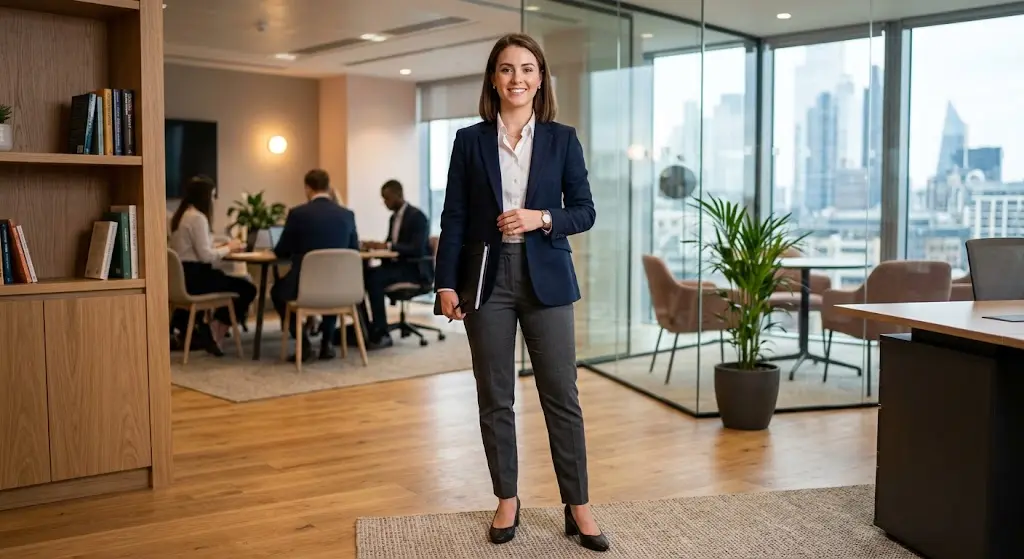
A business casual interview can be confusing because you want to look professional without appearing too formal. You may wonder whether you should wear a full suit, a dress shirt, a blouse, or something more relaxed.
The good news is that dressing for a business casual interview does not have to be complicated. The goal is to look polished, professional, comfortable, and appropriate for the workplace.
In most cases, a clean, well-fitted outfit in neutral or subtle colors is a safe choice. Your clothes should show that you take the interview seriously while still fitting the company’s everyday work environment.
What Does Business Casual Mean for an Interview?
Business casual usually means professional clothing that is less formal than a traditional business suit. However, the exact meaning can vary from one company to another.
For an interview, it is usually better to dress slightly more professionally than you would for a normal workday.
For example, a business casual interview outfit may include:
- A button-down shirt with dress pants
- A blouse with tailored pants or a knee-length skirt
- A sweater with chinos or dress pants
- A blazer paired with trousers or a simple dress
- Clean loafers, flats, dress shoes, or other polished footwear
The key is to choose clothing that looks neat and intentional rather than overly casual.
What Should Men Wear to a Business Casual Interview?
Men have several simple options when preparing for a business casual interview.
A classic combination is a button-down shirt with chinos or dress pants. White, light blue, gray, navy, and other neutral colors are generally easy choices.
You can also add a blazer if the workplace is more formal. A tie is usually not necessary for a business casual interview unless the company or position has a more traditional dress code.
Good options for men include:
- Button-down or collared shirt
- Chinos or tailored dress pants
- Blazer or sports jacket
- Leather belt that matches your shoes
- Loafers, oxfords, or other clean dress shoes
- Simple watch or minimal accessories
Make sure your shirt is wrinkle-free and your shoes are clean. Even a simple outfit can look professional when it fits properly and is well maintained.
What Should Women Wear to a Business Casual Interview?
Women can choose from several professional business casual outfits. A blouse with tailored trousers is one of the easiest and most versatile choices.
A simple dress can also work well, especially when paired with flats, loafers, or low heels. If the dress is sleeveless or particularly casual, adding a blazer or cardigan can make the outfit look more interview-appropriate.
Good options for women include:
- Blouse with tailored pants
- Simple professional dress
- Knee-length skirt with a blouse
- Cardigan or blazer
- Flats, loafers, or modest heels
- Simple and professional accessories
Avoid clothing that is excessively tight, revealing, or distracting. Your interview outfit should allow the interviewer to focus on your qualifications rather than your clothing.
What Colors Are Best for a Business Casual Interview?
Neutral and understated colors are usually the safest choices for an interview.
Good interview colors include:
- Navy
- Black
- Gray
- White
- Beige
- Cream
- Light blue
- Brown
You do not have to wear only dark colors. A subtle color can make your outfit look polished while still showing some personality.
For example, a light blue shirt with navy trousers can create a professional and approachable appearance.
If you prefer brighter colors or bold patterns, consider using them as small accents rather than making them the main focus of your outfit.
Should You Wear a Blazer to a Business Casual Interview?
A blazer is not always required, but it can be a useful addition to an interview outfit.
If you are unsure about the company’s dress code, a simple blazer can make a basic outfit look more professional. You can remove it later if the workplace turns out to be more relaxed.
For example, men can wear a blazer over a button-down shirt with chinos. Women can pair a blazer with tailored trousers, a blouse, or a simple dress.
Choose a blazer that fits comfortably and does not look overly formal compared with the rest of your outfit.
What Shoes Should You Wear?
Shoes are an important part of a professional interview outfit. They should be clean, comfortable, and appropriate for an office environment.
Good choices include:
- Loafers
- Oxfords
- Dress shoes
- Ballet flats
- Professional ankle boots
- Low or moderate heels
Avoid worn-out sneakers, flip-flops, beach sandals, or shoes that look excessively casual.
If you are buying new shoes for an interview, wear them at home beforehand. This helps you make sure they are comfortable before spending several hours walking or standing.
What Should You Avoid Wearing to a Business Casual Interview?
Knowing what not to wear can be just as helpful as knowing what to wear.
Try to avoid clothing that looks too casual, messy, or distracting. Some common examples include:
- Graphic T-shirts
- Sweatpants
- Ripped jeans
- Hoodies
- Flip-flops
- Clothing with large logos
- Wrinkled or stained clothing
- Extremely bright or distracting patterns
- Very short skirts or dresses
- Clothing that is overly revealing
Some workplaces may allow jeans or sneakers as part of their normal business casual dress code. However, an interview is usually not the best time to test the limits of that dress code.
Can You Wear Jeans to a Business Casual Interview?
Whether jeans are appropriate depends on the company and the position.
Some modern workplaces consider dark, clean, well-fitting jeans business casual. However, jeans can still look too relaxed in an interview setting, particularly for corporate, finance, legal, or client-facing positions.
If you decide to wear jeans, choose a dark, clean pair without rips, fading, or excessive detailing. Pair them with a polished shirt, blouse, sweater, or blazer.
When you are unsure, dress slightly more formally rather than taking a risk.
What About Accessories?
Accessories should complement your outfit rather than become the main focus.
A simple watch, small earrings, a modest necklace, or a professional belt can complete your appearance. Keep accessories minimal if you are unsure about the company culture.
The same principle applies to bags. A clean, structured handbag, tote, briefcase, or laptop bag can look more professional than a worn backpack.
Should You Consider the Company Culture?
Absolutely. Company culture can make a big difference in what counts as appropriate business casual clothing.
Before your interview, check the company’s website, social media pages, employee photos, or careers information to get a sense of how employees dress.
You can also ask the recruiter or hiring manager about the expected dress code.
A technology startup may have a much more relaxed environment than a law firm or financial company. Your outfit should match the professional expectations of the role while still making you feel comfortable and confident.
What to Wear If You Are Still Unsure
If you cannot determine the company’s dress code, choose a simple and polished outfit.
For men, a button-down shirt, chinos or dress pants, and clean dress shoes are a reliable choice. Adding a blazer can make the outfit slightly more formal.
For women, a blouse with tailored pants, a simple professional dress, or a skirt with a polished top can work well.
The safest rule is to be slightly overdressed rather than noticeably underdressed.
How Should Your Clothes Fit?
Fit can have a bigger impact than the price or brand of your clothing.
Your clothes should not be extremely tight or excessively loose. Pants should sit comfortably, shirts should allow normal movement, and jackets should fit naturally across the shoulders.
You do not need expensive designer clothing for a successful interview. Clean, well-fitting, wrinkle-free clothing can create a much stronger impression than expensive clothes that do not fit properly.
Final Checklist Before Your Interview
Before leaving for your interview, take a few minutes to check your appearance.
Ask yourself:
- Are my clothes clean and wrinkle-free?
- Do my clothes fit properly?
- Are my shoes clean?
- Is my outfit appropriate for the company?
- Are my accessories simple and professional?
- Does my hair look neat?
- Do I feel comfortable and confident?
If the answer is yes, you are probably ready.
Final Thoughts
Choosing what to wear to a business casual interview does not have to be stressful. The best approach is to choose clothing that is professional, neat, comfortable, and appropriate for the company culture.
A button-down shirt, tailored pants, polished shoes, blouse, simple dress, or blazer can all be excellent choices depending on the workplace. When in doubt, lean slightly toward the formal side.
Remember, your outfit is only one part of a successful interview. Confidence, preparation, communication, and your ability to explain why you are right for the job matter even more.
FAQs
1. What is the best outfit for a business casual interview?
A polished shirt or blouse with tailored pants is one of the safest choices. You can add a blazer if the workplace appears more formal.
2. Can I wear jeans to a business casual interview?
You can in some workplaces, but it is safer to avoid jeans if you are unsure about the dress code. If you wear them, choose dark, clean, well-fitting jeans without rips.
3. Do I need to wear a blazer to an interview?
No. A blazer is optional for most business casual interviews, but it can make your outfit look more polished and professional.
4. What shoes are appropriate for a business casual interview?
Clean loafers, dress shoes, flats, low heels, and professional boots can all work. Avoid worn-out sneakers, flip-flops, and overly casual footwear.
5. What colors should I wear to an interview?
Navy, gray, black, white, beige, cream, and light blue are safe and professional choices. Subtle colors can also work well.
6. Can I wear sneakers to a business casual interview?
It depends on the company. Some casual workplaces allow clean, minimal sneakers, but traditional dress shoes or loafers are generally a safer interview choice.
7. Should I dress more formally for an interview?
Usually, yes. If you are unsure about the company’s dress code, it is generally better to be slightly overdressed than underdressed.
8. What should I avoid wearing to an interview?
Avoid ripped clothing, sweatpants, graphic T-shirts, flip-flops, stained or wrinkled clothes, and outfits that are overly revealing or distracting.
9. How important is clothing fit for an interview?
Fit is very important. Clean, well-fitting clothing can make a simple outfit look professional and polished without being expensive.
10. Should I ask about the company’s dress code?
Yes. If you are uncertain, asking the recruiter or hiring contact about the expected interview dress code is completely reasonable.