
 By admin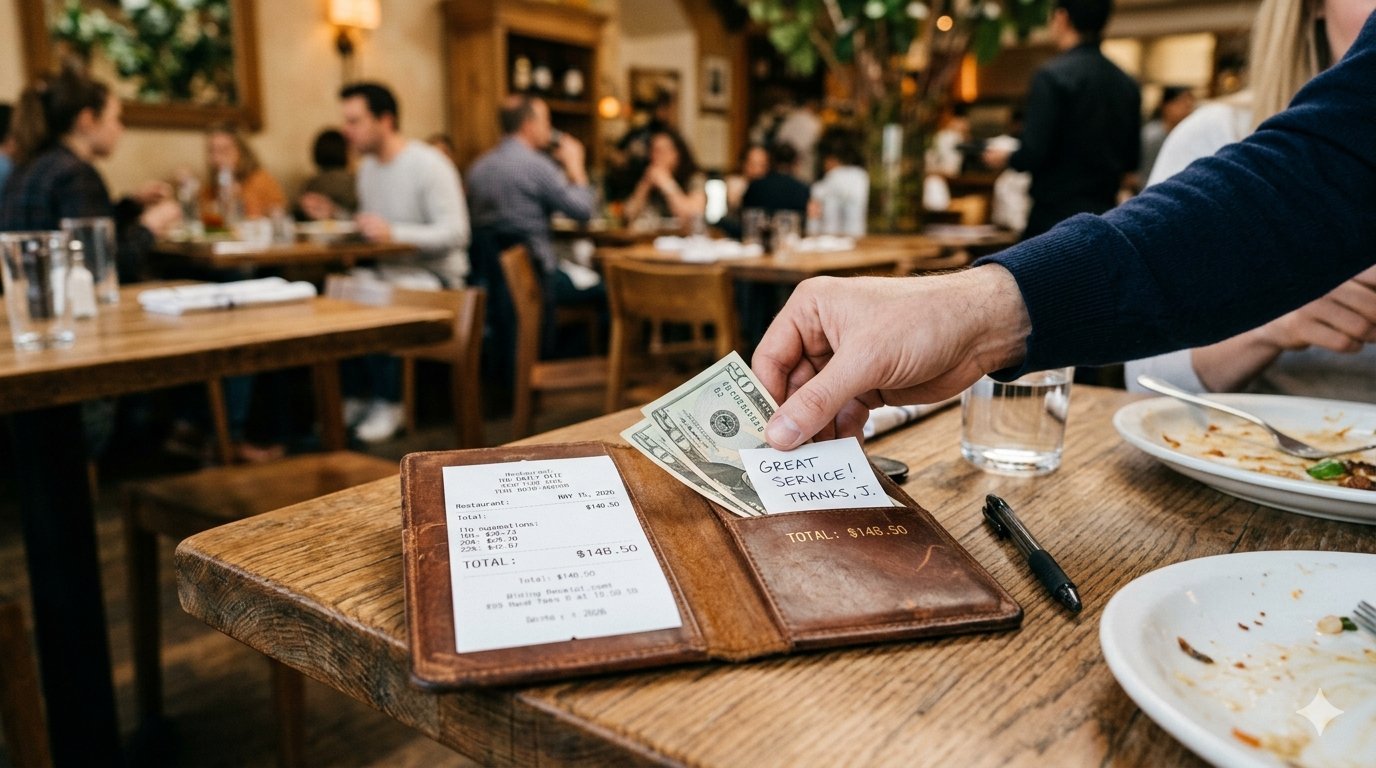
I still remember the panic of my first dinner in Rome. The meal was wonderful, the bill arrived, and I had no idea what to do. Do I tip 20% like back home? Nothing? Would the waiter be insulted either way? I ended up over-tipping out of anxiety, which is the American traveler’s default setting — and in many countries, it’s actually the wrong move.
Here’s what you should know about tipping in other countries: the US is an outlier. Most of the world handles gratuities completely differently, and getting it right saves you money and embarrassment. This guide covers the regions American travelers visit most.
Why Tipping Culture Differs So Much
In the US, tipping subsidizes low service wages — that’s why 18–20% at restaurants feels mandatory. In most other countries, service workers earn a full wage, service charges are built into prices, and tipping is either a small bonus or genuinely unnecessary. Understanding that one difference explains nearly every rule below.
A useful rule of thumb: when in doubt, watch what locals do. If nobody at the next table leaves anything, you don’t need to either. And if you’re unsure about local money customs generally, our guide to the best way to exchange money when traveling abroad will save you from overpaying on currency too.
Europe: Small Tips, Big Variations
Europe is where Americans over-tip most. The general pattern:
- France: A 15% service charge (“service compris”) is legally included in restaurant bills. Leaving a few extra euros in cash for great service is appreciated but never expected.
- Italy: A “coperto” (cover charge) is already on the bill. Tipping isn’t customary; rounding up or leaving a euro or two is plenty.
- Spain: Similar to Italy — rounding up the bill or leaving small change is the norm.
- Germany: Round up to the nearest euro or add 5–10% for good service, handed directly to the server.
- UK: Check for a discretionary service charge (often 12.5%) on the bill — if it’s there, no extra tip needed. If not, 10–15% is standard. You can ask to remove the charge if service was poor.
- Scandinavia: Service is included and wages are high. Rounding up is generous; tipping isn’t expected at all.
Asia: Often Unnecessary, Sometimes Offensive
This is the region where American tipping habits can actively cause offense:
- Japan: Do not tip. It’s not customary and can be seen as rude or condescending — excellent service is considered the standard, not something extra. Some high-end restaurants will refuse a tip outright.
- China: Tipping is not traditional and can cause confusion, though it’s becoming slightly more common in tourist areas.
- South Korea: Not customary; service charges are included.
- Thailand: Tipping isn’t traditional but small tips (20–50 baht) are appreciated in tourist areas.
- India: A 10% service charge is often added at restaurants; if not, 10% is a good guideline.
Middle East, Africa, and Latin America
- Middle East (UAE, Egypt, etc.): A service charge is usually included; an extra 5–10% in cash for good service is generous.
- South Africa: 10–15% at restaurants is standard — closest to US norms on this list.
- Mexico: 10–15% at restaurants is customary. Check whether “propina” is already on the bill — sometimes it is, sometimes it isn’t.
- Brazil: A 10% “serviço” charge is typically included by law.
- Caribbean resorts: Many all-inclusives add gratuities automatically; extra cash tips for standout service are still appreciated by staff.
Beyond Restaurants: Hotels, Taxis, and Tours
Tipping in other countries isn’t just about restaurants. Quick guidelines:
- Hotels: In Europe and Asia, tipping porters (€1–2 per bag) and leaving a small amount for housekeeping is a nice touch but not obligatory. In the Middle East and Latin America, small tips are more expected.
- Taxis: Rounding up the fare is the norm almost everywhere outside the US. In Japan, don’t tip taxi drivers either.
- Tour guides: This is the one area where tipping is widely expected worldwide — roughly $5–10 per person for a half-day tour, more for private guides, even in countries where restaurant tipping isn’t a thing.
The State Department’s international travel pages include country-specific information that often covers local customs, and they’re worth checking before any trip.
The Tourist-Trap Angle
Here’s something the guidebooks skip: in heavy tourist areas, some restaurants add inflated “service charges” targeting visitors who don’t know better. Always read the bill before adding a tip on top. If a 15% service charge is already there, you’re done. This is one of several ways travelers get overcharged — see how to avoid tourist traps when traveling abroad for the full playbook.
How to Handle Tipping When You’re Genuinely Unsure
Despite every guide (including this one), you’ll land in situations where the rule isn’t clear — a small family restaurant in Portugal, a taxi in Morocco, a hotel in Vietnam. Here’s the decision framework:
- Read the bill first. Look for “service compris,” “serviço,” “service charge,” or a gratuity line item. If a charge is already there, you’re done — anything extra is purely optional.
- Watch the locals. Glance at neighboring tables when they pay. This is the fastest, most reliable cultural signal available.
- Ask your hotel concierge or host. “Is tipping expected at restaurants here?” gets you a straight answer in ten seconds. Locals are happy to explain; they’d rather you ask than guess.
- When truly uncertain, leave a small amount in cash. Rounding up or leaving 5% is rarely wrong anywhere — it’s generous where tipping isn’t expected and adequate where small tips are the norm. The only places to avoid even this are Japan and South Korea, where not tipping is the respectful choice.
- Tip in local currency. US dollars force the recipient to exchange them (often at bad rates). Hit an ATM or exchange counter and tip in the local money.
The underlying principle: tipping is a gesture of appreciation, not a tax. A modest, gracefully given tip never offends — except where the culture explicitly says not to, in which case a sincere thank-you is the better gesture.
The Bottom Line
What you should know about tipping in other countries boils down to this: the US 20% standard is the exception, not the rule. In most of Europe, round up or add 5–10%. In Japan and much of Asia, don’t tip at all. In Latin America and Africa, 10–15% is usually right. When in doubt, watch the locals, read the bill for included charges, and remember that a genuine thank-you travels well in every language.