
 By admin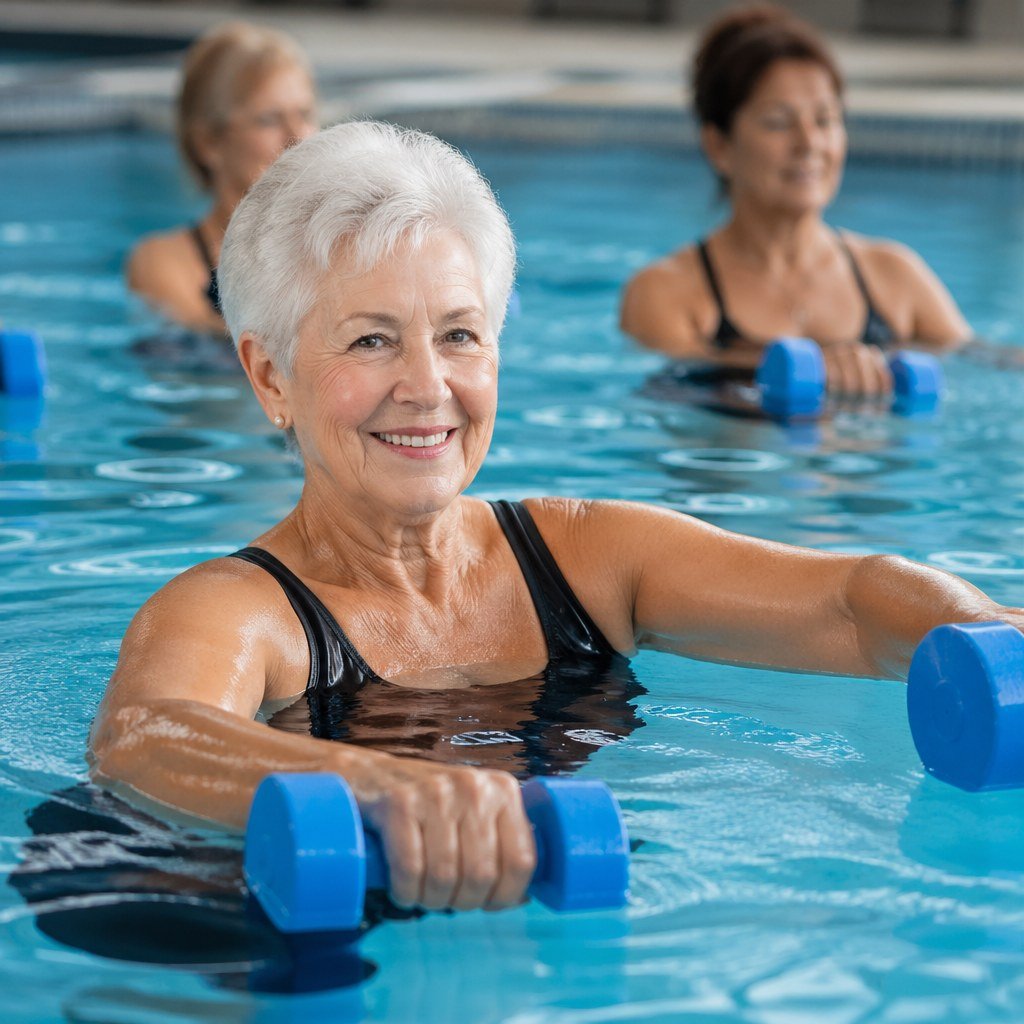
Bad knees create a cruel paradox: the joints hurt, so you move less — and moving less weakens the muscles that protect the joints, so they hurt more. Breaking that cycle doesn’t require running or squatting through pain. It requires the right low-impact exercises: movement that builds strength and fitness without pounding already-unhappy knees.
A quick safety note: if you have sharp pain, swelling, locking, or a recent injury, get evaluated before starting. What follows is for the achy, creaky, arthritic, “my knees aren’t what they were” crowd — and even then, pain during exercise means stop and reassess.
The Gold Standard: Swimming and Water Exercise
Water is the closest thing to a cheat code for bad knees. Buoyancy unloads up to 90% of your body weight in deep water, so joints move freely while muscles work hard. Swimming laps, water walking, and aqua aerobics classes all count. Many YMCAs and community pools run arthritis-friendly water classes specifically designed for joint issues — warm-water pools are even better, since heat loosens stiff joints.
If you’re not a swimmer, don’t let that stop you: you can get an excellent workout walking laps in the shallow end or doing leg lifts holding the pool edge. No swim skills required.
What Are Good Low Impact Exercises for Bad Knees on Land?
- Cycling (stationary or outdoor). The circular pedaling motion strengthens the quadriceps — the key knee-supporting muscles — with minimal impact. Keep resistance moderate and the seat high enough that your knee doesn’t bend past 90 degrees at the bottom of the stroke.
- Elliptical trainer. Mimics running motion without the impact forces. Keep your feet flat on the pedals and avoid cranking the incline to maximum.
- Walking on soft surfaces. Flat walking is lower-impact than most people think. Tracks, treadmills with cushioning, and packed trails beat concrete. Good shoes matter enormously — replace worn ones.
- Rowing machine. Excellent full-body cardio with zero knee pounding, as long as you use proper form (drive with the legs, don’t yank with the back).
- Tai chi and gentle yoga. Both improve balance, flexibility, and leg strength — and better balance means fewer falls, which is the real knee-killer for older adults.
Strength work your knees will thank you for
Strong quads act like shock absorbers for the knee joint, and the research here is unambiguous: targeted strengthening reduces knee pain, including in arthritis. The best part is you can do these at home with no equipment:
- Straight-leg raises — lying down, tighten the thigh and lift the leg. Zero knee bending, pure quad work.
- Seated knee extensions — straighten the knee while seated; add an ankle weight as it gets easy.
- Glute bridges — strong glutes stabilize the whole leg chain and take load off the knees.
- Wall sits (modified) — slide only partway down; even a shallow hold builds endurance.
- Step-ups on a low step — start with a 4-inch step and progress slowly.
The American Academy of Orthopaedic Surgeons and the Arthritis Foundation’s exercise resources both emphasize this combination: low-impact cardio plus targeted strengthening, done consistently.
What to Avoid (or Modify Heavily)
Deep squats, lunges with heavy weight, running on hard surfaces, high-impact aerobics, and kneeling on hard floors are the usual aggravators. That doesn’t mean they’re banned forever — many people return to modified versions as strength improves — but they’re bad starting points. Also: avoid the “no pain, no gain” mindset entirely. With knees, discomfort during exercise is information, not a challenge.
Knee-Friendly Daily Habits Beyond Exercise
Exercise is half the equation; how you treat your knees the other 23 hours matters too:
- Maintain a healthy weight. Every pound of body weight adds ~4 pounds of pressure on the knee per step. Even modest weight loss unloads knees dramatically — it’s the highest-impact “exercise” for knee pain.
- Shoes matter enormously. Worn-out shoes with dead cushioning punish knees; replace athletic shoes every 300–500 miles. Avoid completely flat unsupportive footwear for long days.
- Warm up joints before activity. A few minutes of gentle marching in place or easy cycling before exercise lubricates joints — cold stiff knees hate sudden demands.
- Ice after flare-ups, heat for stiffness. Swollen and angry? Ice 15 minutes. Stiff and achy in the morning? Heat. Match the treatment to the symptom.
- Modify, don’t eliminate, stairs and kneeling. Use handrails (that’s what they’re for), take stairs one at a time if needed, and use knee pads or a cushion for gardening.
- Consider the evidence-based extras: topical NSAID gels (effective for knee arthritis with fewer systemic effects than pills), and for some, unloader braces or cane use on the opposite side — all worth discussing with your doctor.
Tracking progress and knowing when to escalate
Keep a simple log: pain level (1–10), what you did, how knees felt the next day. Patterns emerge quickly — you’ll spot which exercises help and which aggravate. Progress with knees is measured in weeks and months, not days; the trend line matters more than any single workout. Escalate to your doctor for: new swelling, locking or catching, giving way, pain that worsens despite 6–8 weeks of sensible exercise, or night pain that disrupts sleep. Those patterns can indicate meniscus issues, advanced arthritis, or other problems where physical therapy or orthopedic evaluation changes the plan. Most knee pain improves with the approach above — but “push through it” is never the answer with joints.
Assistive Tools Worth Considering
No shame in tools that keep you moving — they’re how active lives continue:
- Quality athletic shoes, replaced on schedule. The foundation. Worn shoes are a top contributor to knee pain that people overlook for months.
- Knee sleeves (compression). Warmth, mild support, and proprioceptive feedback — many people with achy knees swear by them for workouts. Not a medical device; a comfort tool.
- Hinged knee braces. For instability or specific diagnoses — get fitted professionally rather than guessing.
- Walking poles. Hiking poles offload knees significantly on descents (where the pounding happens) and turn walks into upper-body workouts. Unfashionable; extremely effective.
- Cane, used correctly (opposite hand from the bad knee). Dramatically unloads the joint — and there’s no prize for limping without one.
- Topical NSAID gels. Diclofenac gel delivers anti-inflammatory effects to the knee with minimal systemic exposure — first-line for knee arthritis in many guidelines.
The long view: knees for life
Knee management is a decades-long project, and the mindset matters: motion is lotion — the worst thing for arthritic knees is stopping movement entirely. Flare-ups aren’t failures — knees have bad weeks; adjust, don’t abandon the program. Strength is joint insurance — every pound of quad strength is protection that compounds over years. Weight is the master lever — nothing else changes knee loading as dramatically. Surgery is a last resort, not a failure — when conservative care is exhausted and quality of life suffers, joint replacement has excellent outcomes; the goal was never to avoid it at all costs, but to arrive at it (or avoid it) on the best terms. People who manage knees well for decades share one trait: they treat it as ongoing maintenance, like dental care — unglamorous, consistent, and quietly effective.
The Practical Takeaway
Swim or water-walk, cycle, walk on forgiving surfaces, and strengthen your quads and glutes 2–3 times a week. Consistency with gentle exercise beats occasional heroic workouts — your knees want a reliable routine, not a boot camp. For more on this topic, see Is Drinking Coffee Every Day Bad for You? and Is Cracking Your Knuckles Actually Bad for You?.