
 By admin
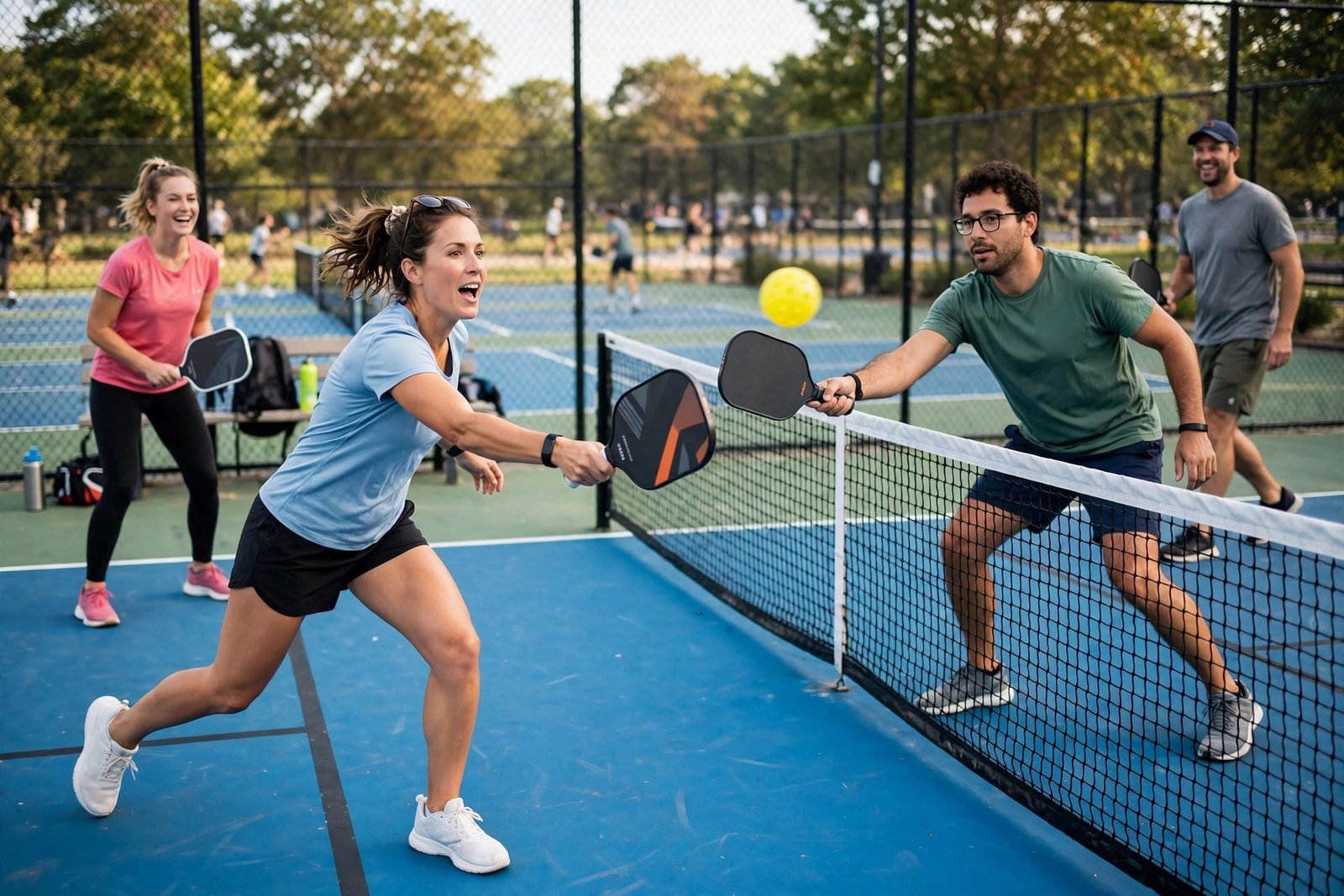
Pickleball is America’s fastest-growing sport for a reason: a complete beginner can learn the rules in ten minutes and rally within an hour. But “easy to learn” doesn’t mean “no rules” — pickleball has a few quirks (the kitchen, the double-bounce rule, the scoring) that confuse every newcomer exactly once. Learn them here, and you’ll walk onto the court looking like you’ve played for months instead of minutes.
The Court and Equipment (30-Second Version)
Pickleball is played on a badminton-sized court (20×44 feet) with a low net (36 inches at the sidelines, 34 in the middle), using solid paddles and a perforated plastic ball. Games are usually doubles, played to 11 points (win by 2). That’s the entire equipment lesson — now the rules that actually matter.
The Serve: Underhand and Diagonal
The serve must be underhand, with the paddle contacting the ball below the waist, and it travels diagonally into the opposite service box — just like tennis. Only one serve attempt (no second serves). The server keeps serving until their team faults. In doubles, both partners serve except on the very first service turn of the game. If the serve lands out or in the net, that’s a side-out — serve passes to the other team. The USA Pickleball Association’s official rulebook governs tournament play, but these fundamentals cover every recreational game you’ll join.
The Double-Bounce Rule (The Big One)
This is pickleball’s signature quirk: after the serve, the receiving team must let the ball bounce once before returning it, AND the serving team must let that return bounce once before playing it. Only after these two bounces can anyone volley (hit the ball in the air). Why? It prevents serve-and-volley domination and keeps rallies alive. Newcomers violate this constantly — usually by rushing the net and volleying the third shot. Drill it mentally: serve (bounce), return (bounce), then play.
The Kitchen: The Non-Volley Zone
The 7-foot zone on each side of the net is the “kitchen” (non-volley zone). The rule: you cannot volley the ball while standing in the kitchen, and your momentum can’t carry you into it after a volley. You CAN stand in the kitchen — there’s no penalty for being there — you just can’t hit the ball out of the air while any part of you touches the zone. Let it bounce, and kitchen hits are fine. This single rule creates pickleball’s distinctive dink game: soft shots arcing just over the net, forcing opponents to hit up. Master the dink and you leapfrog 80 percent of beginners who only know how to bang.
Scoring: Only the Serving Team Scores
Here’s the part that melts beginners’ brains: only the serving side can score points. If the receiving team wins a rally, they don’t get a point — they get the serve (side-out). Games go to 11, win by 2. The score is called as three numbers: server’s score, receiver’s score, then which server (1 or 2) in doubles — e.g., “4-2-1.” When the serving team faults, the serve passes to the partner (second server), and when both have served, it’s a side-out. The one exception: at the very start of the game, the first serving team gets only one server before side-out (to offset the serve advantage). Call the score before every serve — it’s required, and it prevents the arguments that plague beginner games.
Faults: Ways to Lose the Rally
A fault ends the rally: hitting the ball out of bounds, into the net (and it doesn’t cross), volleying from the kitchen, violating the double-bounce rule, or serving illegally. On a fault by the serving team, service passes; on a fault by the receiving team, the servers score. Lines are in — if the ball touches any part of the line, it’s good. When in doubt on recreational calls, replay the point; beginner pickleball runs on goodwill, and nobody remembers who won a Tuesday rec game.
Beginner Strategy: What Actually Wins Points
Get to the net (after the bounce)
The team controlling the kitchen line wins most points. After the double bounce completes, move up — net position lets you hit down while opponents must hit up. But don’t rush during the two-bounce phase; that’s the classic beginner error.
Dink more, bang less
New players try to smash everything. Skilled beginners learn the soft game: dinks into the kitchen, patient rallies, waiting for a ball that sits up. Power without placement just gives opponents attackable balls. Placement beats power at every beginner level.
Serve deep, return deep
The two highest-ROI shots in beginner pickleball: a deep serve (pushes returners back) and a deep return (gives you time to reach the net). Master these before worrying about anything fancy. At moderate intensity, pickleball also counts toward the CDC’s weekly aerobic activity recommendations — fitness disguised as fun. Court positioning and patience decide beginner games more than athleticism — which is exactly why pickleball makes such a welcoming new hobby to pick up with friends.
Court Etiquette for New Players
Call the score loudly before serving. Call “mine” or “yours” to avoid paddle collisions with your partner (the forehand player usually takes middle balls — agree beforehand). Retrieve stray balls promptly and return them to adjacent courts. If you’re rotating into open play, introduce yourself and state your level honestly — sandbagging ruins everyone’s evening. And welcome the etiquette of the paddle stack: in busy open-play sessions, games rotate, winners often split, and everyone plays. It’s the friendliest competitive culture in sports; help keep it that way. Players joining group sessions for the first time can borrow the social confidence tips from our guide to making sports social — showing up friendly matters more than showing up skilled.
Conclusion
Pickleball’s rules fit on an index card: underhand diagonal serve, double-bounce, no volleys from the kitchen, only servers score, first to 11. Learn those five, practice deep serves and patient dinks, mind the etiquette, and you’re not a beginner anymore — you’re a player. The paddle’s waiting.
Frequently Asked Questions
What is the kitchen in pickleball?
The 7-foot non-volley zone on each side of the net. You can’t hit the ball out of the air while standing in it (or let momentum carry you in after a volley), but you can stand there and hit balls that bounce.
Can you volley in pickleball?
Yes, except in two situations: before the double-bounce completes (the first two shots of each rally must bounce), and while standing in the kitchen. After that, volleys are a core part of the game.
How does scoring work in pickleball?
Only the serving team scores. Win a rally as the server: point. Win as the receiver: you earn the serve, not a point. Games to 11, win by 2, score called as server-receiver-server number.
What do the three numbers in pickleball score mean?
Server’s score, receiver’s score, and which server is serving (1 or 2) in doubles. “4-2-1” means the serving team has 4, receivers have 2, and it’s the first server’s turn.
Do I need special shoes for pickleball?
Court shoes with lateral support — not running shoes, which are built for forward motion and roll ankles on lateral cuts. Any tennis, volleyball, or dedicated pickleball court shoe works.
What paddle should a beginner buy?
A mid-weight composite paddle ($50–$100) with a comfortable grip — avoid the cheapest wooden paddles (heavy, harsh) and don’t overspend on pro models yet. As your game develops, you’ll learn whether you prefer power or control paddles.