
 By admin
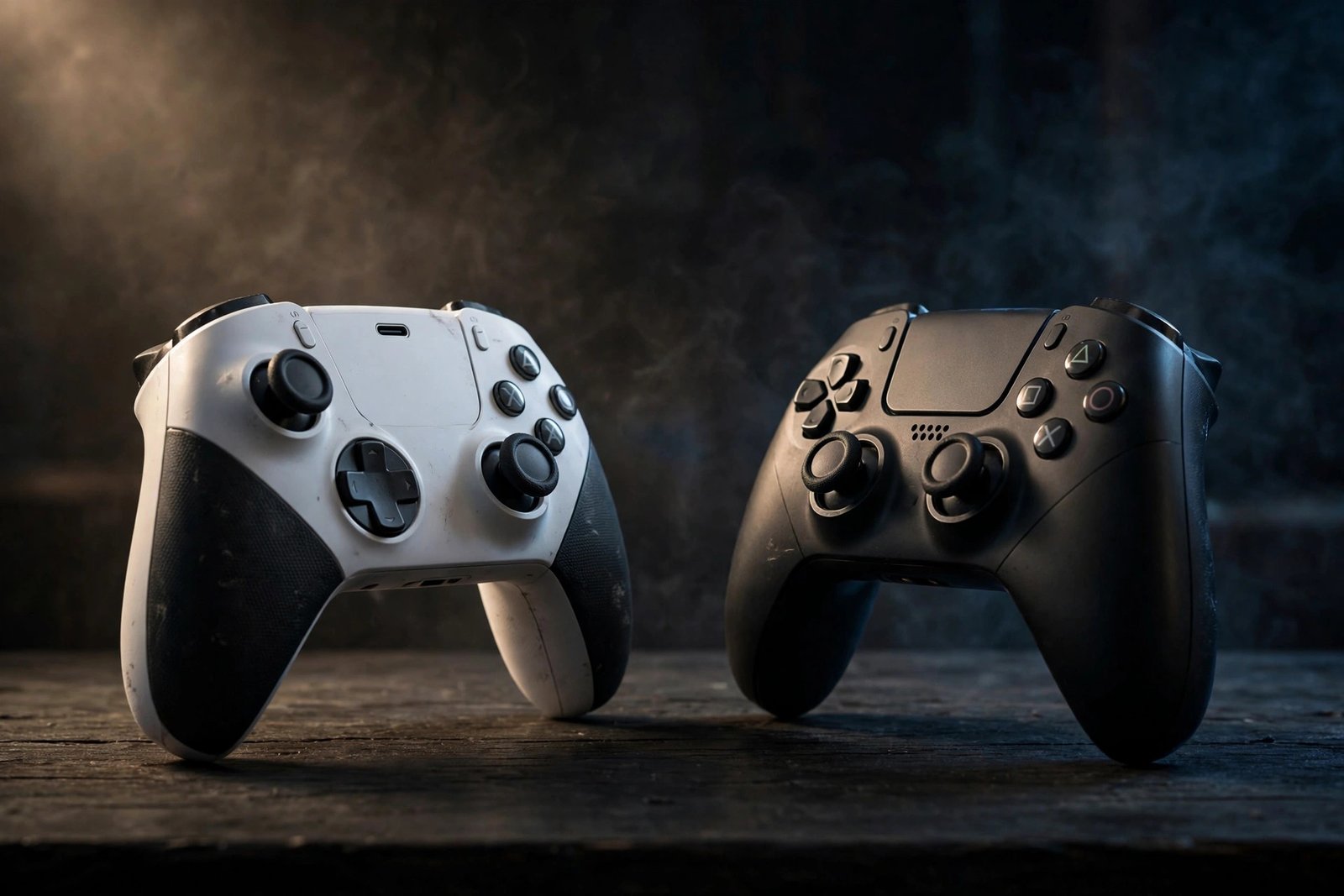
The console war never really ended — it just got more expensive and more confusing. In 2026, both Xbox and PlayStation have matured into deep ecosystems with mid-generation refreshes, sprawling subscription libraries, and exclusives designed to lock you in for years. Choosing wrong doesn’t just cost $500; it costs the library, the friends list, and the subscription you’ve been building.
This guide compares the two platforms as they stand in 2026 — hardware, games, subscriptions, and the hidden factors nobody mentions — so you can pick the one you’ll still be happy with in 2029.
The Hardware in 2026: Closer Than Ever
Raw performance differences between the flagship consoles have narrowed to the point of irrelevance for most players. Both deliver 4K gaming, ray tracing, fast SSD loading, and 120Hz support in competitive titles. The mid-generation refreshes sharpened the picture: slightly faster GPUs, more storage, quieter cooling. Unless you’re the kind of player who pauses games to count pixels in digital foundry breakdowns, treat performance as a tie.
What actually differs: controller philosophy (PlayStation’s haptic-heavy DualSense versus Xbox’s classic, battery-friendly design), storage expansion costs (Xbox’s proprietary cards versus PlayStation’s standard M.2 slot — the latter is meaningfully cheaper to expand), and backward compatibility depth (Xbox’s multi-generation library remains unmatched).
Exclusives: The Real Battleground
Exclusives decide console purchases more than specs ever will. PlayStation’s first-party studios continue producing the prestige single-player epics — cinematic action-adventures and narrative showcases that win awards and dominate conversation. Xbox, meanwhile, leveraged its studio acquisitions into a steadier drip of day-one releases across genres, with particular strength in RPGs and shooters.
The honest way to decide: list the five games you’re most excited about for the next two years. If three or more are exclusive to one platform, your decision is made. Everything else — UI preferences, controller feel, brand loyalty — is secondary to where the games you actually want to play live. And remember that “exclusive” is a shrinking category; more former exclusives than ever now arrive on PC within a year or two.
Subscriptions: Game Pass vs. PlayStation Plus in 2026
This is where the ecosystems diverge most. Xbox Game Pass remains the best value in gaming — a rotating library of hundreds of titles including day-one first-party releases for one monthly fee. For players who bounce between games, it’s transformative: the effective cost per game drops to single digits.
PlayStation Plus countered with its own tiered library, strong monthly games, and cloud streaming improvements. It’s competitive but philosophically different — fewer day-one blockbusters, more curated catalog depth. Do the math on your habits: if you buy 6+ full-price games a year, Game Pass likely saves you hundreds; if you play two or three favorites for months each, buying outright on either platform wins.
The Hidden Factors Nobody Mentions
Where your friends play
Cross-play has improved enormously, but party chat, shared libraries, and co-op habits still cluster by platform. If your entire friend group is on PlayStation, the “better” Xbox deal won’t make your Friday nights fun. Ask around before you buy — social gravity beats spec sheets.
Your TV and internet
Both consoles assume a modern 4K TV and solid broadband for downloads that routinely exceed 100GB. A weak connection turns game day into download day — fixing a weak Wi-Fi signal is the cheapest upgrade in all of gaming. The FCC’s broadband resources can help you check what speeds are actually available at your address.
The non-gaming stuff
Both consoles double as streaming boxes, and if yours will live in the living room, that matters. Compare against dedicated streaming devices — sometimes a cheap stick plus a console is redundant, sometimes it’s the perfect combo for a household with mixed needs.
Price and Value: Total Cost of Ownership
The sticker price is the smallest part of the math. Over four years, add: the subscription tier you’ll actually use ($80–$240/year), 8–12 full-price games or their subscription equivalent, an extra controller ($70), and storage expansion ($100–$200). The “cheaper” console can easily become the expensive one depending on your buying habits. Budget shoppers should also watch for bundle deals during holiday sales — console-plus-game bundles routinely shave $50–$100 off the effective price. For general electronics value judgments, Consumer Reports’ buying guidance is a useful reality check.
And don’t forget audio: a good headset transforms competitive and cinematic play alike — see noise-cancelling headphone picks for options that pull double duty for gaming and work calls.
Backward Compatibility and Your Existing Library
Here’s the factor that quietly decides for many buyers: what you already own. If you’ve got a shelf of PlayStation 4 discs or a digital library stretching back years, PlayStation’s backward compatibility preserves that investment — most PS4 games run on PS5, often with performance boosts. Xbox goes further: its backward compatibility program stretches back to the original Xbox, with auto-HDR and framerate boosts applied to hundreds of older titles at no cost. For players with deep libraries, this isn’t nostalgia — it’s hundreds or thousands of dollars of games that remain playable.
Think about your household too. Multiple gamers under one roof multiply every consideration: game sharing policies differ (both platforms allow sharing within a household, with different setup quirks), and a second controller plus a subscription family tier changes the value math. If kids are involved, both platforms’ parental controls are robust — set time limits, spending caps, and content filters during initial setup rather than after the first surprise purchase. The “right” console is often simply the one that respects the library and habits you already have.
Conclusion
Choose PlayStation if prestige single-player exclusives are your priority and your friends are already there. Choose Xbox if subscription value, backward compatibility, and day-one variety matter more to you. In 2026 there’s no wrong answer on hardware — both are excellent — so let the games, the subscription math, and your social circle decide. Then stop second-guessing and go play.
Key Takeaways
Exclusives decide; specs don’t. List the games you actually want for the next two years — whichever platform holds most of them is your answer.
Do the subscription math. Heavy buyers save hundreds with Game Pass; players who live in two or three favorites should buy outright.
Frequently Asked Questions
Is it worth waiting for the next generation of consoles?
Probably not unless you’re within a year of launch announcements. Both current platforms have years of support ahead, deep libraries, and prices that have settled. Waiting means missing years of gaming for hardware that will itself be superseded.
Can I play online with friends on the other console?
For many popular multiplayer games, yes — cross-play is now standard in most big titles. But party systems, voice chat quality, and some co-op features still work smoothest within the same ecosystem.
Which console is better for kids?
Both offer robust parental controls. Xbox’s Game Pass is arguably better value for kids who try many games briefly; PlayStation’s exclusives skew toward teen-and-up narratives. Consider the specific games your kids want, not the brand.
Do I need the disc version or digital edition?
Disc versions cost more upfront but let you buy used games, share discs, and resell — often saving more than the price difference within a year if you buy physical games regularly. All-digital is fine if you exclusively buy on sales digitally.