
 By admin
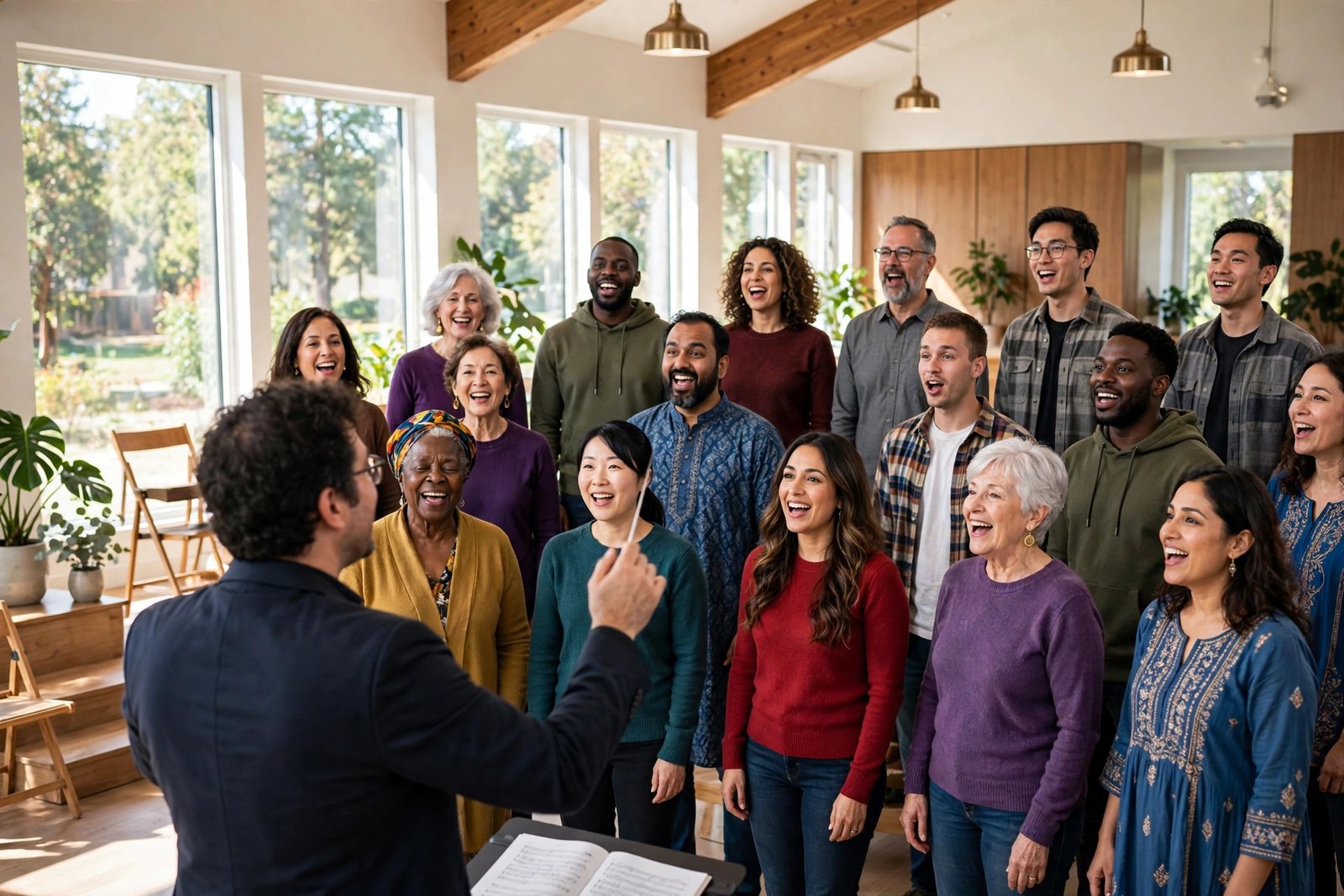
You’ve always loved to sing — in the car, in the shower, maybe at karaoke after two drinks — but the idea of joining an actual choir in Los Angeles feels like a leap. What if you’re not good enough? What if everyone else read music since childhood? What if the audition is humiliating? Here’s the secret LA’s choral community won’t tell you upfront: most community choirs are desperate for new singers, beginners are genuinely welcome, and “not good enough” is a story you’re telling yourself, not a fact anyone else believes.
This guide covers what joining a choir is really like for a beginner singer in Los Angeles — the types of choirs, what auditions actually involve, costs, time commitments, and how to find your people.
Why a Choir (and Why Los Angeles Is Perfect for It)
LA’s choral scene is enormous and weirdly welcoming — community choruses, church choirs, LGBTQ+ choruses, genre-specific groups (gospel, barbershop, early music, contemporary a cappella), and everything in between. Whatever your taste, there’s a choir for it within a 30-minute drive. The benefits go beyond music: studies consistently link group singing to reduced stress, improved mood, and even stronger immune function. It’s exercise, therapy, and a social life in a two-hour weekly rehearsal.
For beginners specifically, choirs offer something private lessons can’t: you learn by immersion, surrounded by stronger singers who carry you through the hard parts while your ear develops. Nobody expects you to arrive polished — they expect you to arrive willing.
The Types of Choirs (and Which Fits a Beginner)
Non-auditioned community choirs (start here)
These groups accept everyone — no audition, sometimes not even a voice check. They’re the ideal entry point: low pressure, friendly, and full of fellow beginners. Many perform just once or twice a season, so the commitment is gentle.
Auditioned community choirs (the next step)
These hold auditions, but “audition” usually means a friendly 10-minute voice placement — singing a scale, matching pitches, maybe a short prepared piece — not an American Idol trial. They’re a great goal for your second season, once you’ve built basic confidence.
Church and faith-based choirs
Many welcome singers regardless of belief, rehearse weekly, and perform regularly — which means fast skill development. The repertoire leans traditional, but the community is often the warmest you’ll find.
Specialty ensembles
Gospel choirs, barbershop choruses, and contemporary groups each have their own culture. If one genre makes your heart race, follow that — enthusiasm covers a multitude of beginner sins.
What Auditions Are Actually Like
Forget everything television taught you. A typical community choir audition: you sing “Happy Birthday” or a simple song of your choice, the director plays notes for you to match back, and you sing a scale to determine your voice part (soprano, alto, tenor, bass). That’s it. They’re listening for potential and blend, not perfection — can you hold a pitch, can you follow direction, will you show up reliably?
Prepare by picking a song you know cold — something simple you can sing without thinking about the words. Choosing a good beginner karaoke song uses exactly the same logic: pick something comfortable in your range that you enjoy. Warm up your voice gently beforehand, arrive early to settle your nerves, and remember the director wants you to succeed — empty chairs help nobody.
Costs, Time, and Practical Realities
Community choir dues in LA typically run $50–$200 per season — far less than private voice lessons — and many groups offer waivers. Expect one 2-hour rehearsal per week plus a few extra sessions before concerts. You’ll need a black folder, concert attire (usually all black to start), and a pencil. That’s genuinely it.
The time math surprises people: two hours a week sounds like a lot until you realize it’s replacing two hours of scrolling. And the social payoff is disproportionate — choir friends become real friends fast, because making music together builds trust faster than small talk ever could. If you want to explore LA’s broader music scene alongside, finding free live music in the city is a great companion habit.
Do You Need to Read Music?
No — and this stops more beginners than anything else. Most community choirs teach heavily by ear in early rehearsals, provide practice recordings, and seat beginners next to confident section leaders. You’ll pick up basic notation naturally over a season or two just by following along. If you want a head start, learning the absolute basics beforehand helps — and learning an instrument as an adult follows the same encouraging pattern: everyone starts somewhere, and starting is the whole trick.
The National Association for Music Education offers resources on the cognitive and social benefits of ensemble singing, and Chorus America maintains directories that can help you find ensembles by region and style.
Your First Rehearsal: What to Expect
Walk in expecting beautiful music and you’ll get something better: gloriously imperfect humans making it together. A typical first rehearsal starts with physical and vocal warm-ups (lip trills, scales, silly tongue-twisters — everyone looks ridiculous, which breaks the ice fast), then the director teaches new music section by section. You’ll be handed sheet music and probably seated next to an experienced singer in your section — your human GPS for the evening.
Three survival tips: mark your music with a pencil (circle tricky spots, write in cues), don’t worry about wrong notes in week one (everyone’s learning the piece), and introduce yourself to your stand partner — choir friendships start in these small proximities. By the third rehearsal, the warm-ups feel natural, you recognize faces, and the piece that sounded impossible starts coming together. That arc — from lost to belonging in three weeks — is the experience that hooks singers for decades. Bring water, bring a pencil, bring willingness. The music takes care of the rest.
Conclusion
Joining a choir is one of the best decisions a beginner singer in Los Angeles can make — the scene is huge, the barriers are low, and the rewards compound weekly. Find a non-auditioned community choir, show up to a rehearsal as a guest (most allow this), and give it one season. A year from now, you’ll be the experienced singer making the new beginner feel welcome. That’s how choirs work — and how singers are made.
Frequently Asked Questions
I’m a terrible singer. Can I still join a choir?
If you can carry a tune in the shower, you can sing in a beginner choir. Truly tone-deaf people are rare; most “bad singers” just never trained their ear. A non-auditioned choir will develop your pitch faster than you expect.
How do I find choirs near me in Los Angeles?
Chorus America’s directory, local arts council listings, and community center bulletin boards are good starting points. Many choirs also recruit through social media — search for your neighborhood plus “community choir.”
What voice part am I?
Don’t worry about it — the director will place you after hearing your range in the first rehearsal or two. Most beginners are surprised by their placement, and parts can shift as your voice develops.
How much time does choir really take?
Typically one 2-hour rehearsal per week, plus 3–4 extra rehearsals and 1–2 concerts per season. Serious auditioned groups may rehearse twice weekly. Start with a low-commitment group and scale up if you catch the bug.