
 By admin
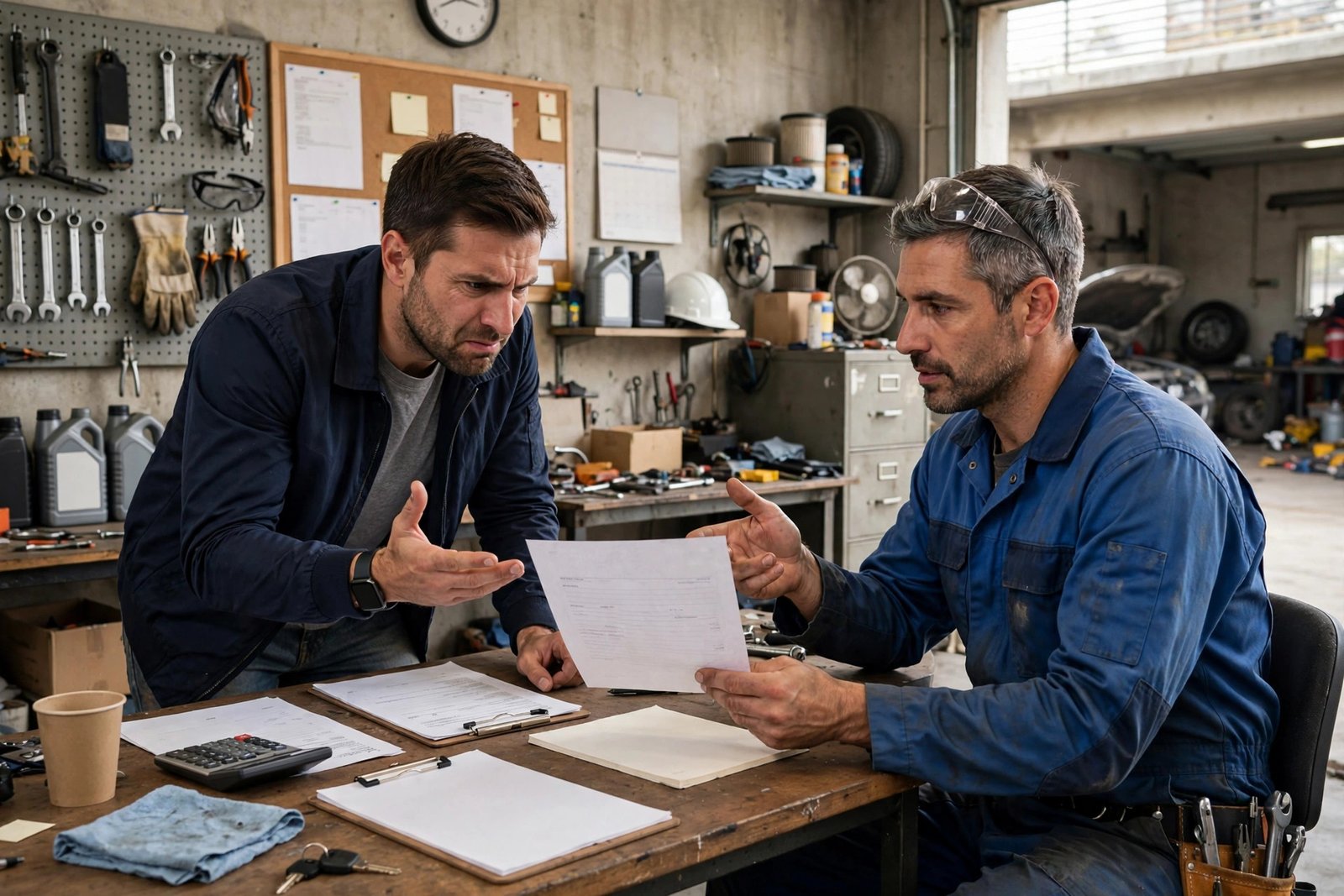
You took your car in for a $400 brake job. The final bill says $1,150 — with line items you don’t recognize, parts priced at triple what you saw online, and labor charges that don’t match the hours your car was actually in the bay. Your stomach tightens. Is this legitimate, or are you being taken for a ride? And more importantly: what can you actually do about it?
Disputing a car repair bill that seems too high is a structured process, not a confrontation. Mechanics and shops operate under specific consumer protection laws in every state, you have rights most customers never exercise, and there’s a clear escalation ladder from polite questions to regulatory complaints. Here’s exactly how to challenge an inflated bill — and how to avoid the situation next time.
Step 1: Understand the Bill Before You Challenge It
Before disputing anything, decode what you’re looking at. A proper repair invoice separates parts and labor: parts should list part numbers and prices; labor should show hours charged and the shop’s hourly rate (typically $100–$200/hour depending on region). Compare each element against benchmarks: parts prices against RockAuto, AutoZone, or dealer list prices (shops mark up parts 30–100% over wholesale — some markup is normal, 300% is not); labor hours against standard labor guides (Mitchell, AllData — ask the shop which guide they used); and the hourly rate against 2–3 other local shops.
Common legitimate surprises: the job genuinely took longer (rusted bolts, seized parts), additional problems were found mid-repair, or your car’s design requires more labor than average (some vehicles need 3 hours for a job that takes 1 hour on others). Common illegitimate padding: charging for parts not replaced, inflating labor hours beyond guide times, performing unauthorized work, or double-charging diagnostic fees. Knowing which you’re facing determines your strategy.
Step 2: The Conversation (Most Disputes End Here)
Start calm, specific, and in person if possible. Vague complaints (“this seems high”) get vague responses; specific questions get answers. Ask: “Can you walk me through the labor hours on this line item?” “What’s the part number and list price for this component?” “I authorized the brake job — when was I told about the additional work, and by whom?” “Your estimate was $400 — what changed, and where’s the documentation?”
Listen carefully to the answers. Honest shops explain clearly: they’ll show you the old parts, reference the labor guide, and acknowledge estimate variances. Evasive shops deflect, get hostile, or can’t produce documentation — which tells you everything about how the dispute will resolve. Take notes with names, dates, and quotes. If the service advisor can’t answer, escalate to the shop manager or owner — front-desk staff often lack authority to adjust bills.
Key phrase that works: “I’d like to understand this before I pay.” It’s firm, reasonable, and signals you’re not leaving until it’s resolved — without aggression that makes people defensive.
Step 3: Know Your Legal Rights
Every state has auto repair consumer protections, and they’re stronger than most customers realize. Common rights include:
Written estimates: most states require written estimates before work begins (thresholds vary, often $100+). If the final bill exceeds the estimate by more than a statutory amount (commonly 10%), the shop may have violated the law — particularly if they didn’t get your authorization for the overage.
Authorization requirements: shops generally cannot perform work beyond what you authorized without contacting you first. Unauthorized work is the strongest basis for refusing payment on those line items.
Right to old parts: many states give you the right to receive replaced parts (request this before work begins). “We threw them away” after you asked is a red flag.
Mechanic’s liens: understand the shop’s leverage — in most states, they can hold your vehicle until paid (a mechanic’s lien). This is why disputes are better resolved before you need the car back urgently. Never let a shop keep your car hostage without understanding your state’s specific lien procedures.
The CFPB’s consumer complaint resources and your state attorney general’s office publish your state’s specific auto repair protections — look them up before escalating; citing the actual statute transforms negotiations.
Step 4: Escalation Ladder
If the conversation fails, escalate methodically:
Written dispute to the shop
Send a dated letter or email detailing the disputed charges, the estimate variance, and the resolution you want (specific dollar adjustment). Written records create accountability and are essential if you escalate further.
Credit card chargeback
If you paid by credit card, you can dispute the charge with your card issuer — particularly powerful for unauthorized work or services not rendered. Document everything; card companies often side with consumers on poorly documented auto repair charges. (This is another reason to always pay by credit card, never cash.)
State regulatory complaint
File with your state’s Bureau of Automotive Repair (or equivalent) and attorney general’s consumer protection division. Licensed shops face real consequences — investigations, fines, license jeopardy. Mentioning that you’re filing often resolves disputes; actually filing resolves the stubborn ones.
Better Business Bureau and reviews
BBB complaints get responses from most established shops. Detailed, factual online reviews (Google, Yelp) create public accountability — stick to verifiable facts to avoid defamation issues.
Small claims court
For disputes of $500–$10,000 (limits vary by state), small claims court is designed for exactly this — no lawyer needed, filing fees under $100, and shops often settle when served rather than appearing. Bring your estimate, invoice, photos, correspondence, and any expert opinion (another mechanic’s written assessment of the work is powerful evidence).
Preventing the Next Dispute
The best dispute is the one that never happens. Always get written estimates before authorizing work; set a “call me before exceeding $X” threshold in writing; ask for the labor guide time and hourly rate upfront; request old parts back; photograph your car (including mileage and existing damage) before handing over keys; and build a relationship with a trustworthy shop before you need one. Knowing benchmark prices strengthens your position — our guide to what phone screen replacement costs at repair shops shows how to research fair rates, a habit that transfers to any repair quote. For major work ($1,000+), get a second quote as routine practice, not as an insult — honest shops expect it. And our guide to negotiating better prices covers the pushback tactics that work when a number looks wrong.
Understanding what repairs should cost also helps you spot padding in real time. The AAA’s auto repair cost guidance provides benchmark pricing that turns vague suspicions into specific questions.
Conclusion
An inflated repair bill isn’t a verdict — it’s an opening negotiation. Decode the invoice against parts benchmarks and labor guides, ask specific questions calmly, invoke your state’s estimate and authorization laws, and escalate through written disputes, chargebacks, regulatory complaints, and small claims court as needed. Most disputes resolve at the conversation stage when you demonstrate you understand the numbers. And the ultimate protection is structural: written estimates, authorization thresholds, trusted mechanics, and second quotes on big jobs. The shops worth your money welcome scrutiny; the ones who don’t have told you everything you need to know.
Frequently Asked Questions
Can a mechanic charge more than the estimate?
Most states allow small variances (often 10%) but require your authorization before exceeding that. If the shop performed additional work without contacting you, you have strong grounds to refuse those charges — check your state’s specific auto repair statutes.
Can a shop keep my car if I don’t pay?
In most states, yes — mechanic’s lien laws let shops hold your vehicle until paid. This is why you should resolve disputes promptly and understand your state’s lien release procedures. Paying under protest (in writing) while disputing preserves your rights without losing the car.
Should I pay the bill and dispute later, or refuse to pay?
If you need the car, pay by credit card and note “paid under protest” on the receipt — this preserves your chargeback rights while recovering your vehicle. Refusing to pay outright risks lien complications; disputing after documented payment is usually the stronger position.
How do I know if labor charges are inflated?
Ask which labor guide the shop uses (Mitchell/AllData are standard) and the time allocated per job, then compare against another shop’s quote for the same work. Labor rates of $100–$200/hour are normal; 8 hours charged for a 3-hour guide-time job is not.
What should I do if a shop did work I never authorized?
Dispute those specific charges in writing immediately, citing your state’s authorization requirements. Unauthorized work is among the clearest consumer protection violations in auto repair — regulators and small claims courts treat it seriously. Never pay for work you didn’t approve without a fight.